

You want clarity on whether tattoos violate your faith, and you’re not alone in wondering. This question hinges on one Old covenant verse, centuries of interpretation, and your own conscience.
You’ll need to examine the biblical evidence, weigh theological arguments, and consider your personal witness.
The answer isn’t simple, but you can reach a confident decision.
Where Does the Bible Mention Tattoos?
If you’re wondering where the Bible actually talks about tattoos, you’ll find the clearest statement in Leviticus 19:28. This verse commands you not to “put tattoo marks” on yourself, pairing this with a prohibition against cutting your bodies for the dead. You’ll find this instruction in the Old Testament, specifically within a section addressing ritual holiness.
The clearest biblical statement on tattoos appears in Leviticus 19:28, commanding you not to put tattoo marks on yourself.
1. Understanding the Context
You’ll notice Leviticus 19:27 sits right before the tattoo verse, addressing hair and beard rules. This placement shows you that bodily markings belong to a broader set of ancient Israelite customs.
2. What the New Testament Offers
You’ll search the New Testament and find no explicit command about tattoos. Revelation 19:16 mentions writing on Jesus’ robe and thigh, though this doesn’t clearly describe tattooing. You won’t find direct approval or prohibition there, so you must interpret the Old Testament passage carefully.
Recommended Products

✝️ Empower Your Faith - Find inspiration and comfort with our curated selection of Bible verses and scripture. Featuring verse references and powerful texts, each tattoo serves as a personal reminder of God's presence to strengthen your faith journey.

✝️ Empower Your Faith - Find inspiration and comfort with our curated selection of Bible verses and scripture. Featuring verse references and powerful texts, each tattoo serves as a personal reminder of God's presence to strengthen your faith journey.

❤️16 Sheets of motivational, inspiring and encouraging large, small bible verse fake tattoos stickers for adults, women and men. Minimalist meaningful words, letters, phases, powerful faithful sayings writings from God to motivate and comfort us in life.
Why Leviticus 19:28 Doesn’t Apply to Christians
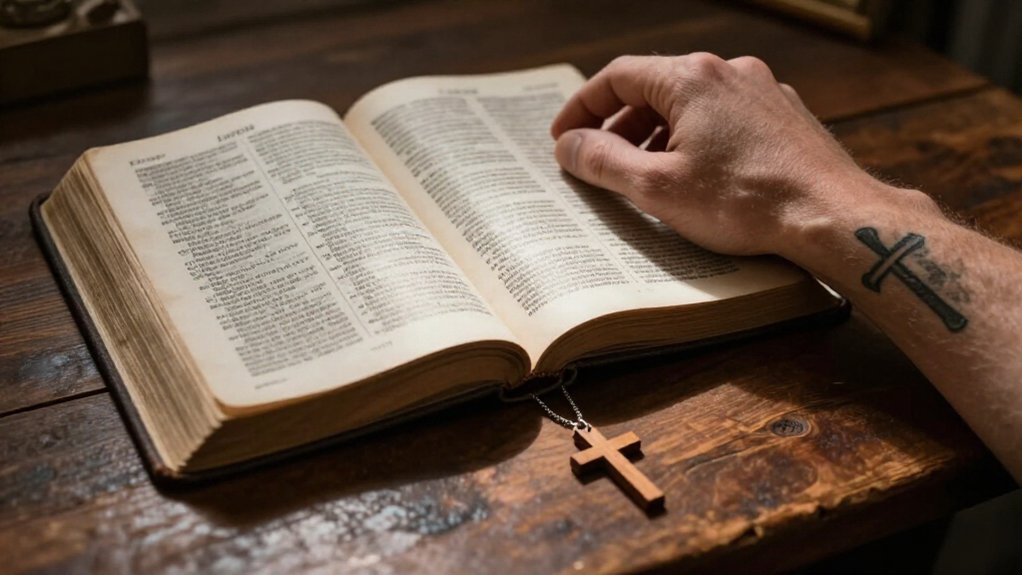
Leviticus 19:28 sits within a collection of rules given specifically to ancient Israel under the Mosaic Covenant. You need to understand this context when you read it.
1. The Old Covenant Setting
The Law forbids certain practices to set Israel apart. You see this in nearby rules about hair, beards, and and fabric mixing. You cannot pick Leviticus 19:28 alone while ignoring these others.
2. The Original Meaning
The Hebrew term, *kethobeth*, remains uncertain. You should recognize this refers likely to pagan mourning rituals, not modern tattooing.
3. The New Covenant Change
The New agreement teaches Christ fulfilled the Law. You read this in Matthew 5:17, Romans 10:4, and Galatians 3:23, 25. You are no longer bound to the Old Covenant as a rulebook.
4. Your Next Step
You ask God for wisdom about getting a tattoo. You follow New Testament principles, not Leviticus 19:28 alone.
Recommended Products

Package Includes: 7 christian religious temporary tattoo sheets; Total 140 tattoos in 20 different designs
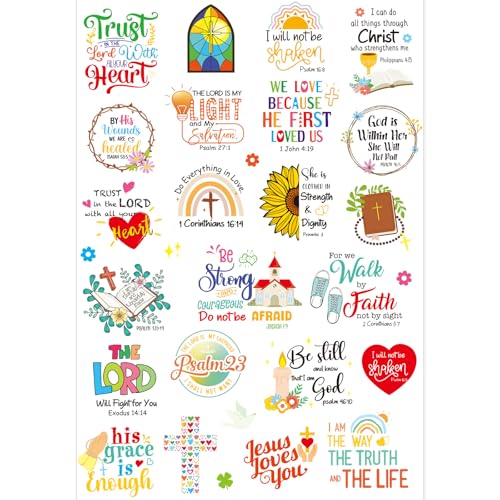
Christian Temporary Tattoos: You will receive 8 sheets Bible verse temporary tattoo stickers for a total of 184 pieces Christian temporary tattoo stickers! Christian New Year Temporary Tattoo Stickers are uniquely printed with verses from the Bible in a cute and colorful style that can be used to express the joy and faith you want to express.

Is Getting a Tattoo a Sin? How to Decide

Because the New Agreement never directly commands “yes” or “no” on tattoos, you’re left to work through the decision with Scripture’s broader principles. You’ll weigh whether Leviticus 19:28 binds you today, or if it sits with nearby rules you already set aside.
1. Check your conviction level.
Romans 14:5 calls you to be fully convinced in your own mind. Romans 14:22–23 adds that whatever isn’t with faith is sin. If you doubt, wait.
2. Examine your motive.
Ask if your tattoo honors God. Avoid designs that accept or promote what Scripture rejects.
3. Apply the gray-area rule.
When unsure, don’t proceed. Romans 14:23 treats doubt as a stop sign, not a green light.
Recommended Products

20 Count Individually Wrapped - Each wipe is single-use and sealed for better hygiene, portable and easy to carry in pockets, bags or backpacks for outdoor activities and events.

100% new brand and high quality. Favored among professional tattoo technicians.

100% new brand and high quality. Favored among professional tattoo technicians.
Will Your Tattoo Help or Hinder Your Witness?
When you choose to get inked, you’re not just decorating skin, you’re selecting a permanent message that walks into every room before you speak. Ask yourself: Will this design help or hinder your witness for Jesus Christ?
1. Evaluate Your Design’s Impact
Consider whether your tattoo aligns with God’s standards, or if it broadcasts something wrong to unbelievers (1 John 2:15-17). You’re an ambassador for Christ, so your body speaks before you do.
2. Test Your Motives
Romans 14:22-23 ties gray areas to faith, not doubt. Can you approach this decision with confidence that you’re honoring the Holy Spirit?
3. Prioritize the Gospel
If your tattoo crowds out spiritual conversations, reconsider. Your testimony matters more than self-expression. Do all things, including ink, for God’s glory (1 Corinthians 10:31).
Recommended Products

Package Includes: This set features 8 sheets with over 200 temporary tattoos showcasing religious scriptures and faith designs. It offers a wide variety of Bible verses for party favors, ensuring all guests can participate
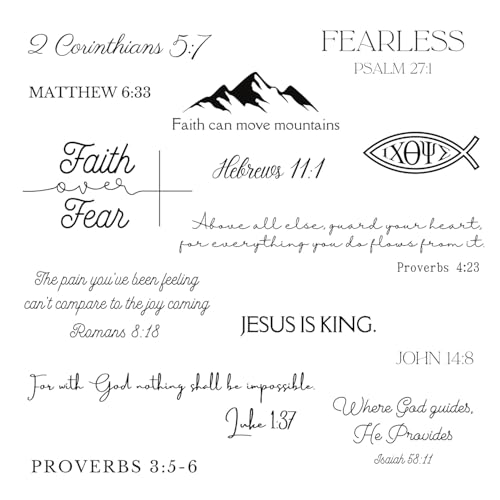
✝️ Empower Your Faith - Find inspiration and comfort with our curated selection of Bible verses and scripture. Featuring verse references and powerful texts, each tattoo serves as a personal reminder of God's presence to strengthen your faith journey.
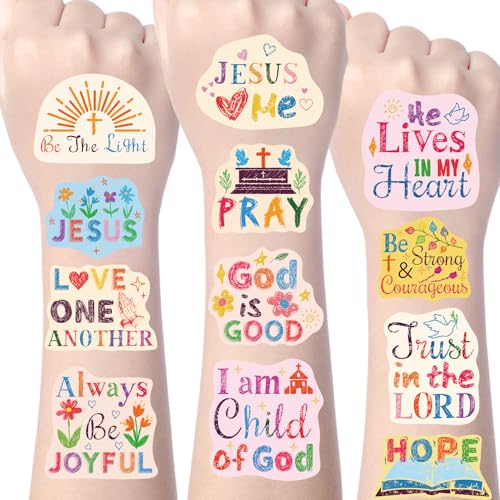
Chic Tattoos: Christian themed temporary tattoos are very rich in patterns, with a total of 24 different patterns. The Bible-themed encouraging sentences and graphic designs are perfect as gifts.