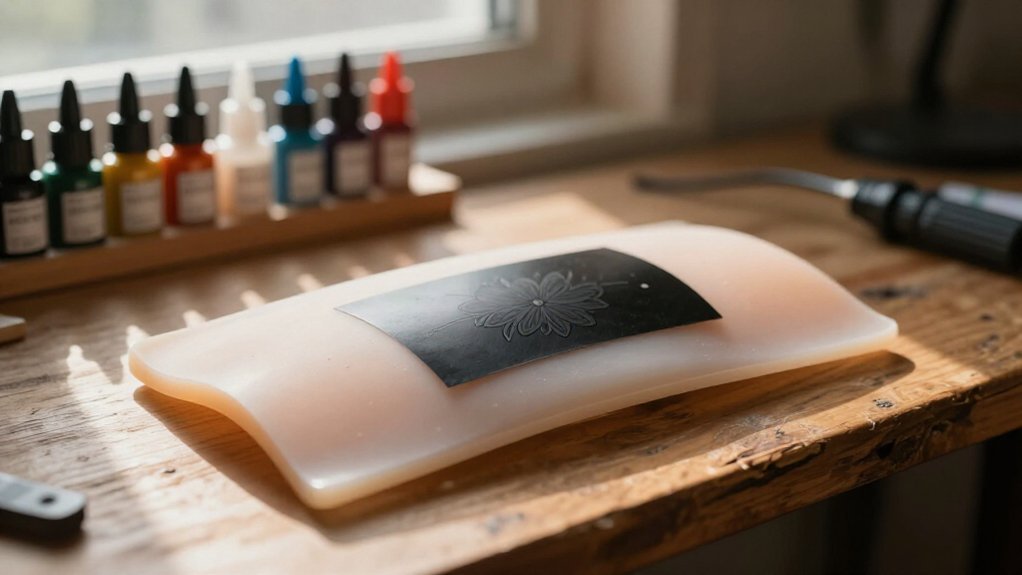

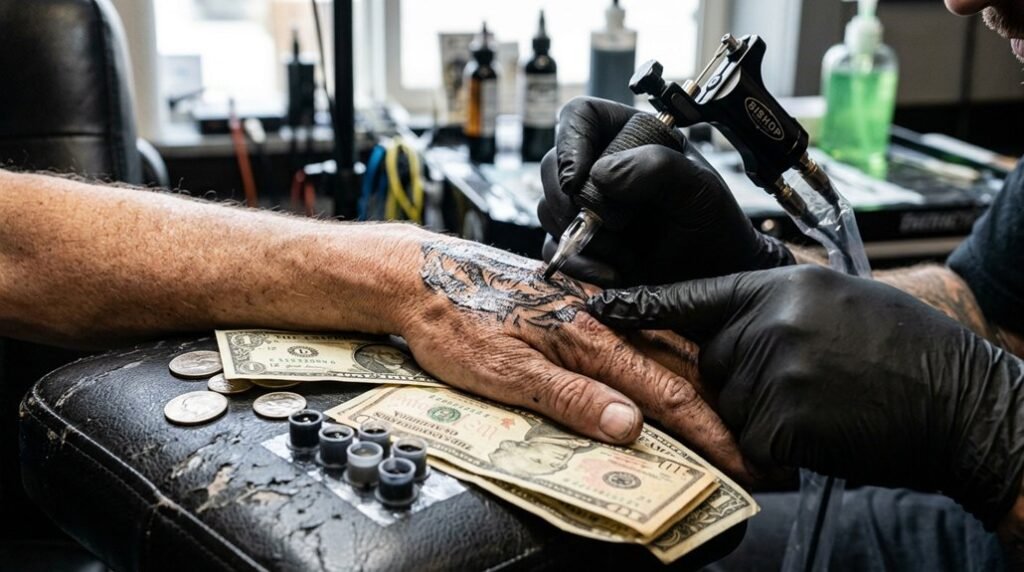
You’re staring at quotes ranging from $200 to $800-plus, and you’re wondering why hand ink costs markedly more than shoulder work. The reality involves bony surfaces, blowout risks, and specialists who command premium rates. Before you put down that deposit, you’ll need to uncover which pricing structures hide surprises.
Key Takeaways
- Hand tattoos typically cost $150–$400 per hour, with sessions lasting two to four hours.
- Flat-rate pricing ranges from $200–$800 depending on design complexity and artist experience.
- Deposits usually require 20%–50% upfront, plus 15%–25% tips on the final price.
- Simple designs start around $150, while complex hand coverage exceeds $800.
- Major cities like NYC and LA charge premium rates compared to smaller markets.
Recommended Products

Safe and Healthy: Our tattoo transfer gel meets strict safety and non-toxic material standards, non-irritating to the skin and vegan-friendly. Maintains client comfort while achieving clear tattoo stencil transfers.
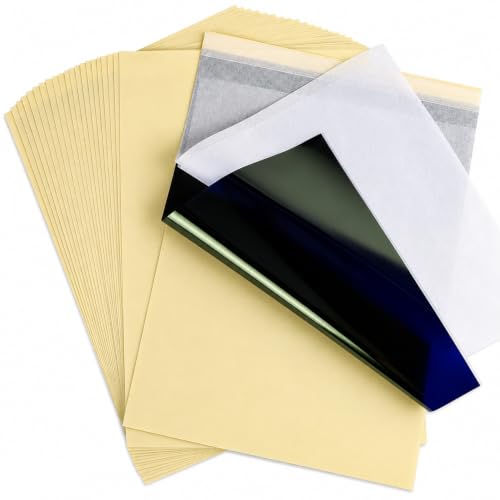
PROFESSIONAL PRECISION TRANSFER: Upgrade your tattoo transfer paper with bold, crisp lines that make every tattoo stencil paper design stand out. This premium transfer paper for tattoos works as reliable tattoo printer paper for both hand-drawn tracing paper designs and thermal copier printing, giving artists flawless tattoo stencils every time

Clean, Flawless Transfers: Your artwork will look so clean once transferred to the skin with the Stencil Stuff gel! Gentle on the skin, Stencil Stuff transfer solution helps you achieve clear and sharp tattoo stencil transfers every time!
Why Hand Tattoo Costs Run Higher Than Other Placements
Why do hand tattoos typically cost more than ink on your arm or back? You’re paying for specialized expertise.
Hand skin differs dramatically—it’s thinner, bonier, and more prone to blowouts. Your artist navigates constant movement, tendons, and uneven surfaces that demand technical precision most placements don’t require.
You’ll need someone with proven hand experience. Seasoned artists command higher rates because they’ve mastered the techniques required. Your tattoo also fades faster here, so artists often recommend bold designs and touch-up plans, increasing your total investment.
Pain tolerance becomes another factor. You’ll likely request multiple breaks, extending session time. Shops also charge premiums for high-visibility placements that affect your professional image. Your artist assumes greater liability with publicly visible work, and you’re compensating for that added responsibility and skill required.
Recommended Products

TATTOO AFTERCARE ESSENTIAL: Hustle Butter is the original tattoo aftercare balm for new and older tattoos. With over 10 years in the market, we are a pioneer of the tattoo aftercare category.
PROTECT & SOOTHE: Condition & protect your tattoos to keep ink looking bold & vibrant. Soothing, nourishing tattoo care softens fresh tattooed skin, calms redness & irritation, and promotes healing

Nourishes Healing Ink for Vibrant Color: Tattoo Goo supports healing tattoos & maintains vibrancy on healed ink with a lightweight formula rich in olive oil, lavender oil, cocoa butter, and beeswax. It absorbs quickly, moisturizes deeply, and helps reduce dryness, itch and tightness so your tattoo looks and feels comfortable through everyday routines
What You’ll Actually Pay: Hourly Rates vs. Flat Pricing
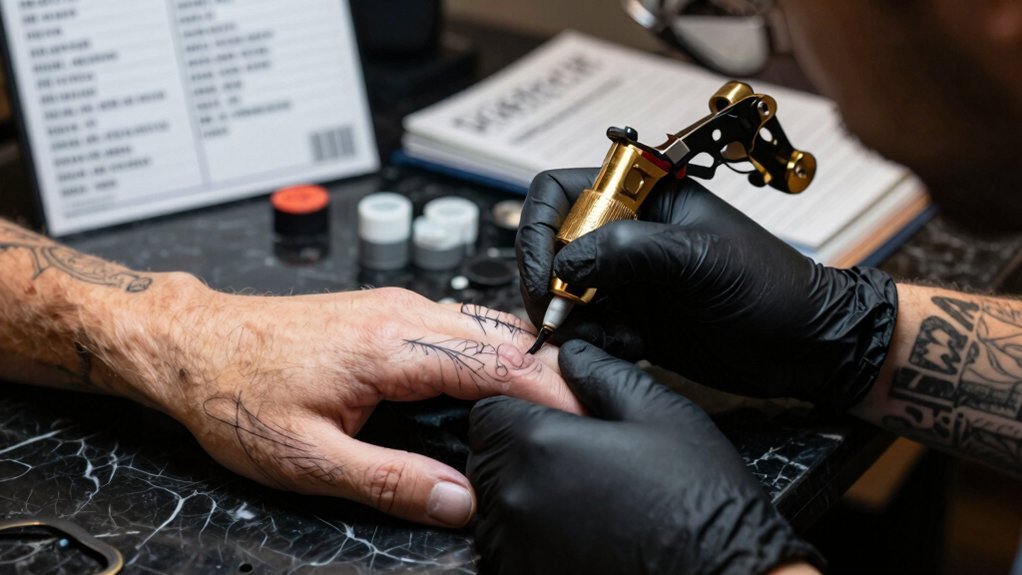
Understanding why hand tattoos command premium rates helps you anticipate what you’ll actually pay. Most artists charge by the hour, and you’ll typically encounter rates between $150 and $400 per hour for hand work. Sessions often run two to four hours, so you’re looking at $300 to $1,600 per sitting.
Some artists offer flat pricing for simpler designs, quoting $200 to $800 upfront. This benefits you when sessions run long, but hourly pricing protects you if work finishes quickly.
You’ll pay deposits—usually 20% to 50%—that apply toward your total. Budget for tips too; you’ll add 15% to 25% on top. Ask which structure your artist uses before booking. Flat rates demand precise design details, while hourly billing rewards efficiency. Either way, you’re investing significantly.
Recommended Products

Self Adhesive Bandage: Package includes 16 rolls of black self adhesive bandage wrap. Each roll measures 2 inch wide and 5 yards long after stretching. It easily adheres to itself but will not stick to other surfaces such as skin or hair, making it easy to pull off and change bandages

Widely Used: Our tattoo film has grid lines on the backing paper, which can be cut into different sizes according to requirements. The size of the film is 6 inches x 8 yards, including 3 layers, namely PET backing, PU film and release paper. Soft and stretchable, which makes it fit perfectly anywhere in the body

Self Adhesive Bandage: Package includes 16 rolls of pink self adhesive bandage wrap. Each roll measures 2 inch wide and 5 yards long after stretching. It easily adheres to itself but will not stick to other surfaces such as skin or hair, making it easy to pull off and change bandages
How Design Complexity Drives Your Final Hand Tattoo Cost
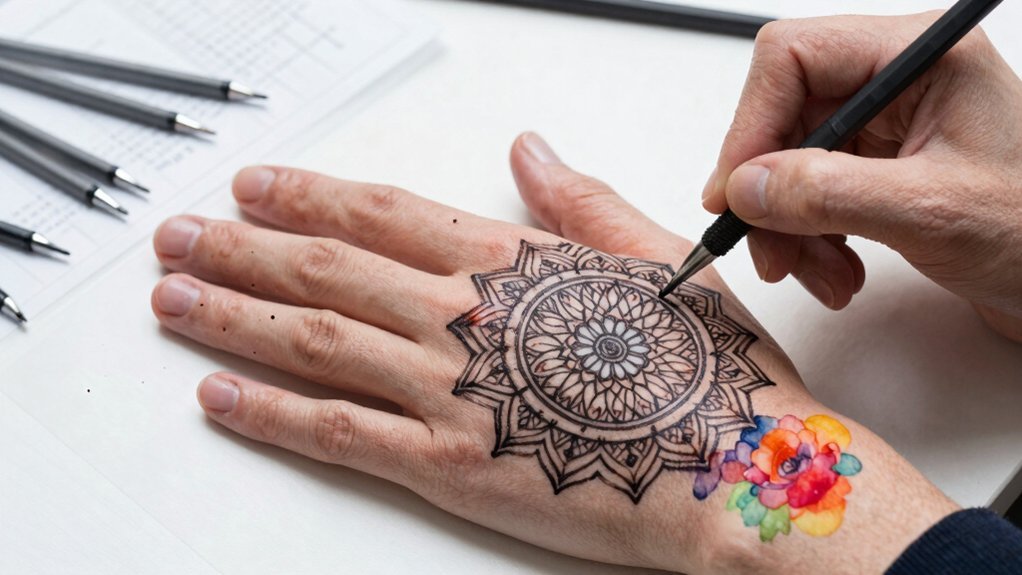
How dramatically does your design choice affect what you’ll pay? You’re looking at anywhere from $150 for a simple symbol to $800+ for intricate artwork.
Simple designs—a small star, basic lettering, or minimal linework—take less time. You’ll pay less because the artist works faster with fewer color changes and less detail. You’re in and out quickly.
Complex designs change everything. You’re paying for realistic portraits, detailed mandalas, or full hand coverage with shading and color blending. These demand precise needlework, multiple sessions, and advanced expertise. You’re also covering the cost of stencils, design prep, and the artist’s focus.
You’re choosing between affordability and visual impact. A detailed piece transforms your hand but empties your wallet faster. Weigh your priorities before booking that consultation.
Recommended Products
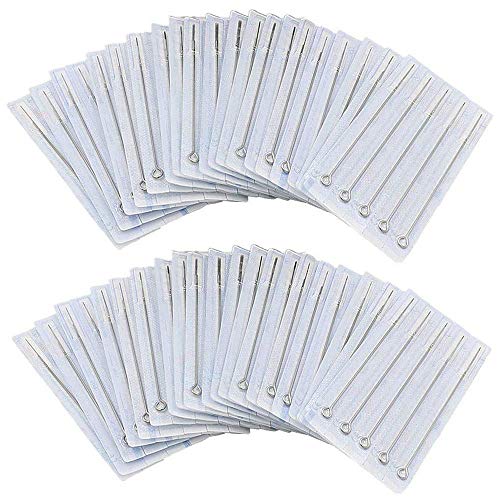

【Design】V-SELECT cartridge tattoo needles are design for micropigmentation & makeup permanent, eyebrows, eyelinver, lips, Microblading, small piece tattoo and hair tattoo-Scalp, Developed by EZ with a unique style stabilizing system.

This tattoo kit have two Dragonhawk tattoo machines for lining & shading and friendly beginner start tattooing life, Cast iron tattoo machine 10 wrap coils. Made of superior composite material, the spring is high-elastic and anti-fatigue for long-time working, made of copper coils.
Tattoo Prices by City: What Location Means for Your Quote
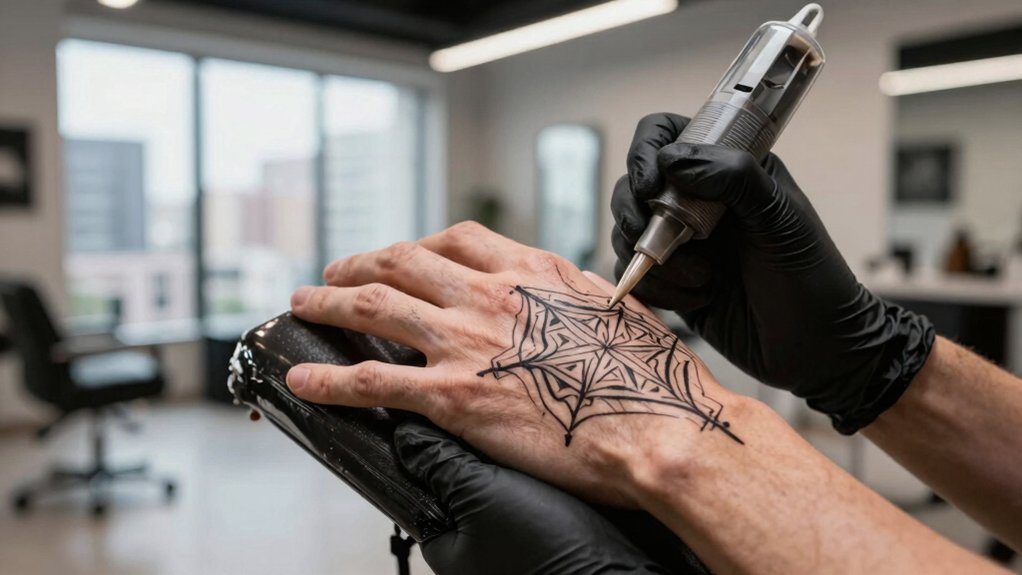
Where you get inked matters as much as what you get. You’ll pay premium rates in cities like New York, Los Angeles, and Seattle, where established artists often charge $200 to $400 per hour for hand work.
In smaller markets—think Kansas City or Cleveland—you’ll find talented artists charging $120 to $180 hourly for the same skill level.
You can’t simply compare sticker prices across zip codes. A $300 piece in San Francisco might match a $180 piece in Phoenix because overhead, demand, and local economies differ sharply. Even within cities, neighborhood shops vary—studios in trendy districts typically outprice those in working-class areas.
Research artists thoroughly wherever you are. You’ll discover incredible value in mid-sized cities, though you’ll sacrifice the bragging rights of famous shop names.
Recommended Products

MADE IN THE USA SINCE 1990 — For over 30 years Dynamic Color has produced professional tattoo ink in the United States, an established American brand artists built their work on long before most imported labels existed.

MADE IN THE USA SINCE 1990 — For over 30 years Dynamic Color has produced professional tattoo ink in the United States, an established American brand artists built their work on long before most imported labels existed.
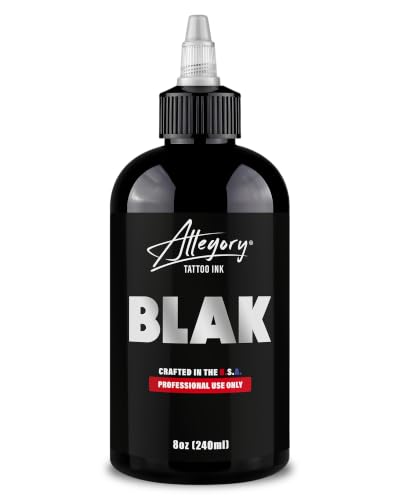
Premium Tattoo Black Ink – Allegory BLAK is a smooth, consistent blend of liquid dispersed pigment. Many of the most popular tattoo artists around the globe uses Allegory BLAK Ink for precise lining and shading. Allegory BLAK is the stepping-stone to the future of tattooing.
The Hidden Costs Nobody Warns You About
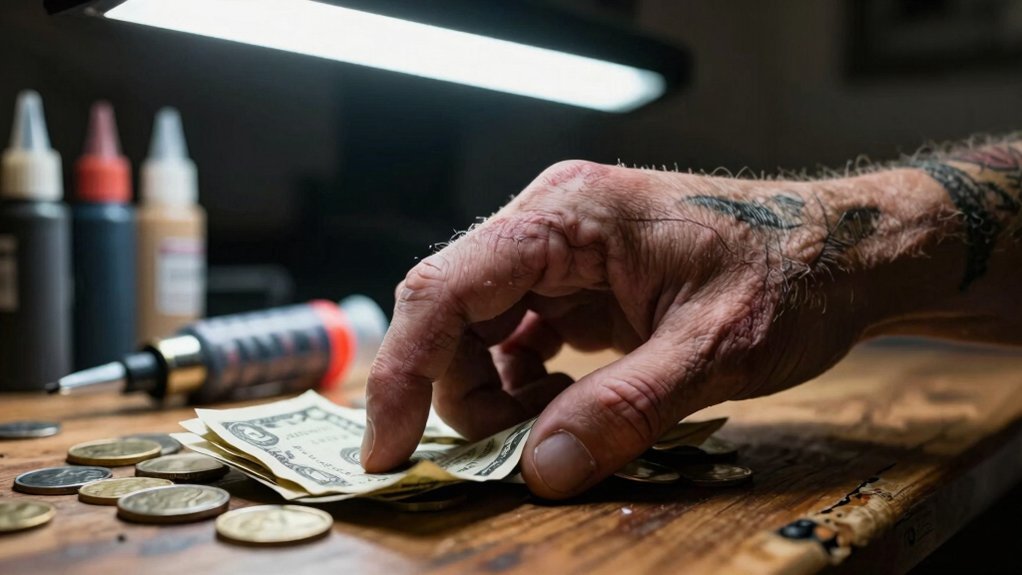
Once you’ve budgeted for the artist’s rate, you’ll discover the bill doesn’t stop there. You’ll pay for numbing cream if your artist offers it—many hand specialists charge extra. You’ll cover touch-ups, and hands demand them frequently. Fading hits fast here, so you’ll return within months, not years.
You’ll buy specialized aftercare: fragrance-free soap, tattoo balm, and sunblock you’ll apply obsessively. Skip this, and you’ll watch your investment blur.
You’ll lose wages if your job restricts visible ink, forcing you to choose between income and healing time. You’ll spend on concealer for professional settings where tattoos aren’t welcome.
You’ll face removal costs if you change your mind—hand tattoos rank among the most expensive and painful to erase. You’ll discover cheap ink costs far more than you saved.
Recommended Products
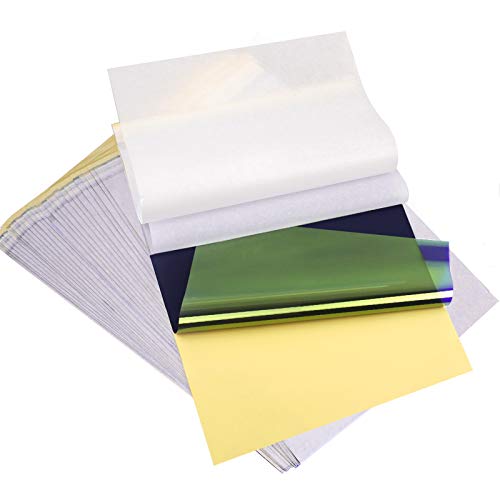
ADVANCED MATERIAL: Tattoo transfer paper is made with the high quality dyes and stencil paper. Transfer marks are very clear, clean and smooth. Tattoo transfer paper kit come with 35 sheets. Great for tattooing, trace and transfer images onto the body.<br>

100-Sheet Value Pack — Stock up with 100 sheets of tattoo stencil paper, enough to cover weeks of daily appointments without reordering. A studio-ready supply for busy artists and high-volume shops.

Fox Chapel Publishing Rock Art Handbook Book
How to Vet an Artist and Negotiate Without Overpaying
Why gamble your skin and savings on the wrong artist? You scout their healed work photos first. You check licenses, sterilization practices, and local health board records. You read reviews beyond star ratings—look for comments about aging ink and touch-up policies.
You ask direct questions: “What’s included in your rate?” “How do you price touch-ups?” You request itemized quotes upfront. You compare three artists minimum, but you don’t bargain-shop—quality costs, though transparency shouldn’t.
You negotiate timing, not safety. You ask about off-peak discounts or longer session rates. You get everything in writing. You trust your gut when consultations feel rushed or evasive.
You remember: cheap hands become expensive regrets. You invest once in the right hands.
Recommended Products

STICK APPLICATION, ZERO MESS: Twist up the tattoo balm stick, swipe directly over the tattoo, and blend as needed. No jar to open, no fingers scooping product, and no need to carry a separate applicator. The solid stick format is easy to keep in a bag, bathroom cabinet or travel kit, making care simple at home or on the go. It gives you controlled application exactly where you want moisture, with less mess than traditional balm jars. Great for quick touch-ups whenever tattooed skin feels like it needs extra care, at home, after work or while traveling.

Tattoo Aftercare Balm Stick: our tattoo balm is now available in a balm stick. This tattoo balm stick delivers targeted care to keep your artwork looking and feeling fresh whenever you need it most. For use on all tattoos, just not fresh ones.

TATTOO AFTERCARE LOTION: After Inked Tattoo Lotion brings hydration and nourishment to your tattooed skin. Formulated with grape seed oil, which helps maintain vibrant ink colors while pacifying the skin and promoting moisture retention.
Cheaper Hand Placements and Smaller Designs That Still Work
Full hand pieces drain both your skin and your wallet, but you’ve got options that don’t sacrifice impact. Target the side of a finger, the webbing between thumb and index, or the outer edge of your hand. These spots require less time, less ink, and often less experienced artists bill lower rates for them.
Small symbols, thin linework, or single-word script fit these placements perfectly. You avoid the premium pricing of palm or full-knuckle coverage.
Stick with black ink; color demands more passes and doubles your cost. Skip heavy shading too.
You save money without looking cheap. A tiny moon on your finger side or a minimal arrow along the thumb webbing carries weight. Placement smart, and you’ll stretch your budget further.
Recommended Products
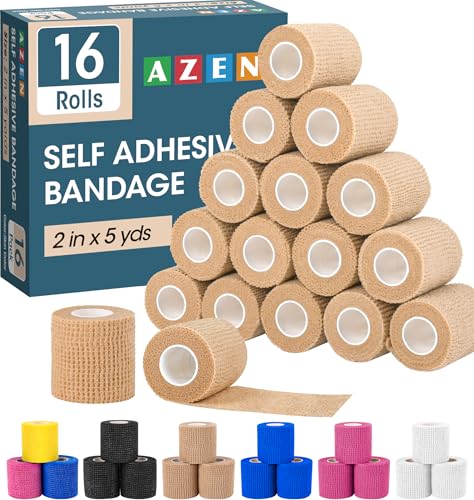
Self Adhesive Bandage: Package includes 16 rolls of skin color self adhesive bandage wrap. Each roll measures 2 inch wide and 5 yards long after stretching. It easily adheres to itself but will not stick to other surfaces such as skin or hair, making it easy to pull off and change bandages

Self Adhesive Bandage: Package includes 20 rolls of black color self adhesive bandage wrap. Each roll measures 2 inch wide and 5 yards long after stretching. It easily adheres to itself but will not stick to other surfaces such as skin or hair, making it easy to pull off and change bandages

You Will Receive: 30Pcs 6 x 8inch tattoo cover up bandage, The tattoo aftercare bandage has a 3-layer design, consisting of PET backing, medical PU film, and release paper, There are green grid lines behind the lining paper, Can be cut into suitable sizes according to requirements
Conclusion
Hand tattoos demand premium pricing, but you’ll get what you invest in if you’re smart about it. Research artists thoroughly, budget for hidden costs, and never sacrifice quality to save money—this placement stays visible forever. Prioritize experience over discounts, negotiate deposits when possible, and consider scaling down your design if funds are tight. Your hands deserve an artist who specializes in them, so take your time choosing right.
Recommended Products
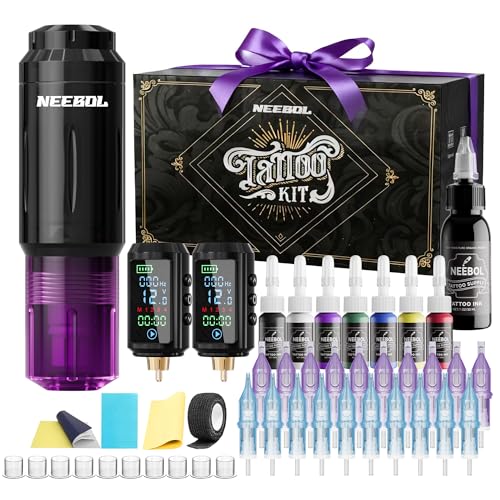
NEEBOL Tattoo Machine Kit with Complete Accessories:This tattoo machine kit includes 1 wireless tattoo gun, 2 x 1600mAh batteries, 20 needles, a large bottle off black ink, a full color ink set, and other essentials—ideal for beginners, apprentices, and professionals seeking a maquina para tatuar.

Dual Purpose Design: Functions effectively as both a liner and shader tattoo machine.

【Design】V-SELECT cartridge tattoo needles are design for micropigmentation & makeup permanent, eyebrows, eyelinver, lips, Microblading, small piece tattoo and hair tattoo-Scalp, Developed by EZ with a unique style stabilizing system.