
You’ve just left the studio with fresh ink, and what you do next determines how your tattoo will look for decades. The first 48 hours are critical, but most people make simple mistakes they don’t even realize. If you skip the right steps now, you risk faded lines, patchy color, or worse. The good news? Proper aftercare isn’t complicated—it just requires knowing what your skin actually needs.
Key Takeaways
- Leave the bandage on for 2–6 hours, then gently pat away plasma and ink without rubbing.
- Wash the tattoo 2–3 times daily with unscented antibacterial soap and lukewarm water.
- Apply a thin layer of fragrance-free, alcohol-free moisturizer to keep skin slightly shiny.
- Avoid submerging the tattoo in water, direct sunlight, and tight clothing for at least two weeks.
- Contact a doctor if you notice fever, thick pus, spreading redness, or increasing pain.
Recommended Products

Gentle, Deep Cleansing: Tattoo Goo Foaming Cleansing Soap for tattoos and piercings helps remove impurities and clean the inked or pierced areas at a deep level by removing dirt, dead skin cells, and killing germs without damaging the skin

GENTLY CLEANSES NEW TATTOOS - Use Repair Tattoo Wash during the healing process to keep your fresh tattoo ink clean or as a perfect prep wash before and after tattooing.

GREAT FOR NEW TATTOOS - H2Ocean Blue Green Foam Soap cleanses skin on and around new tattoos and the addition of aloe vera aids the healing process.
Tattoo Aftercare: Your First 24 Hours
Your first day with fresh ink sets the foundation for how your tattoo will heal. You’ll leave the shop with a bandage covering your new art—keep this covering on for the timeframe your artist specifies, typically two to six hours. Don’t peek early; you’re exposing vulnerable skin to bacteria.
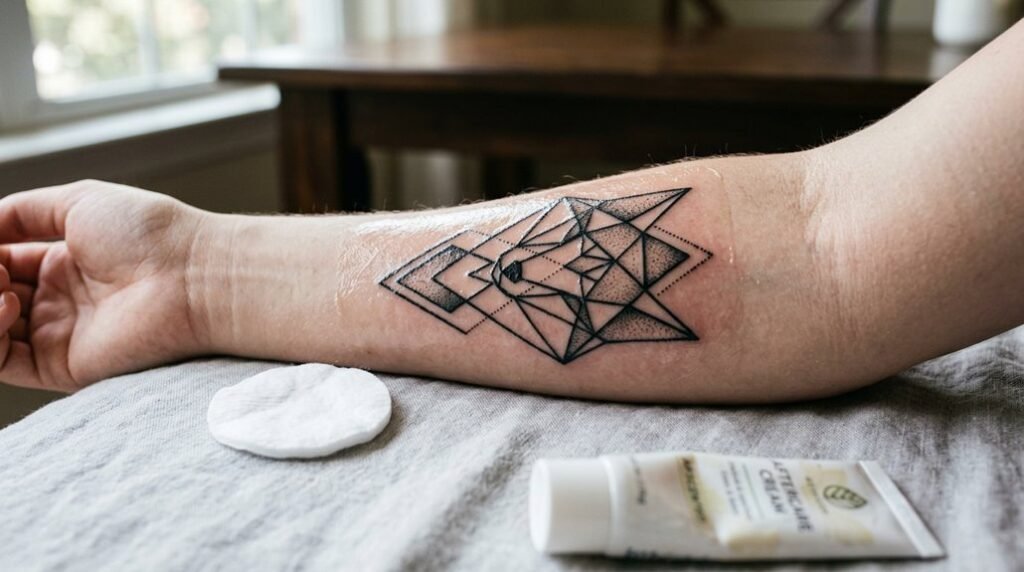
Once you remove the bandage, you’ll notice plasma, ink, and blood pooling on the surface. This oozing is normal. You’ll want to pat—never rub—the area with a clean paper towel to absorb excess moisture. Let your tattoo breathe; tight clothing will stick and irritate the wound.
You’ll feel tenderness, warmth, and mild swelling. Resist touching your tattoo with unwashed hands. Sleep on clean sheets tonight, and position yourself so you won’t roll onto the fresh ink. Your careful attention now prevents complications later.
Recommended Products

FRAGRANCE FREE TATTOO AFTERCARE FOR SENSITIVE SKIN - The same #1 artist recommended Hustle Butter formula, now with no added fragrance, dyes, or parabens. The unscented tattoo lotion of choice for sensitive or easily irritated skin.

COMPLETE AFTERCARE KIT FOR NEW & EXISTING TATTOOS: This Tattoo Aftercare Kit brings together 3 essentials, Antimicrobial Soap, Tattoo Balm, and Tattoo Lotion, to help cleanse, protect, and moisturize fresh ink. Useful after tattoo sessions and throughout healing, it supports vibrant color and skin comfort for dedicated ink enthusiasts and artists

SHEER FINISH — This sunscreen for body is easy to apply and blends in across all skin tones with no white cast
How to Wash Your New Tattoo (and How Often)
Once the initial bandage comes off, washing becomes your next responsibility. Wash your tattoo 2-3 times daily using unscented, antibacterial soap and lukewarm water. Wet the area gently, lather the soap in your hands—not directly on the tattoo—and pat it across the skin. Don’t scrub or use washcloths; your fingers work best. Rinse thoroughly, removing all soap residue. Pat dry with a clean paper towel; don’t rub.
Wait 24-48 hours after bandage removal before your first wash, unless your artist instructed otherwise. Keep showers brief and avoid soaking the tattoo in baths, pools, or hot tubs during healing. You’ll know it’s time to wash when plasma and excess ink build up on the surface. Don’t overwash; doing so dries the skin and irritates the tattoo.
Recommended Products

16-fluid ounce bottle of Lubriderm Fragrance Free Daily Moisture Lotion + Pro-Ceramide, Shea Butter and Glycerin to help restore skin's moisture barrier for healthier-looking skin

Protect Your Body Art: Moisturizing with the bonus of itch relief! Tattoo Goo's Tattoo Care Lotion soothes healing skin & keeps healed ink looking sharp for life. With olive oil & glycerin, it delivers deep, breathable hydration that won’t clog pores

TATTOO AFTERCARE LOTION: After Inked Tattoo Lotion brings hydration and nourishment to your tattooed skin. Formulated with grape seed oil, which helps maintain vibrant ink colors while pacifying the skin and promoting moisture retention.
Pick the Right Moisturizer for Healing
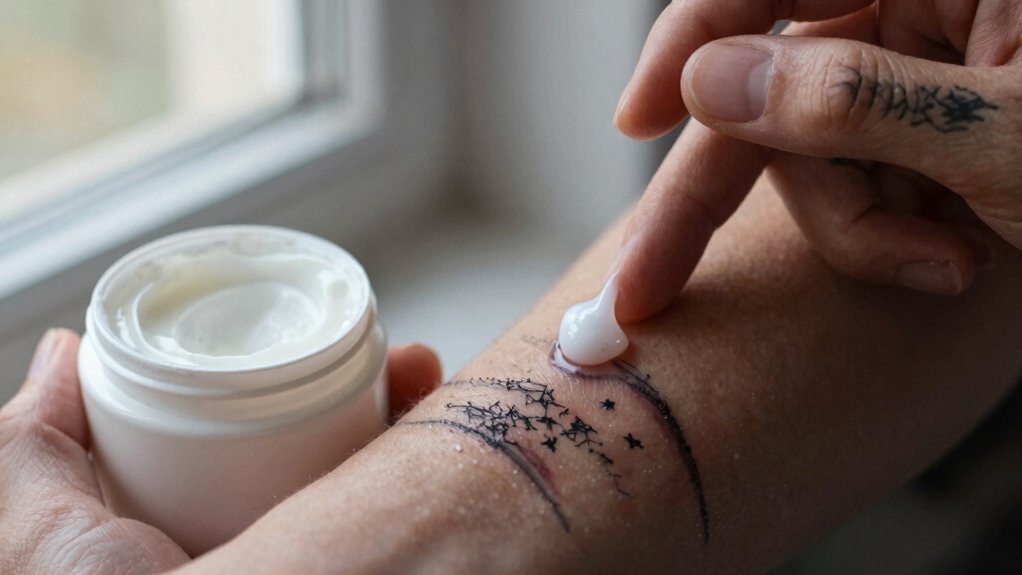
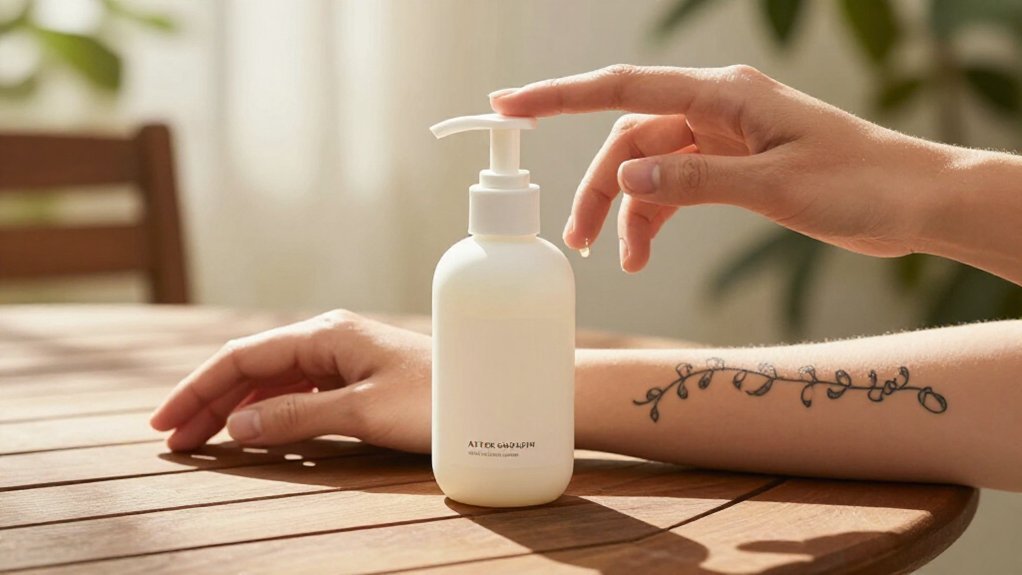
Patience pays off once you’ve patted that skin dry—now’s the moment to lock in moisture without suffocating the work. You’ll want a fragrance-free, alcohol-free moisturizer specifically designed for sensitive or healing skin. Reach for products labeled tattoo-safe or recommended by your artist.
Apply a thin layer—just enough to make the skin slightly shiny, not greasy. You’re aiming for hydration, not occlusion. Over-moisturizing traps bacteria and delays healing, so resist the urge to slather.
Petroleum-free options work best for many people, as heavy ointments can clog pores. Fragrance and dyes irritate fresh wounds, so check those ingredient lists carefully.
Reapply two to three times daily, or whenever the area feels tight or dry. Your tattoo will let you know what it needs—listen, adjust, and keep that barrier light and breathable.
Recommended Products

Widely Used: Our tattoo film has grid lines on the backing paper, which can be cut into different sizes according to requirements. The size of the film is 6 inches x 8 yards, including 3 layers, namely PET backing, PU film and release paper. Soft and stretchable, which makes it fit perfectly anywhere in the body

THE ORIGINAL TATTOO AFTERCARE BANDAGE – Saniderm’s Original Gloss Bandage is the tried-and-true, industry-defining tattoo aftercare bandage. Dermatologist-recommended and trusted by expert tattoo artists worldwide, this medical-grade bandage ensures your tattoo heals quickly, safely, and more vibrantly. With over a decade of experience and millions of tattoos healed, it’s the perfect way to heal your ink.

Transparent Matte Film Protection - This breathable tattoo bandage is a must-have in your tattoo supplies, offering latex-free protection that supports gentle healing for new ink.
What to Avoid: Sun, Water, and Friction
You must block direct sunlight completely. UV rays fade fresh ink and damage healing skin. When you step outside, cover the tattoo with loose, breathable clothing.
You can’t submerge your tattoo in water. Skip baths, pools, hot tubs, and oceans for at least two weeks. Quick showers are fine, but you’ll pat the area dry immediately with a clean towel.
You should eliminate friction against the tattoo. Tight clothing, gym equipment, and sleeping on the fresh ink all create irritation. You’ll notice less scabbing and faster healing when you minimize contact.
You’re protecting an open wound. Treat it that way, and your artwork stays sharp.
Recommended Products
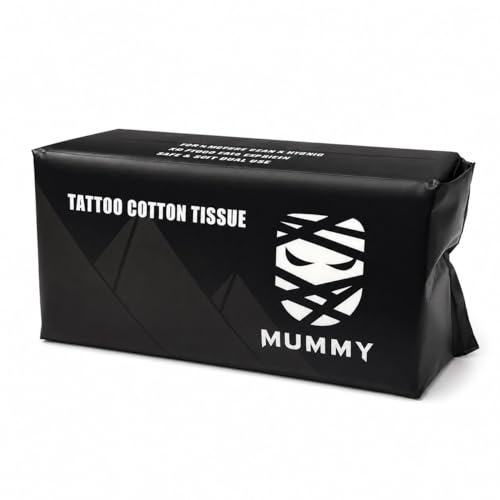
100% Cotton Softness: Made from 100% pure cotton, Mummy tattoo tissue towels provide a soft, gentle touch for skin contact. Each towel measures 20 x 20cm, with 80 disposable towels per pack.

DRY WIPES FOR TATTOOING: Wipe Outz premium dry tattoo towel is the ultimate wipe for tattoo care! Each towel is durable and gentle on the skin, promoting faster healing while keeping dirt out. Use this dry wipes for cleaning during sessions in place of conventional tattoo paper towels as part of your tattoo cleaning supplies.

ECONOMICAL FOOD SERVICE WIPES: These economical disposable wipes can be reused like cloth, and then easily disposed at the end of the day.
Tattoo Healing Timeline: Week by Week
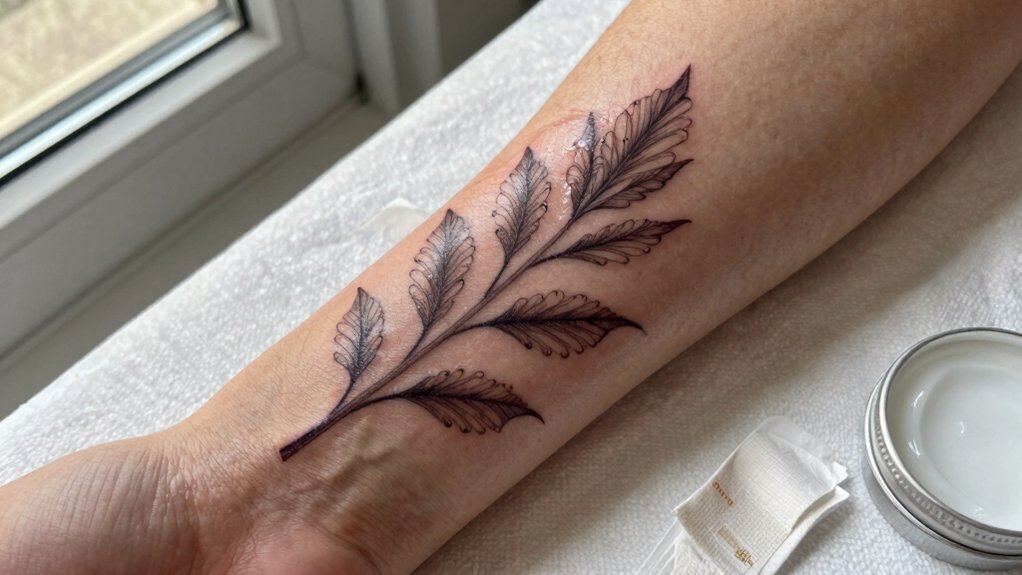
The healing process unfolds in distinct stages, and knowing what to expect keeps you from worrying unnecessarily.
During week one, you’ll notice redness, swelling, and plasma oozing from your tattoo. You’ll wash it gently twice daily and apply a thin layer of ointment. Scabs form by day three or four. Don’t pick them.
By week two, itching intensifies as skin regenerates. You’ll switch from ointment to unscented lotion. Flaking becomes visible, and colors appear dull beneath peeling layers. Continue moisturizing, but don’t overdo it.
Week three brings diminished flaking and reduced itching. Your tattoo looks cloudy or hazy as deeper layers heal. You’ll keep moisturizing and avoid soaking the area.
Recommended Products

CONVENIENT SET: This Dial Liquid Hand Soap Set includes a 7.5 fl oz Hand Soap Pump Bottle and a 52 fl oz Hand Soap Refill, ensuring long-lasting freshness and convenience.

Gentle Formula: Dial up your handwashing routine with this antibacterial hand soap that kills more than 99.99% of bacteria* and creates a luxurious lather. Dial foaming hand soap cleanses deep while being gentle on skin. *Encountered in household settings

GREAT FOR NEW TATTOOS - H2Ocean Blue Green Foam Soap cleanses skin on and around new tattoos and the addition of aloe vera aids the healing process.
Infection Warning Signs: When to Call Your Artist
What distinguishes normal healing from a brewing infection? You’ll notice normal healing brings mild redness, slight swelling, and clear plasma or ink leakage. An infection announces itself differently.
Watch your temperature. If you develop a fever, that’s your body fighting something serious. Feel your tattoo. Excessive heat radiating from the skin signals trouble. Observe the discharge. Thick yellow or green pus demands immediate attention. Track the redness. If it spreads outward or forms red streaks, don’t wait.
Smell your tattoo too. A foul odor indicates bacterial growth. Note increasing pain after the initial healing period. That worsening ache isn’t typical.
Contact your artist immediately when these signs appear. They’ll assess whether you need medical intervention. Don’t self-diagnose or delay. Quick action prevents complications and protects your investment. Your artist wants to help you heal properly.
Recommended Products

INFUSED WITH CLEAN, EFFECTIVE INGREDIENTS - The clean ingredients like Glycerin & Shea Butter provide lightweight nourishment and bounce to skin without ever feeling heavy or greasy on the surface. Anti-aging powerhouse vitamin A promotes visible firmness to skin, offsetting the appearance of fine lines and wrinkles.

PROTECT & HEAL - H2Ocean Aquatat seals the skin in a moisturizing barrier to protect from irritants while still allowing the skin to breathe. Aquatat will also heal topical wounds on skin such as tattoos, rashes, cuts and scrapes while minimizing scabbing.

Enhances Tattoo Appearance: Helps improve the look of existing tattoos by supporting a clearer, bolder and more defined appearance with regular use.
Conclusion
You’ve got this. Stick to gentle washing, keep it moisturized with fragrance-free products, and protect your tattoo from sun, water, and friction while it heals. Watch for infection signs and don’t hesitate to reach out to your artist if something feels off. Follow these steps, and you’ll preserve your ink’s vibrancy for years to come.
Recommended Products

NATURAL AND UNSCENTED FORMULA – Saniderm’s Original Tattoo Aftercare Balm is made using natural ingredients like beeswax, shea nut butter, and sea buckthorn oil. Unlike other common ointments and tattoo balms, Saniderm’s fragrance-free Tattoo Aftercare Balm is also petroleum-free so it won’t suffocate the skin while your tattoo heals.

Tattoo Aftercare Daily Lotion: gives your tattoos the everyday care they deserve to keep your artwork looking fresh. Formulated to provide deep hydration and leave skin feeling soft and smooth. Rejuvenates your artwork and moisturizes skin.

Deep Hydrating Body Lotion: This 48 hour cocoa butter moisturizing body lotion is fragrance free and provides deep, soothing hydration for all skin types, from normal to dry to eczema prone skin