
You want that ink gone, but your wallet might not agree. Most insurers call laser tattoo removal cosmetic, so you’ll pay out of pocket unless you can prove medical necessity. You’ll need documentation of allergic reactions, suspicious moles hidden beneath the art, or radiation markers from cancer care.
The path to coverage exists, you just need to know exactly where to step.
Is Tattoo Removal Covered by Insurance?
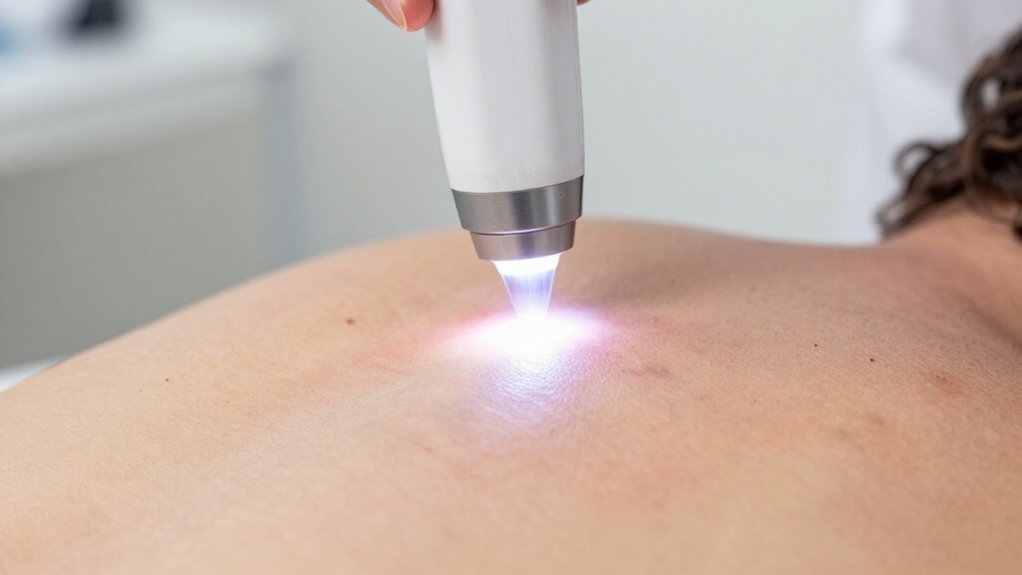
Because most insurers classify tattoo removal as elective or cosmetic, you’ll find that standard health plans rarely cover laser tattoo removal. Insurance coverage for this cosmetic procedure remains limited across the industry.
Standard health plans rarely cover laser tattoo removal, as most insurers classify it as elective or cosmetic.
Understanding Your Insurance Coverage
You’ll need to contact your insurance company directly to learn your specific policy rules. Ask whether they cover laser tattoo removal, what preauthorization steps they require, and which documents you’ll need to submit in writing.
When Medical Necessity Applies
Your clinician can sometimes secure insurance cover tattoo benefits by proving medical necessity. They’ll draft a letter of medical necessity, including diagnosis codes and clinical photos. Valid reasons include allergic reactions to ink, tattoos blocking mole evaluation, or removal of oncology markers.
Without approval, you’ll pay out of pocket.
Recommended Products

Wavelength: 200nm-2000nm, broad spectrum protection, block UV, Blue, Red and Infrared Laser Light

1. Function: Protective wavelength range 200nm-2000nm, optical density: OD5+, visible light transmittance: 0.1%, visible light transmittance: <20%

When Insurance Actually Covers Tattoo Removal

Although standard insurers reject most tattoo removal claims, you can secure coverage when your situation meets strict medical necessity criteria. Tattoo removal is considered cosmetic by default, but exceptions exist for documented health conditions.
Medical Scenarios That Qualify
You may secure insurance approval for these situations:
- Persistent allergic reactions to tattoo ink causing inflammation or infection
- Suspicious moles or skin changes hidden beneath ink requiring evaluation
- Radiation marker removal for oncology treatment
Documentation Requirements
You must obtain a Letter of Medical Necessity from your physician. Your doctor will submit relevant diagnosis codes, clinical photos, and preauthorization forms to justify laser treatment. Insurers review this evidence before approving any portion of the cost of tattoo removal.
Coverage Limitations
If approved, insurance covers only the medically necessary work. You will pay out of pocket to remove any remaining tattoo for aesthetic reasons.
Recommended Products

100% new brand and high quality. Favored among professional tattoo technicians.

Protect Your Body Art: Moisturizing with the bonus of itch relief! Tattoo Goo's Tattoo Care Lotion soothes healing skin & keeps healed ink looking sharp for life. With olive oil & glycerin, it delivers deep, breathable hydration that won’t clog pores
How Much Does Tattoo Removal Cost Out of Pocket?

How much will you actually pay if insurance denies your claim? Much does tattoo removal cost you when insurance won’t help? You’ll typically face out-of-pocket expenses, since insurers classify this procedure as cosmetic.
National averages run around $353 per session, with typical ranges between $272 and $659. Your final bill depends on several key factors:
- Tattoo size directly impacts your total cost
- Ink depth and color, like stubborn dark blue or black, require more sessions
- You’ll need 1 to 10 sessions, spaced at 6-week intervals for laser removal
- Geographic location matters; New York clinics often charge premium rates
Side effects remain generally mild, but you’re paying for each visit. Since insurance rarely covers this, you’ll absorb every expense yourself. Document any medical necessity early if you hope for rare coverage exceptions.
Recommended Products

FAST & EASY REMOVAL: Wipe away any temporary tattoo in seconds. No scrubbing, no mess, no sticky residue.

Quickly and easily remove any brand of metallic temporary tattoos with no mess
Tattoo Removal Payment Plans and Ways to Save
Where can you turn when insurance won’t cover your tattoo removal? You explore payment plans, which many clinics offer to make this manageable.
1. Understand Your Costs
The Aesthetic Society notes tattoo removal averages $353 per session, typically ranging $272–$659. Most people need multiple sessions, spaced about 6 weeks apart, because ink depth, skin color, and tattoo complexity affect how difficult to remove each design proves.
2. Explore Payment Options
You can choose:
- Pay-as-you-go pricing
- Package plans bundling multiple sessions, which often cost less than individual bookings
3. Check HSA/FSA Rules
Since insurers classify tattoo removal among cosmetic procedures, HSA/FSA funds usually don’t apply. However, if the procedure is performed for documented medical necessity, like allergic reactions or cancer evaluation interference, you confirm with your plan administrator whether exceptions exist.
Recommended Products

Bulk 50-Pack for Efficiency and Convenience: Save time while ensuring your clients have all the pico laser post care information they need. Our 50-Pack ensures you have an ample supply of pico laser aftercare cards on hand, ready to provide personalized pico laser care for every client.

75 TOTAL PAGES consisting of 25 consent forms, 25 client intake forms, 25 aftercare pages.

Compatible with all LASER printers.Please print image on gloss side.Safe material, but please do not apply to eyes and broken skin.