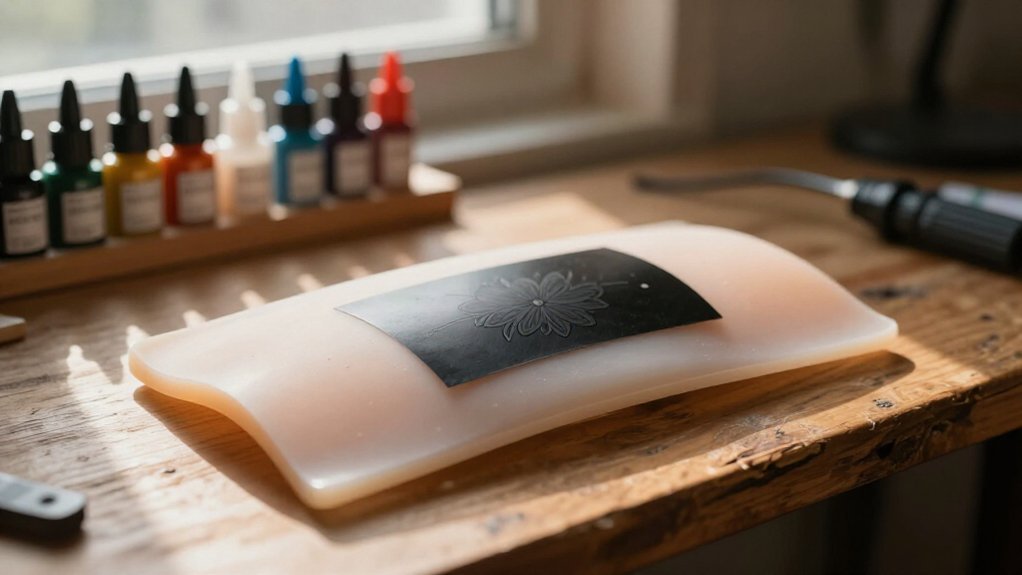

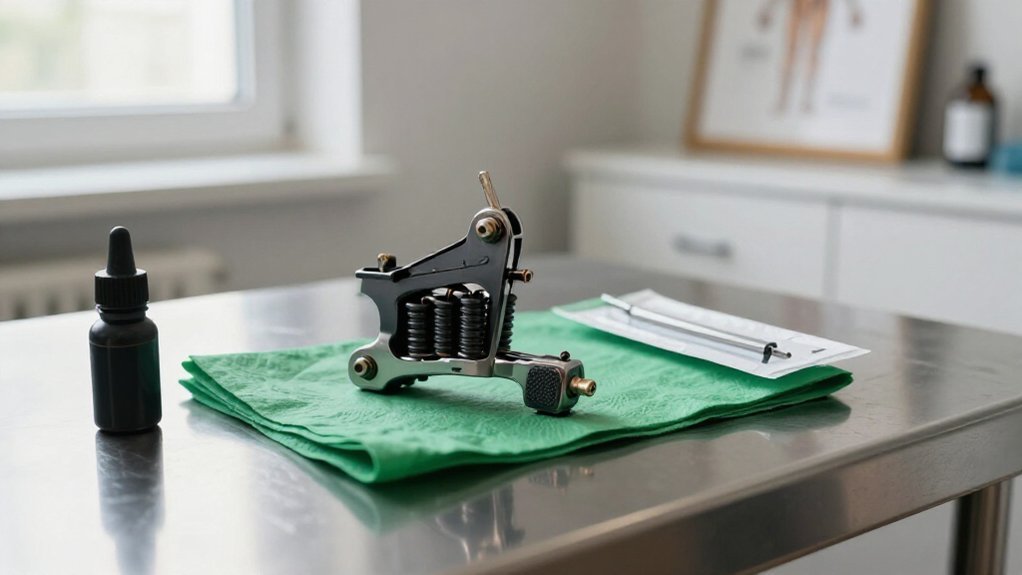
You might assume tattoo safety rules are universal, but Texas sets its own standards through DSHS licensing that many artists overlook.
Your studio must meet strict infection control protocols: validated autoclave cycles with documented logs, OSHA bloodborne pathogen training, and puncture-resistant sharps containers.
You’ll need disposable gloves for every client, antiseptic surface disinfection between appointments, and proper hand hygiene with documented procedures.
These requirements aren’t suggestions; they’re enforced through unannounced health inspections that can shut down non-compliant operations.
Core Safety Requirements Every Tattoo Studio Must Meet
Because your health depends on it, every tattoo studio must meet core safety requirements before you ever sit in the chair. Tattoo safety demands strict hygiene standards that protect you from blood-borne pathogens.
1. Personal Protective Equipment and Hand Hygiene
Your artist must wash hands for 20 seconds, use antiseptic rubs, and wear fresh gloves for every client. This hygiene protocol minimizes exposure risks.
2. Tool Sterilization
Studios must use sterile, single-use needles. Non-disposable tools require cleaning, then sterilization autoclave processing with steam under pressure. Effectiveness is monitored and documented.
3. Surface and Waste Protocols
The workstation needs antimicrobial disinfection between clients, with intact barriers on contact points. Artists must properly dispose of sharps in designated containers.
These safety and hygiene practices minimize the risk of infection. Verify your studio follows them.
Recommended Products

EFFICIENT AUTOCLAVE STERILIZER – Efficient Steam Sterilization for Daily Use with preset programs: 121°C / 30 min and 134°C / 10 min. Sterilization time starts once the chamber reaches target temperature (heating & exhaust not included) for fast and effective results

Characteristic of magnetic induction switch system.

5.25” x 11” Practicon Sterilization Pouches
How to Get Licensed and Pass Health Inspections
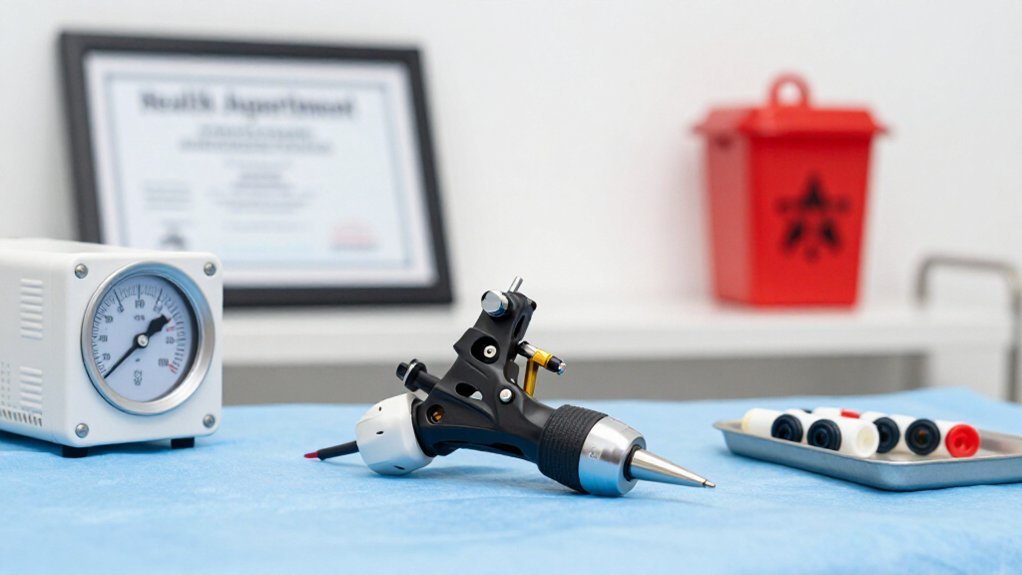
Meeting core safety standards is only the first step; you also need proper licensing to operate legally. States require TBP.reg/DSHS licensing for any Tattoo Studio offering Professional tattoo services. In Texas, you’ll complete your application online through the Regulatory Services Online Licensing System.
Meeting safety standards is just the beginning—proper licensing is what keeps your tattoo studio operating legally in Texas.
To get started, create an account, receive your one-time password, and visit vo.ras.dshs.state.tx.us. Select the “Tattoo and Body Piercing” board, choose “Initial Tattoo Studio Permit,” and upload your zoning letter. For temporary events up to seven days, include your specific dates.
Once licensed, you’ll face regular health inspections. Make sure your studio demonstrates proper sanitation protocols throughout the Tattooing process, a sterile environment with autoclave standards and barrier protection, and cross-contamination controls, including fresh gloves for each client.
Tattoo artists must also maintain accurate records. Email tbp.reg@dshs.texas.gov for location, DBA, or ownership changes. Local health departments enforce these rules to protect everyone involved.
Recommended Products

Complete Protection: Includes essential items like gloves, face mask, gown, and a biohazard bag to ensure full protection during cleanup.

Bodily Fluid Clean Up Pack|Use as a BBP Kit refill, addition to first aid kit or cabinet, or use as a stand-alone BBP kit

This Premium Bloodborne Pathogen & Bodily Fluid Spill Clean Up Kit meets federal OSHA regulations, in 29 CFR 1910.1030 Bloodborne Pathogens. Designed to provide essential supplies needed for cleaning up a blood borne pathogen or bodily fluid spill
Autoclave Procedures That Prevent Client Infections
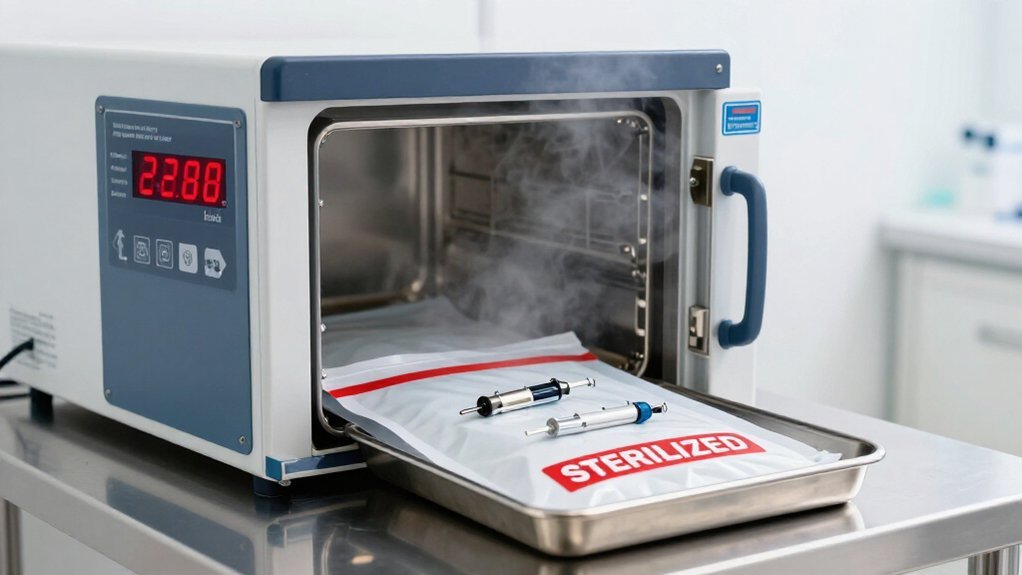
While licensing gets you through the door, your autoclave is what keeps clients safe from serious infections. You must follow strict autoclave procedures to meet tattoo industry safety standards and prevent cross-contamination.
1. Clean Before You Sterilize
You can’t sterilize dirty tools. You must fully clean instruments first to remove clients’ blood and ink residue, because leftover organic material blocks sterilization and leaves clients vulnerable to skin infections, HIV and hepatitis.
2. Run Validated Cycles
You must follow your autoclave’s exact time, temperature, and pressure settings for each wrapped load. You need to log every cycle for traceability, and you should never guess at parameters.
3. Verify and Store Properly
You must use chemical indicators on each load and biological spore tests on schedule. You should keep sterilized items wrapped until use.
4. Handle Sharps Correctly
You must use single-use items like pre-sterilized needles per client, and you need immediate disposal of used sharps into regulated containers so sterilization actually protects clients.
Recommended Products

DURABLE AND HIGH QUALITY – The durable and high-quality sharps container is constructed of puncture and impact resistant material.

Versatile Use: 1 Quart sharps disposal container for home use, hospitals, labs, and EMS; holds needles, lancets, and injector pens.

DURABLE AND HIGH QUALITY – The durable and high-quality sharps container is constructed of puncture and impact resistant material.
Required Safety Training and Protective Gear
Before you touch your first client, you’re required to complete OSHA-approved bloodborne pathogens (BBP) training, which teaches you how to protect yourself and others from hepatitis, HIV, and other serious infections you’ll encounter in this work. You’ll learn proper protocols for minimizing the risk of cross-contamination during every tattoo session.
You must wear gloves consistently throughout each procedure. Use disposable gloves, and change them for every client without exception. This barrier protects you from bodily fluids, including blood and plasma that contact your skin during tattooing.
Your training also addresses sharps disposal risk, teaching you to immediately place used needles in puncture-resistant containers. Additional protective measures include wearing face masks and eyewear to block splashes during procedures, washing hands with antibacterial soap before and after glove use, and providing clear aftercare instructions to support proper healing.
Recommended Products

20pcs 1inch/25mm disposable tattoo tubes with needles.

1.PACKING:Tattoo needles are individually blister packaged,stamped with expiration date

Designed for Fluid Tattooing Sessions - Peak Quartz Tattoo Needle Cartridges are designed for smooth tattooing sessions and performance. Smoky in color, the needles feature an inner membrane that prevents the backflow of pigment.