
You’re considering a lion tattoo, and you’ve already sensed it carries more weight than mere aesthetics. The image means something different inked on your chest than on your shoulder, rendered in sharp geometry versus raw realism. But you don’t yet know how placement shifts the message, or why a lioness tells a separate story entirely. Something essential remains unexplained—and it sits just beneath the surface.
Key Takeaways
- Lion tattoos signify universal symbols of power, protection, and sovereignty across ancient cultures and modern traditions.
- They represent courage, dominance, and nobility as shorthand for personal strength and leadership qualities.
- Geometric designs emphasize intellect and control, while realistic styles honor raw authenticity and primal force.
- Gender expression varies: male lions convey commanding protection, lionesses depict matriarchal strength and nurturing power.
- Placement choices transform meaning—chest reveals vulnerability, back carries weight, hidden spots hold private significance.
Recommended Products

1. Safe and Healthy: Meet rigid safety and non-toxic materials standard, no irritation to the skin. Plus, It also has Clean Dry Protection Skin antiperspirant and deodorant functions.
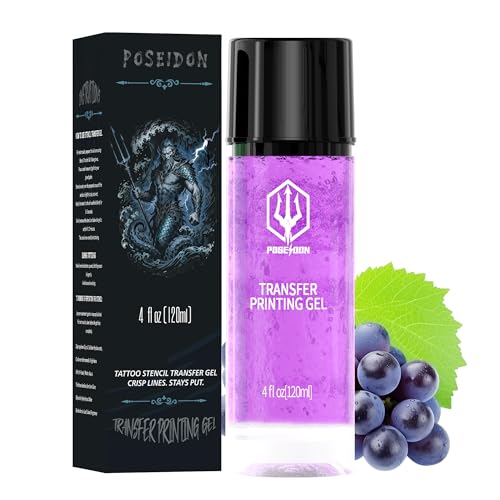
【CRYSTAL-CLEAR & PRECISE TRANSFERS】Achieve flawless, sharp stencil lines every time. Our professional-grade gel transfers your artwork onto the skin with exceptional clarity, capturing even the most intricate details. Prevents smudging or fading for a perfect outline to guide your tattoo work.

15 sheets transfer paper
What Lions Have Symbolized Across History and Cultures
Why do lions command such universal reverence? You’ll find they’ve dominated symbolism across millennia. In ancient Egypt, you see them protecting pharaohs as embodiments of power.
You encounter them in Greek mythology, where the Nemean lion’s hide becomes Hercules’s invincible armor.
When you examine Asian traditions, you discover Chinese guardian lions standing watch at temples, and you realize Japanese samurai adopted them as courage emblems.
You spot them on English royal crests, where they’ve represented sovereignty since medieval times.
You find African cultures honoring lions as spiritual guardians and ancestral messengers.
You recognize how Babylonians, Persians, and Indians each woven them into their cosmologies.
You understand that no single culture invented this reverence; you witness humanity collectively choosing the lion as shorthand for dominance, protection, and nobility across every continent.
Recommended Products

Vibrant Metallic Colors & Versatile Designs: Create eye-catching body art with 8 metallic colored markers that deliver shimmering, bold lines. The temporary tattoo markers kit includes 12 reusable stencils. Perfect for holidays, parties, cosplay, or everyday creativity

【 575+ Fun Assorted Tattoo Stencils 】-The ChurlChurl tattoo stencils collection includes 575 high quality stencils with multiple themes. enjoy cute trendy tattoo stencil designs like butterflies, words, flowers, symbols, totem, Egypt style patterns and more.

▶ Henna Tattoo Kit: 16 sheets tattoo stencils. airbrush tattoo stencils suitable for tattoo lovers. Experience the effects of tattooing without the pain of tattooing.
Why a Geometric Lion Means Something Different Than a Realistic One
Every artistic choice you make reshapes meaning, and when you choose between geometric and realistic lion designs, you’re selecting entirely different symbolic languages.
You pick a geometric lion when you value intellect over instinct. Clean lines and fractured shapes strip away flesh and fur, leaving pure structure. You’re celebrating mathematical precision, modern minimalism, and the idea that strength can be calculated and controlled. This style speaks to engineers, architects, and thinkers who see power as something you construct.
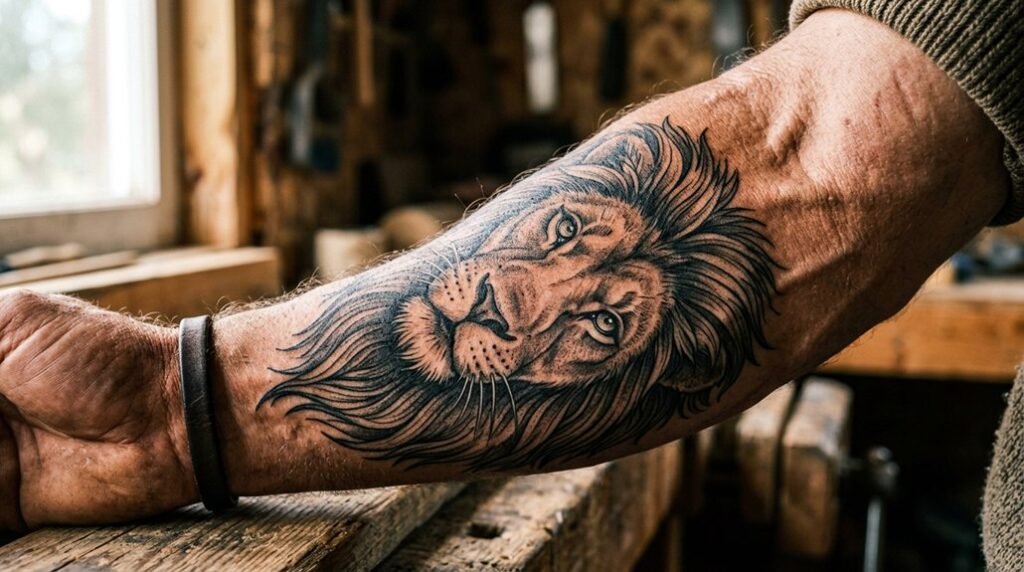
You select a realistic lion when you want raw authenticity. Every whisker and shadowed muscle connects you to nature’s unfiltered force. You’re honoring tradition, respect for wildness, and the physical presence of something untamed. This approach demands technical mastery from your artist and shows you don’t need abstraction to convey meaning.
Recommended Products

Tattoo Needle Set Contains:#12 Tattoo Needle 03RL,05RL,07RL,09RL,11RL,07RM,09RM,11RM,13RM,15RM 2pcs each, we launch this experience set to meet the needs of beginners on the common tattoo needles, you can only buy a box of needles can experience 10 tattoo artist commonly used models to enrich your practice, we have enough confidence to make you fall in love with this tattoo needle!

Package: 50pcs mixed size tattoo cartridge needles set, includes 5pcs each of 1005RL, 1007RL, 1009RL, 1205RS, 1207RS, 1209RS, 1015M1, 1021M1, 1015RM, 1021RM; Those tattoo needles can be used for lining and shading, which can assist you to complete the entire tattoo work

Poseidon cartridge adopt a one-time joint design hygienic standard The material is stainless steel and easy to color,and has better ink flow
Placement and Pain: Chest, Back, Sleeve, and Hidden Spots
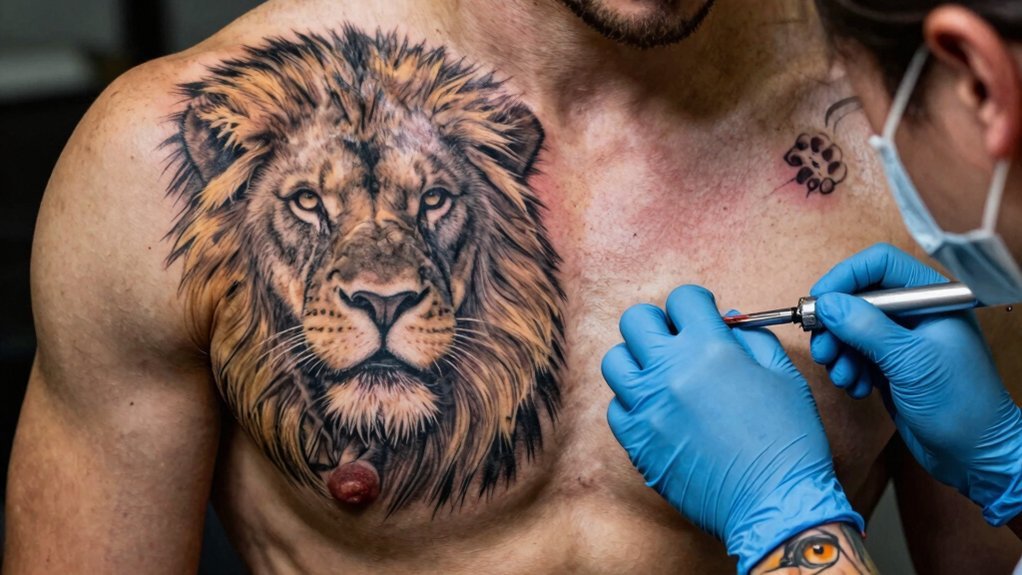
Where you place a lion tattoo changes everything about how it moves, breathes, and commands attention. You feel the lion’s power differently when it spans your chest, heart beating beneath its jaws.
The back offers canvas for sprawling manes, each session testing your endurance across bone and muscle.
You choose a sleeve when you want the lion to travel with every gesture, wrapping strength around your arm like armor.
Hidden spots—ribs, hip, behind the ear—let you carry private courage, revealed only when you decide.
Pain varies: chest stings over sternum, back tolerates well, ribs seize your breath.
You balance visibility against discomfort, permanence against daily encounter.
Your placement choice shapes meaning as much as the image itself.
Recommended Products

Small removable fake temporary tattoo stickers for women and men, motivational inspiring encouraging quotes, cursive letters words phrases, sayings, writings and scripture tattoos. Size: 5.7x9.7 cm (2.25x3.8 inch).

REALISTIC LION DESIGN::-- These lion temporary tattoos feature highly detailed and lifelike lion head designs, perfect for men, women, and teens looking for bold cosplay or party accessories.

Amazing Product: Different from you know ordinary temporary tattoo stickers or fake tattoos. It is so real and comparable to the real tattoo. It is a semi-permanent technology, waterproof, friction-resistant, and can last for a long time, staying on your skin for 1-2 weeks.
How Lion Symbolism Shifts for Feminine and Masculine Expression
How does a symbol as raw and territorial as the lion bend to fit your own expression?
You’ll find the lion adapts to you, not the other way around. If you identify with masculine energy, you’ll likely gravitate toward the male lion’s commanding presence: full mane, bared teeth, dominant stance. This channels protector roles, leadership, and ancestral strength.
If feminine expression resonates, you’ll connect with the lioness—the hunter, the provider, the fierce matriarch. She represents quiet power, strategic patience, and maternal ferocity. You might choose flowing lines, softer geometries, or paired cubs.
Yet these boundaries blur. You can embody both. A minimalist lioness speaks to understated power. A roaring male lion with botanical elements merges softness and dominance. Your tattoo becomes uniquely yours when you claim the meaning that pulses truest in your chest.
Recommended Products

💎【67 Sheets Black Tiger Lion Temporary Tattoos For Men Women Designs!】Every Package Includes 12 Sheets Large Tribal Lion Tiger Temporary Tattoos Sleeve For Men Women Adults and 55 Sheets Small Temporary Tattoos Inspired Quotes Letter Paw Feather Birds Ghost Bat Pirate Anchor Butterfly infinity Cross Geometic Triangle Spider Spiderweb Ship Gangster Wolf Tattos Elephant Eagle Dragon Skull Gothic Skeleton Devil Compass Flower Tatoos Mountain.

⚡Awesome Artistic Wildlife Styles Fake Tattoos for Men -- Super stylish design temporary tattoos, set includes variety of animals elements that you can use for different locations on your shoulder, arms, chest, etc. Easy to share it with your family and friends.

✔[ANIMAL FLOWER TEMPORARY TATTOO] Briyhose Realistic Tiger Lion Floral Tattoos Temporary Can Cover Your Body Parts Large. It Contains 8 Sheets 8.27 * 5.83 Inch (21 * 14.8cm) Realistic Half Sleeve Fake Flower Animal Tattoo Stickers For Adults Women Girl Tatto Kit. You Can Share It With Your Family And Friends.
5 Questions to Ask Before Committing to a Lion Tattoo?
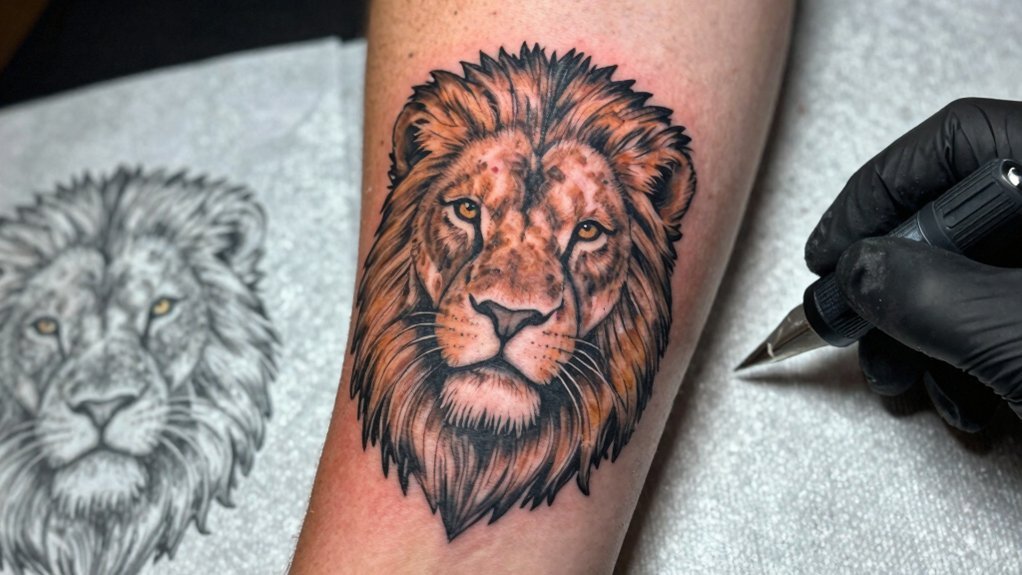
Why commit to ink before you’ve interrogated the impulse? Ask yourself these five questions.
First, what story are you telling? A lion carries weight—determine if you’re claiming strength, honoring heritage, or masking insecurity.
Second, where will you place it? Visibility shapes perception. Consider how employers, partners, or your future self might interpret this placement.
Third, which style resonates? Photorealistic, geometric, or tribal—each variant alters meaning dramatically.
Fourth, can you tolerate permanence? Laser removal hurts more than initial application; your relationship with this symbol must outlast trends.
Fifth, have you researched your artist? Their portfolio reveals technical competence. Mediocre execution transforms majesty into parody.
Answer honestly. Your skin deserves intention, not impulse.
Recommended Products

SMUDGE-PROOF, LONG LASTING & PRECISE - Our Tattoo Stencil Transfer Gel is a professional product that ensures excellent adhesion and precise transfers while preventing smudges or fading.

⭐ESSENTIAL FOR TATTOOING - This tattoo transfer paper is an essential tool for professional and beginner tattoo artists alike, allowing them to create high-quality, long-lasting stencil transfers that ensure clear and accurate designs

About the Stencil: You will receive 4 pieces animal themes Lion head stencil and 1 piece plastic paint brush, the stencil is made of high quality PET Plastic with good flexibility, durability, professionally cutting, smooth edges, rounded edges and corners, can serve you for a long time. Size: Painting Stencils: about 5.9inch wide, 5.9inch long, Plastic Paint Brush: 6.3x0.28x0.2inch.
Conclusion
You’re choosing more than ink—you’re claiming a legacy. Your lion tattoo distills millennia of courage, protection, and power into personal mythology. Whether geometric restraint or roaring realism adorns your chest, back, or sleeve, you’ve mapped meaning onto skin. Lion or lioness, masculine or feminine, the symbol bends to your story. Ask yourself why, where, and how before the needle hits. Then wear it boldly: you’ve joined ancient guardians and modern seekers alike.
Recommended Products

Detailed Lion and Tiger Designs::-- This set includes 9 sheets of full arm and half arm temporary tattoos, featuring powerful and realistic lion, tiger, and cross designs, perfect for any event, from cosplay to parties.

INCREDIBLE VALUE – 281 Unique Designs: This extensive henna tattoo kit includes 281 diverse patterns suitable for full creativity across hands, arms, and body. Featuring mandalas, florals, paisley, and geometric motifs, these flexible henna stencils allow you to mix and layer styles freely. The collection of henna temporary tattoos ensures you always have the perfect design for festivals, parties, or personal expression

VARIETY OF OPTIONS - This set of temporary tattoo stencil includes 262 different theme patterns. butterfly, mermaid, flower,pirate,animal,shark,crown, dinosaur etc daily kid’s favorite design, also have like as pumpkin, spider, bat, skull, snowflake, etc Halloween, Christmas festive Style in 14 pages A4 size.