
You’re considering a moon tattoo, but you haven’t settled on what it should say about you. The symbol carries weight—cycles, secrets, transformation—yet its meaning shifts dramatically with a single design choice. A crescent whispers one story; a full moon shouts another. Before you commit, you’ll want to understand how each variation reshapes the message you wear.
Key Takeaways
- Moon tattoos symbolize cycles, change, and personal transformation across cultures worldwide.
- Crescent moons represent new beginnings; full moons signify completion and fulfillment.
- Cultural meanings range from Japanese beauty to Celtic feminine power and Hindu emotional influence.
- Black ink creates timeless, shadow-heavy imagery; color adds emotional depth and personal mythology.
- Placement shapes meaning: behind the ear for secrecy, collarbone for declaration, ribcage for vulnerability.
Recommended Products

PACKAGE INCLUDES: You will receive a set ,5pcs moon phase stencils, each measuring 11.8 x 11.8inch/30 x 30cm, 1mm thick. Recording the different variations of the moon from the first quarter to the full moon, the rich and varied patterns can meet your DIY needs. NOTE:Please refer to the picture for the detailed pattern size on the stencil.

Moon Phase Stencil: You will receive 10 pieces of painting stencils which have beautiful patterns in border theme. There are moon phase, mountain, sun patterns on the stencils. Our templates are suitable for you to make small border decoration by yourself.

Layered Moon Stencil: You will receive a creative hollow out painting template with a space theme. The stencil is patterned with moon, including the moon, the full moon and the crescent moon. also decorated with stars.
Moon Tattoo Meanings Across Cultures
Why does the moon captivate so many cultures? You’ll find the answer woven into centuries of symbolism. In Japanese tradition, you embrace the moon as a symbol of beauty and impermanence—think of Tsukuyomi illuminating the night. You discover Hindu beliefs where Chandra governs emotions and fertility, making lunar ink deeply personal.
You encounter Native American tribes who’ve tracked moon cycles for planting and hunting—you’re carrying that same rhythm when you choose this tattoo. In Ancient Greece, you’re connecting with Selene’s eternal chase, while Celtic druids saw the crescent as sacred feminine power.
You’ll notice Chinese culture celebrates the moon during Mid-Autumn Festival—you’re honoring family unity. Each culture offers you distinct layers: transformation, cycles, mystery. When you wear a moon tattoo, you’re not selecting mere decoration. You’re claiming humanity’s oldest shared language.
Recommended Products

Amazing Product: Different from you know ordinary temporary tattoo stickers or fake tattoos. It is so real and comparable to the real tattoo. It is a semi-permanent technology, waterproof, friction-resistant, and can last for a long time, staying on your skin for 1-2 weeks.

⚡ Four 6"x9" sheets with 32 tattoos inspired by our deep connection to the cycles of the moon

How to Choose Your Moon Phase
How exactly do you pick the phase that speaks to you? Start by asking what you’re honoring. You track the full moon if you celebrate completion and fullness. You choose the crescent if you’re embracing new beginnings or holding mystery close. You mark the gibbous if you’re building toward something unfinished.
Consider your birth phase. You calculate where the moon sat when you entered the world, tying permanence to your origin. You also reflect on seasons of change—did you launch a career under a quarter moon? End a chapter at waning?
You avoid picking blindly. Each phase carries weight: waxing pulls toward growth, waning releases. You match the shape to your story, not aesthetics. Let the moon mirror where you’ve been or where you’re headed.
Recommended Products

✅ MIXED CONFIGURATIONS FOR VERSATILITY – Includes 20 cartridges (#06/03RL - #12/11RL), perfect for micro realism, fine lines, and portrait tattoos.


【High‑Quality Premium Materials】 Crafted with sharp 316L stainless steel bugpin needles for long‑lasting durability. Premium plastic housing and flexible silicone ensure stable smooth operation. Single‑use disposable design keeps tattoo practice clean for artists and beginners.
Moon Tattoo Styles That Match Your Aesthetic
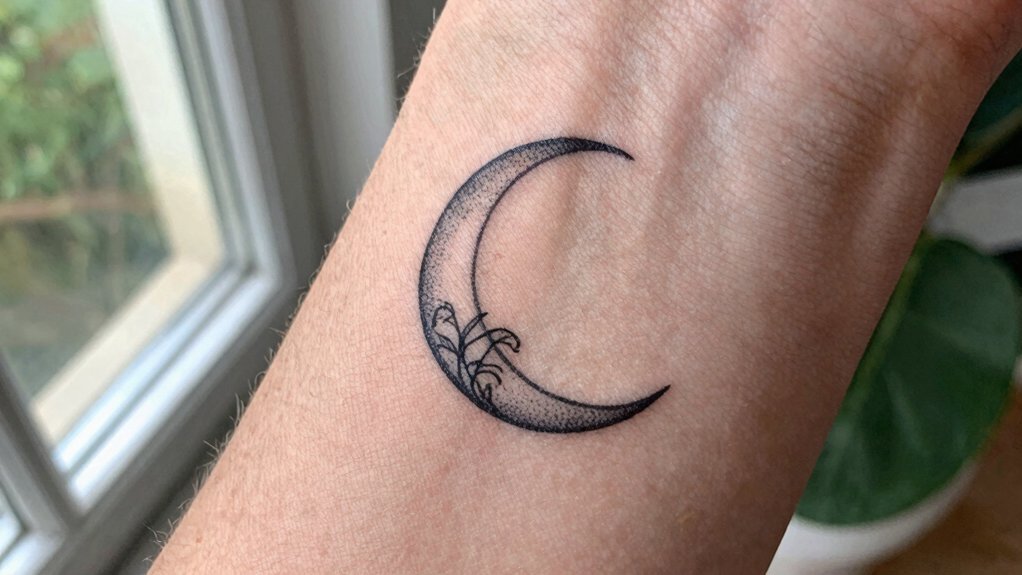
Where exactly do you land between delicate linework and bold geometry? You’ll discover your answer by examining your personal aesthetic. If you gravitate toward minimalism, you’ll love single-needle moons with whisper-thin contours. You’ll find they pair beautifully with fingers, collarbones, or behind your ear.
Perhaps you’ll embrace ornate Victorian styling instead. You’ll see crescents wrapped in baroque flourishes, antique frames, or botanical elements. You’ll feel these suit larger placements like your thigh or upper arm.
For those drawn to spirituality, you’ll connect with sacred geometric patterns—metatron’s cubes, mandalas, or pointillism surrounding your lunar choice. You’ll notice how stippling creates texture without overwhelming lines.
You’ll also encounter watercolor washes, though you’ll remember those involve color considerations. You’ll ultimately select what resonates with your existing wardrobe, your other tattoos, or the energy you carry daily.
Recommended Products

Package Includes: You will receive 20 sheets reusable tattoo stencils, enough quantity to meet your daily requirements. The mehndi stencils are suitable for airbrush painting, glitter tattoo, and so on.

【Henna Tattoo Kit】 16 sheets tattoo stencils. Henna stencils for hands. airbrush tattoo stencils suitable for tattoo lovers. Henna tattoo kit for beginners. Experience the effects of tattooing without the pain of tattooing.

[Tattoos Stencils Kit]: 40 sheets Ramadan style tattoo stencils featuring moon,star, butterfly,floral,lamp design. Enough quantity and different pattern for you unleash your creativity and adorn yourself with beautiful henna designs. Variety of options to meet your every need.
Moon Tattoo Color: Black Ink vs. Color
When you’re choosing between black ink and color for your moon tattoo, you’re really deciding what kind of presence you want on your skin.
Black ink delivers timeless gravity. It ages gracefully, stays legible, and carries a stark, poetic weight that mirrors the actual moon’s silvery isolation. You might choose this for gravity, eternity, or restraint.
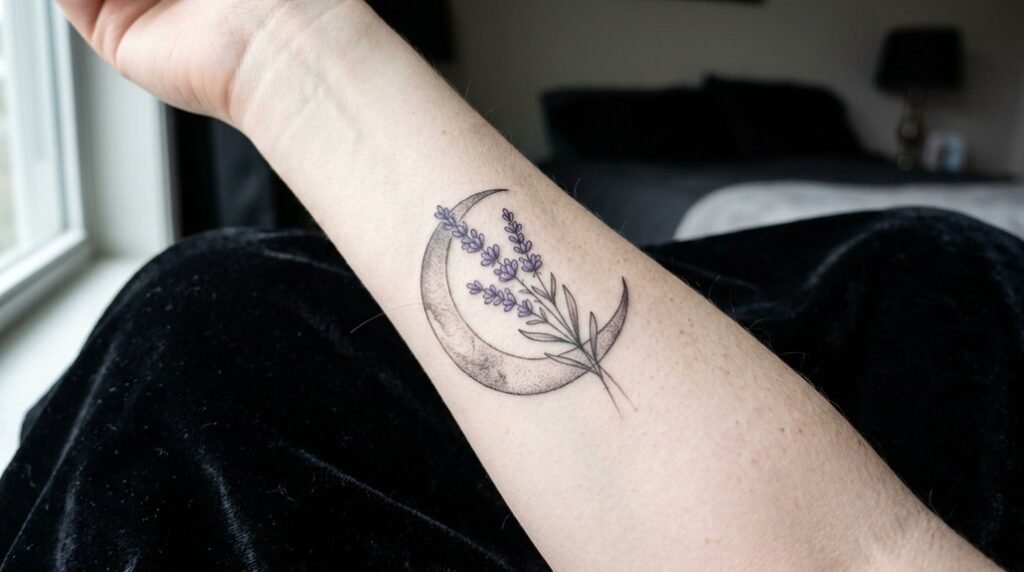
Color cracks the symbolism open. Blues evoke depth and mysticism; purples suggest dreams or bruised emotion; yellows and oranges capture the harvest moon’s warmth. You tattoo the moon in full chromatic swagger when you want joy, transformation, or a personal mythology that refuses to fade quietly into skin.
Consider your healing too. Color demands more touch-ups. Black endures.
Your choice reveals whether you see the moon as shadow or spectrum, silence or song.
Recommended Products

★【28 Sheets! Variety Outer Space Temporary Tattoos For Women Men Kids】--Contain More Than 500 Exquisite Designs COKTAK Brand Variety Waterproof Temporary Tattoos For Kids Boys Girls Teens Fashion Hot Popular Designs Tattoo Stickers in One Package.【Size】: 28 Sheets Cute Universe Small Temporary Tattoos Stickers For Kids aughters Son Children 10.5x6CM 4.1x2.3inch.

[Semi-Permanent, Realistic Tattoos] INKARTLINK semi-permanent tattoos are lifelike, durable, waterproof, and sweat-resistant, lasting 7–14 days and gradually fading as the skin’s outer layer sheds. They’re perfect for everyday wear, events, or themed occasions. From the beach to the office, they stay vibrant, allowing you to effortlessly showcase your body art in any setting.

High quality fashionable temporary tattoo, which looks like real
What Your Moon Tattoo Placement Reveals
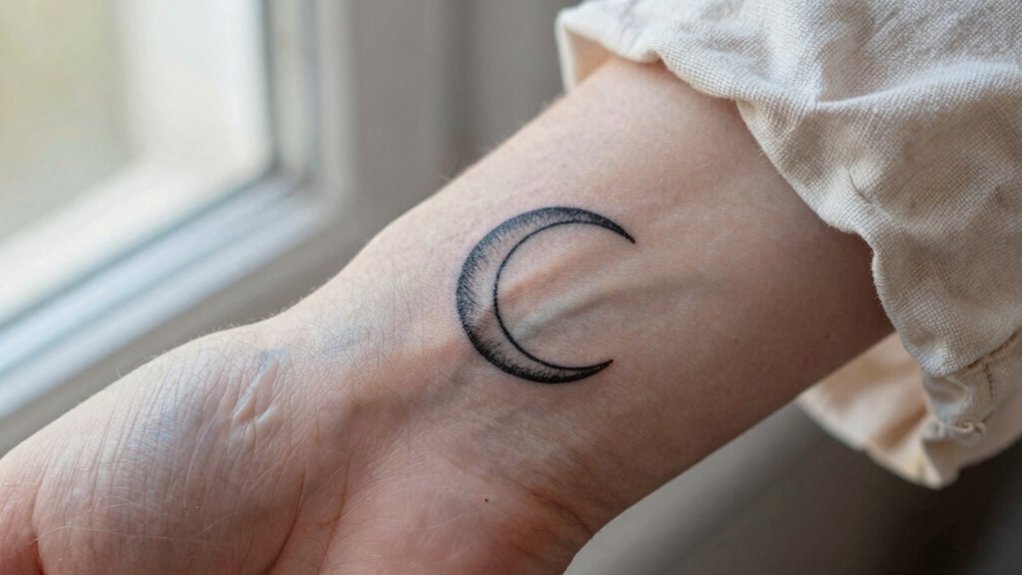
Why does a crescent moon behind your ear hit differently than one stretched across your collarbone? You’re choosing between whisper and declaration.
When you tuck a moon behind your ear, you’re speaking secrets. You catch glimpses in mirrors, forget it’s there, then remember—intimate, almost hidden. You control who sees. You’re mapping personal cycles, marking private transformation.
Stretch that same curve across your collarbone? You’re occupying space. You demand attention. The collarbone frames the throat, the voice. You’re willing your interior life outward.
Your wrist speaks movement, change, daily visibility.
Your ribcage guards vulnerability, presses memory against bone.
Your ankle grounds you, roots lunar pull into walking.
Where you place your moon tells what you’re ready to reveal. Skin becomes strategy.
Recommended Products

Moon Phases Stencil: You will receive 1 pc moon phases pattern stencil. Reusable DIY plastic stencil that can bring fun to your daily DIY projects, perfect for moon phases enthusiasts for house decorating! add a splash of color to your life. Please note: This product is intended for ages 14 and above.

High quality fashionable temporary tattoo, which looks like real

6PCS Sun Moon Stars Stencils: You will receive a creative hollow out fantasy theme template with 1PC plastic paint brush. The template features sun, moon, clouds, stars, moon phases and dream catchers patterns, unique designs will surely design inspire you.
Moon Tattoo Variations: Adding the Sun
The solitary moon only tells half your story. You complete it when you add the sun, capturing cosmic balance on your skin. This pairing speaks to duality—the light you show and the shadow you keep.
You choose this design when you recognize opposing forces within yourself. The sun represents your conscious energy, your outward drive. The moon holds your intuition, your hidden depths. Together, they trace the line between masculine and feminine, action and reflection.
You might encircle them, overlap them, or place them at your wrists like eternal promises. Some of you add stars, planets, or eclipse moments where they meet. The style shifts the meaning—geometric lines suggest order; flowing watercolor embraces chaos. You’re mapping how opposites attract, not just in the sky, but in your own nature.
Recommended Products

🐙9 Sheets 110+ Designs Unique Flash Temporary Tattoos:🐠 There Are 9 Large Sheets Gold Temporary Tattoos For Women Adults 21x15cm 8.2"x5.9" Crystal Diamond Face Gems Fake Jewelry Jewels Sparkle Sun Moon Star Feather Indian Tribal Lion Bracelet Chains Butterfly Mandala Flower Metallic Tattoos Decal Paper Festival Accessories.

✨ INSTA GLAM GLITTER FRECKLES Create instant viral-inspired glitter freckle makeup looks with premium waterproof metallic makeup patches for face and body. These blue ombre and silver celestial moon and star freckle and motifs deliver a sparkling glitter effect inspired by TikTok beauty trends, festivals, and editorial glam.

Exquisite body art that can be worn in place of jewelry. Celebrity inspired.
Personalizing Your Moon Tattoo Meaning
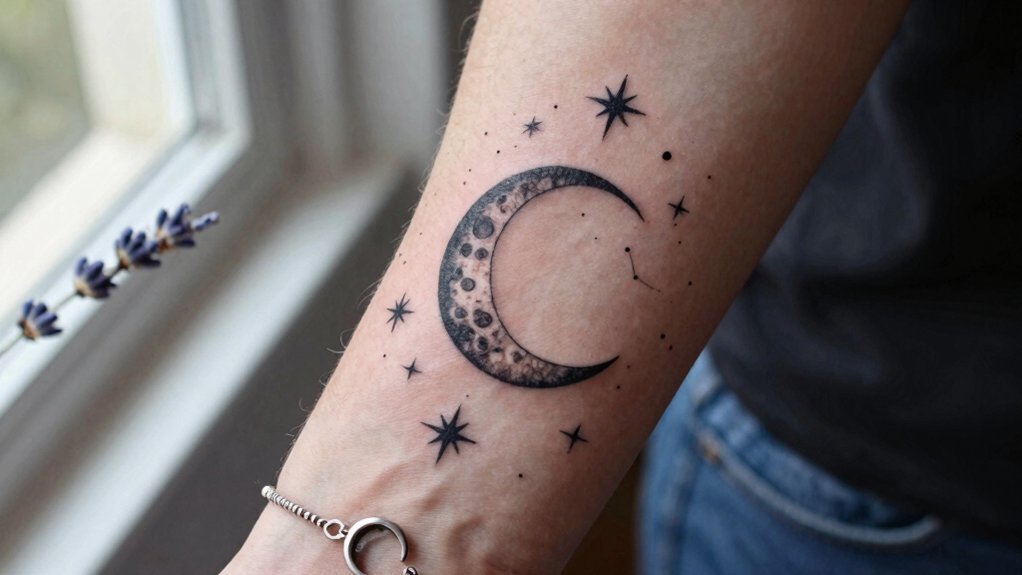
How do you make the moon truly yours? You combine it with symbols that mirror your journey. Add a wolf if you’ve embraced your wild independence. Pair it with waves if you’ve overcome turbulent times. You choose specific phases that mark pivotal moments—your firstborn’s date, your sobriety anniversary, the night you left home.
You don’t copy popular designs. You sketch your grandmother’s crescent pendant from memory. You request your artist stipple the craters exactly as you photographed them during that camping trip. You place the tattoo where only you see it, or where everyone must.
Color shifts meaning too. Black ink holds gravity; watercolor suggests fluidity. You decide what the moon carries for you. Your skin writes the story.
Recommended Products

Package: 50pcs mixed tattoo cartridge needles, includes 10pcs each of 1203RL, 1205RL, 1207RL, 1209RL, 1211RL.

Poseidon cartridge adopt a one-time joint design hygienic standard The material is stainless steel and easy to color,and has better ink flow

【Mast Pro SMP】Developed by Mast Tattoo,this series is exquisite in every step with a unique style stabilizing system.Mast pro SMP is designed to provide the maximum ideal cartridge needles
Conclusion
You carry your own cycle of becoming, and the moon you etch becomes a mirror for that journey. Whether you choose a slender crescent or full glowing orb, black ink or violet wash, placement whispers your private truth. Trust what pulls you—meaning lives in the choosing, not the dictionary. Your tattoo holds only what you give it.
Recommended Products

▶ Henna Tattoo Kit: 16 sheets tattoo stencils. airbrush tattoo stencils suitable for tattoo lovers. Experience the effects of tattooing without the pain of tattooing.

Geometry Stencils:Patterns including Hexagon Mandala,The Sri Yantra Torus,Sri Chakra Mandala Circle,The Flower of Life,the seed of lift,etc.The stencils for wall are designed to bring you the feel of Meditation and Mindfullness.

Package Contains: one set of 12 pcs Sacred Geometry Stencils. The size of the Yoga stencils:8.3"x11.7"(A4 Size). Different patterns that combine with many Meditation elements including Om Sacred Lotus, Chakra, the flower of Life, Tree of Life, Half Mandala, Hamsa Hand, and Moon,etc. bring you many DIY ideas which will add good vibes and positive energy to the objects you decorate.