
You’re drawn to the sun and moon tattoo, and there’s more to this pairing than meets the eye. Maybe you feel caught between two selves—the outgoing and the withdrawn, the certain and the questioning. This design speaks to that tension, but the real question is whether you’re ready to wear that duality on your skin. Before you decide, you’ll want to know what you’re actually committing to.
Key Takeaways
- Sun and moon tattoos represent merging opposing forces—light and dark, action and rest—into harmonious balance.
- They symbolize duality within oneself: conscious will meets intuitive mystery, logic pairs with emotional wisdom.
- Combined designs emphasize unity in difference; separate placements honor distinct yet interdependent energies.
- Rooted in global traditions, they draw from Egyptian, Polynesian, Norse, Japanese, and Aztec celestial symbolism.
- Color and placement shape meaning: gold sun radiates vitality, blue moon honors cycles, positioning affects visible energy.
Recommended Products
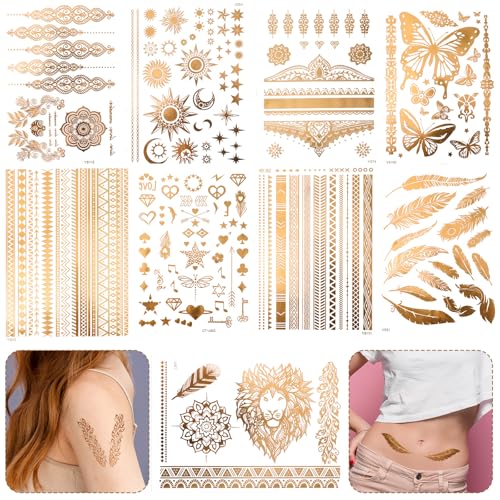
【Quality Materials】The gold temporary tattoos are made of water transfer paper and environmentally friendly ink,which is waterproof and sweat-proof and does not hurt the skin.Dazzling sequin freckles,face tattoos and festive styles instantly enhance the sense of fashion

⚡ Four 6"x9" sheets with 32 tattoos inspired by our deep connection to the cycles of the moon

【Sun & Moon Fine Line Tattoo Design】This fine-line Sun & Moon semi permanent tattoo set celebrates balance, duality, and harmony—light and dark, strength and calm. The clean minimalist design feels modern yet symbolic, making it perfect for those who appreciate celestial themes and want a meaningful reminder of balance and wholeness in everyday life.
What Sun and Moon Tattoos Represent Together
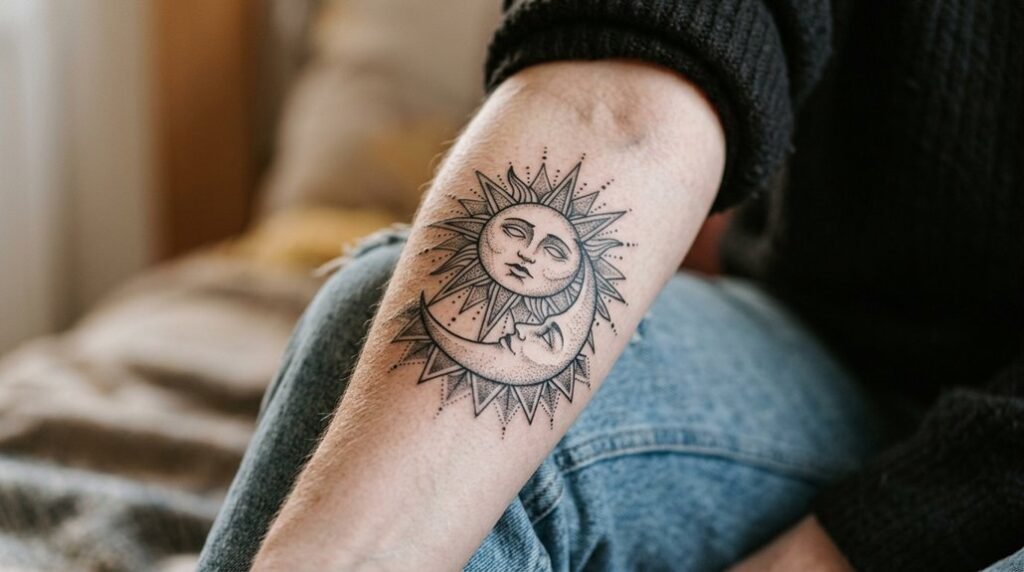
What happens when you merge two opposing forces into a single design? You create harmony from contradiction. Sun and moon tattoos embody this balance, showing you don’t have to choose between light and dark, action and rest, or logic and intuition. You’re wearing a reminder that opposing elements complete rather than cancel each other.
When you choose this design, you’re expressing duality within yourself. You acknowledge your driven, fiery side and your reflective, calm nature. You’re honoring cycles—how day becomes night, how you transform through phases. The design speaks to unity in difference, suggesting you find strength in embracing contrasts rather than denying them.
You’re also connecting to ancient symbolism. Cultures worldwide recognized these celestial bodies as complementary powers. Your tattoo continues this tradition, declaring that balance isn’t static—it’s dynamic, shifting, and alive.
Recommended Products

Quantity: 10 Pieces individual tattoo sheets, with 30+ unqiue cosmo galaxy universe designs, including boho style sun, moon, planets chain, moon and star charms tassels, shooting stars, etc.

CELESTIAL SUN AND MOON ART: Features a beautiful symbolic pairing of the cosmos across two independent sheets: one showcasing a radiant, flaming sunburst and the other depicting an ornate bohemian crescent moon flanked by geometric lines. This mystical motif is crafted using a digital hand-drawn fine line tattoo ensures crisp lines to keep the delicate starburst sparkles, fine dots, and long vertical alignment lines perfectly sharp and elegant.

Innovative Skin-Sync Technology: We don't just sit on the skin; we interact with it. By reacting organically with naturally occurring proteins in your skin's outermost layer (stratum corneum), our plant-based formula magically transforms from a transparent guide into a rich, ultra-realistic navy-black. It looks exactly like a healed, permanent tattoo—without the needles or depth.
What the Sun Symbolizes in These Designs
Radiance shapes everything you see in the sun’s half of the design. You recognize fire, energy, and unstoppable movement in its rays. The sun embodies your conscious mind—your will, ambition, and the face you show the world. It represents masculine energy in traditional symbolism, though you need not gender it to feel its power.
You choose this element to mark vitality, strength, and the life-giving force that pulls you forward. It symbolizes clarity, truth-seeking, and rational thought. In many cultures, you’ll find it tied to gods of war, prophecy, and order.
Your sun speaks of daytime action, visibility, and heat. It balances against shadow not by eliminating it, but by defining where shadow falls. You carry illumination itself—bold, exposed, and burning.
Recommended Products

Pinky Promise Bracelets - After Wearing it on wrist, i promise no matter where we go, no matter what we do, i'll always be there for you, and everything will be OK! That's Our Pinky Promise!

CUTE MATCHING BRACELETS: Sun and Moon inspired matching couples/friendship bracelets. Our paths may change as life goes on, but the bond between us remains forever strong. The perfect long-distance bracelets that makes those who are apart feel connected, as if they were never apart. Simple but powerful bracelet for him or her.

This set of jewelry features a sparkling sun pendant and a blue crystal moon pendant, symbolizing eternal love and friendship. The matching necklace, adjustable ring, and exquisite bracelet are plated with gold and silver, creating a romantic celestial appearance that complements any outfit.
What the Moon Symbolizes in These Designs
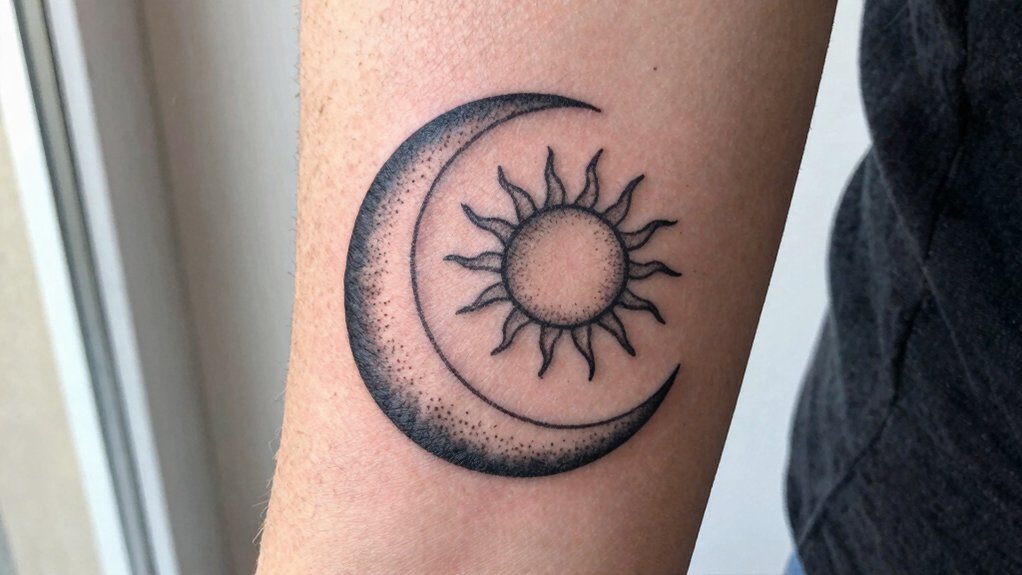
Where does light go when it surrenders? You find your answer in the moon—gentle, reflective, pulling tides you didn’t know you contained. You choose this symbol when you embrace mystery over declaration, intuition over certainty. The moon speaks of cycles you recognize in yourself: phases of withdrawal and return, fullness and diminishment. You mark your skin with crescents to claim your fluidity, your refusal to remain static.
You understand the moon as guardian of secrets, keeper of dreams you revisit at 3 AM. It represents your receptive nature, how you mirror rather than generate. When you pair it with sun, you acknowledge duality within yourself—action and reception, clarity and shadow. The moon reminds you that darkness isn’t absence but transformation, and you’re learning to trust what’s partially hidden.
Recommended Products

❤[LARGE WALL STENCIL] - Include 1pc sun and moon stencil, 11.8x11.8 inch/30x30cm. Large size meets your more needs.

What You Get: nature stencils for painting include 60pcs 3 x 3 inch small spray paint stencils with cloud, sun, boho sun, moon, stars, celestial patterns ect. Rich drawing style to create any DIY art projects, share your creativity and imagination with friends and family.

The dimensions shown are the overall stencil sheet size. The graphic fits inside the sheet and is slightly smaller than the overall sheet size
Sun and Moon Tattoo Gender Symbolism
How deeply do gendered readings of sun and moon imagery still shape your choice of tattoo? You might reject these associations entirely, yet they persist in Western tradition. You see the sun coded masculine—active, penetrating, logical—and the moon feminine—receptive, reflective, intuitive. You inherit this binary from centuries of European thought, not from universal human nature.
You can reclaim or subvert these pairings through your design. You might ink a dominant moon and diminutive sun, or fuse both into an androgynous face. You might placement them on body parts that complicate their “expected” gendering.
You should recognize that Asian and Indigenous traditions often read these symbols differently. Your tattoo operates within specific cultural grammars. You choose which systems you invoke, resist, or hybridize when you commit this duality to skin.
Recommended Products

Exquisite body art that can be worn in place of jewelry. Celebrity inspired.

9-Sheet Gold Temporary Tattoo Set: A vibrant pack of 9 gold temporary tattoos for women and adults— for festivals, parties, makeup looks, and cosplay to add a shiny, eye-catching touch.

🌊【4 Sheets Groovy 3D Blue Luminous Temporary Tattoo For Women Girls Men Adults 】TASROI Unique Design Glow In The Dark Tattoos For Girls Realistic Sparkles Crescent Moon Sun Star Chains Planets Butterflies Fake Jewels Jewelry Pendants Tattos. 【Size】4 Sheets Fake Tattoos For Women Stencils Template 6.2"x4.7".
Sun and Moon Tattoo History Across Ancient Cultures
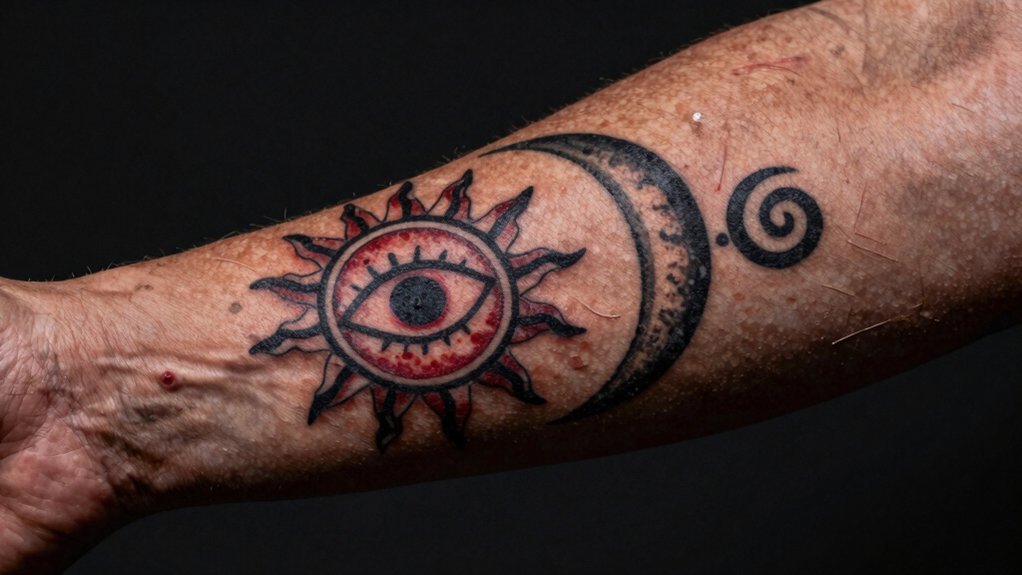
Why do you carry on your skin symbols older than written history? You’re connecting to ancient Egyptians who tattooed solar disks and crescent moons to invoke divine protection. You’re following Polynesian practitioners who marked warriors with celestial spirals representing cosmic order. You’re tracing Norse seafarers who wore sun wheels and lunar runes as navigational charms across dark waters.
In Japan, you’d find sun goddess Amaterasu and moon god Tsukuyomi inked as spiritual guardians. Aztec priests tattooed sun rays alongside moon rabbits to honor their dual deities. Celtic tribes burned solar and lunar knots into skin for seasonal rites.
Recommended Products

🐙9 Sheets 110+ Designs Unique Flash Temporary Tattoos:🐠 There Are 9 Large Sheets Gold Temporary Tattoos For Women Adults 21x15cm 8.2"x5.9" Crystal Diamond Face Gems Fake Jewelry Jewels Sparkle Sun Moon Star Feather Indian Tribal Lion Bracelet Chains Butterfly Mandala Flower Metallic Tattoos Decal Paper Festival Accessories.

Waterproof Stickers - These funny Sun Moon Temporary Tattoos Stickers are made of high quality vinyl PVC which is sun protection and waterproof, safe and durable. The design is more precise and clear, and the color hardly fades. These reusable stickers are easy to paste or peel off without leaving any residue.

Sun and Moon Tattoo Styles by Placement
What shifts when you move a sun and moon from shoulder to ankle, from spine to wrist? You change how the world sees your balance, and how you carry it.
On your shoulder, you display duality boldly. You’re declaring your contrasts openly. On your ankle, you tuck it closer—personal, private, walking with equilibrium through each step.
Your spine hosts vertical journeys: sun rising, moon descending, tracing your core strength. Your wrists cradle miniature counterparts—constant reminders at your pulse, visible when you reach, create, connect.
Your chest holds intimacy near your heartbeat. Your forearm offers conversation, easily shown or concealed. Behind your ear, you whisper cosmic secrets to yourself.
You choose where your sun and moon live. That placement becomes part of your meaning.
Recommended Products

【102 SHEETS/LOT】- 102 sheets temporary tattoos, Halloween tattoos include black scary wolf lion tiger skeleton skull temporary tattoos stickers size 4.1*2.4 inch (10.5*6cm), used for arms, shoulders, back, legs and any other part of your body. Semi permanents tattoo also can apply them to some smooth objects, for example, glass, cup, stationery, plastic, phone case, car etc

CELESTIAL STARBURST ART: Features an enchanting variety of mystical cosmic icons, including bold multi-pointed stars, north stars, twinkling stardust, and delicate geometric sparkles. This dreamlike motif is crafted using a digital hand-drawn fine line tattoo ensures crisp lines to maintain the ultra-thin points, tiny dot accents, and intricate radiating lines with perfect elegance.

High quality fashionable temporary tattoo, which looks like real
Sun and Moon Tattoo Colors and Their Meanings
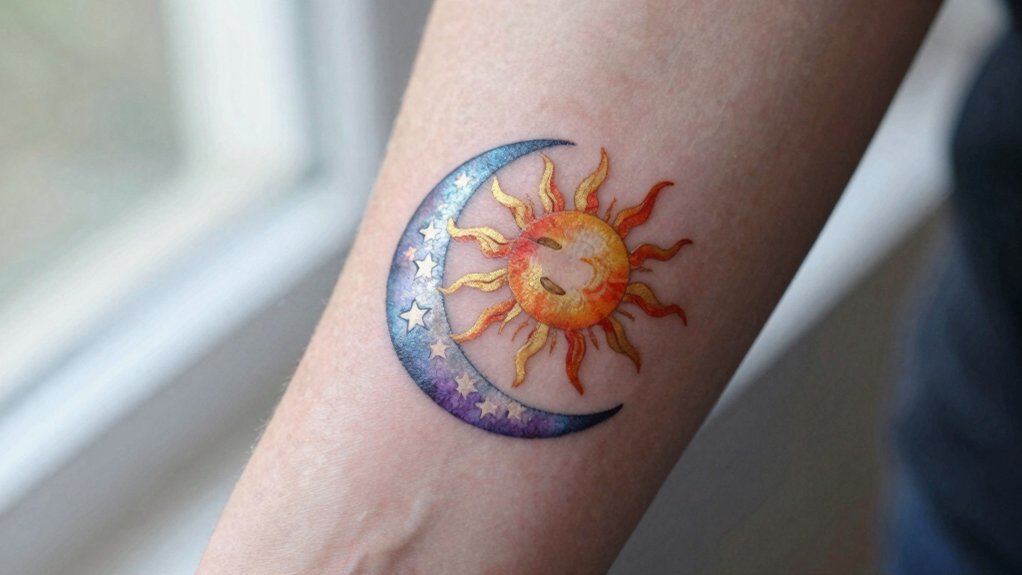
Where do you turn when black ink feels too silent for a symbol built on contrast? You reach for color, and each shade you choose reshapes your tattoo’s meaning.
You pick gold or orange for the sun, channeling raw life, ambition, and unapologetic visibility. You select cool blues or deep indigos for the moon, wrapping mystery, intuition, and nighttime calm around your skin. When you blend warm and cool tones together, you’re not just decorating—you’re staging a dialogue between force and receptivity, between the blaze of noon and the hush of midnight.
You might choose muted, earthy palettes if you favor balance over drama, or neon and watercolor splashes if you’re chasing duality with modern urgency. Your color story becomes emotional grammar: crimson hints at passion, silver suggests reflection, black negative space recedes into cosmic void. You’re encoding private significance into every hue.
Recommended Products

Sun and Moon Jewelry Sets :The jewelry set consists of 2pcs sun and moon necklace , sun and moon bracelets and sun and moon matching Ring

CELESTIAL SUN & MOON ART: Features a powerful symbolic pairing of the cosmos across two independent sheets: one showcasing a radiant, flaming solar swirl and the other depicting an ornate lunar crescent eclipsed by matching tribal flames. This celestial motif is crafted using a digital hand-drawn fine line tattoo ensures crisp lines to keep the fluid, bold curves and tapered flame points perfectly sharp and elegant.

Glowing Radiance:Illuminate your bond with this captivating couple's sun and moon bracelet set, designed to radiate luminosity in the dark after absorbing light from sources like sunlight. Witness your connection shine brightly, casting a magical glow over your relationship
Combined or Separate: Which Design Fits You?
How do you want your duality to exist—locked in eternal embrace, or standing distinct enough to breathe?
Combined designs fuse sun and moon into one form, suggesting unity, interdependence, and the seamless blending of opposites within yourself. You’ll carry a single emblem where light and darkness coexist without boundary. This suits you if you see your contradictions as intertwined, inseparable.
Separate designs position sun and moon apart—perhaps on different wrists, shoulders, or sides of your body. You’re acknowledging that your fire and your calm maintain their own spaces, their own power. They relate across distance rather than merging.
Ask yourself: do you feel whole when opposites touch, or when they face each other across open space? Your answer guides the ink.
Recommended Products

ENOUGH QUANTITY: You will get 9pcs reusable star moon tile stencils, each one is about 12 x 8 inches. Each one has a different pattern and you can pick the one you like best to decorate your walls, floors and patios.

Sun Moon Stencil: You will receive 4 pieces of painting stencils which have beautiful patterns in fantasy theme. There are 2 suns and 2 moons with emoticon and stars patterns on the stencils. Our templates are suitable for you to make handmade projects by yourself.

Package Included : This stencils for crafts set includes 12 hollow out templates in 12 styles, each measuring about 11.8x11.8 inches (30x30 cm), along with brushes. The variety provides ample options for creating layered artwork and detailed projects
Design-Specific Questions Before Your Appointment
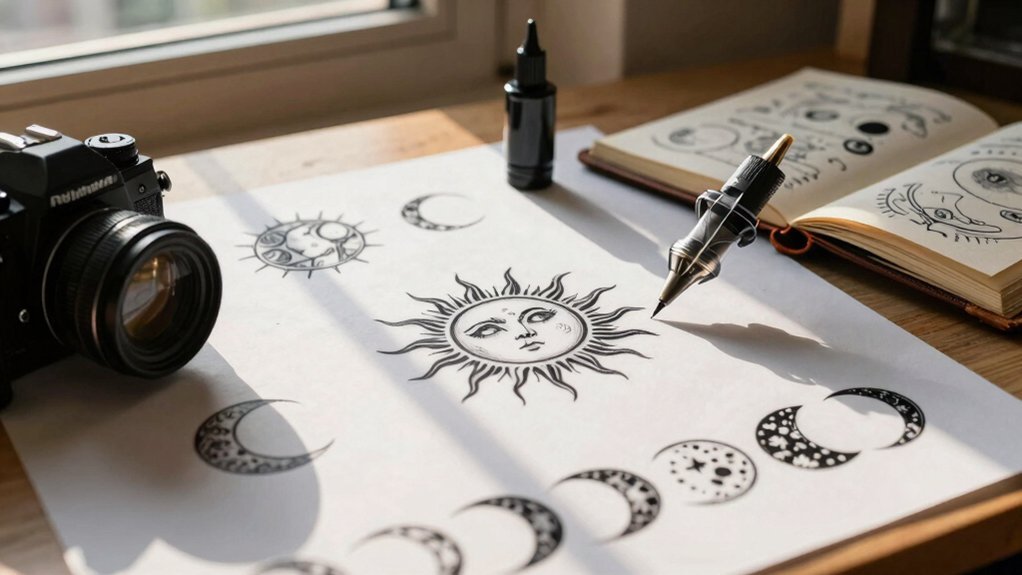
Why walk into the studio unprepared when a few decisions beforehand spare you regret later? Ask yourself: Do you want realism or stylized art? Will you incorporate color or stick to black and gray? Consider scale—delicate wrist pieces differ dramatically from bold back pieces. Think about sun rays: sharp and geometric, or soft and flowing? For the moon, decide between crescent, full, or phase sequence. You should also settle on placement’s visibility and how it ages. Bring reference images, but let the artist adapt them to your body’s contours. Discuss line weight preferences and negative space usage. Clarify if you want standalone imagery or integrated elements like stars, waves, or faces. These choices shape your consultation’s productivity and your tattoo’s longevity.
Recommended Products

★【28 Sheets! Variety Outer Space Temporary Tattoos For Women Men Kids】--Contain More Than 500 Exquisite Designs COKTAK Brand Variety Waterproof Temporary Tattoos For Kids Boys Girls Teens Fashion Hot Popular Designs Tattoo Stickers in One Package.【Size】: 28 Sheets Cute Universe Small Temporary Tattoos Stickers For Kids aughters Son Children 10.5x6CM 4.1x2.3inch.

[Semi-Permanent, Realistic Tattoos] INKARTLINK semi-permanent tattoos are lifelike, durable, waterproof, and sweat-resistant, lasting 7–14 days and gradually fading as the skin’s outer layer sheds. They’re perfect for everyday wear, events, or themed occasions. From the beach to the office, they stay vibrant, allowing you to effortlessly showcase your body art in any setting.

Conclusion
You carry dualities within you—drive and stillness, certainty and wonder—and a sun and moon tattoo captures that balance. Your design choices, from placement to palette, shape a symbol that’s uniquely yours. Whether merged or separate, celestial or minimalist, this ink reflects transformation and wholeness. Trust your instincts, collaborate with your artist, and you’ll wear a timeless reminder: opposing forces aren’t meant to divide you; they’re meant to complete you.