
You might assume all tattoos need bold outlines, but fine line work challenges that expectation entirely. It relies on single needles and minimal pigment to create crisp, almost weightless lines on your skin. The aesthetic feels lighter than traditional work, yet demands far more technical precision from your artist. Before you commit to this delicate style, you’ll need to understand exactly why it fades faster and which designs actually last.
Key Takeaways
- Fine line tattooing uses single-needle techniques to create delicate, weightless designs with minimal saturation.
- A 1RL needle deposits half the ink width of standard setups, requiring precise, slow hand movement.
- These tattoos fade faster than bold work due to shallow pigment placement and require diligent sun protection.
- Oily, thick, or aged skin challenges crispness, making simple, open compositions with negative space ideal.
- Premium pricing reflects specialized skill; expect $150–$300 hourly for quality work with proper equipment.
Recommended Products

Cartridge Needles Sizes: 20 pcs 1RL tattoo cartridge needles for lining. The needle edges are specially designed to catch more ink. Transparent body, high visibility. Great gifts for tattoo artist and beginners

Versatile: BIOMASER tattoo needle cartridges are suitable for shading, lining, and rotary tattooing.It can not only use on body art tattoo,but also permanent makeup eyebrow,liner,lip etc.

What Makes Fine Line Tattoos Look So Delicate
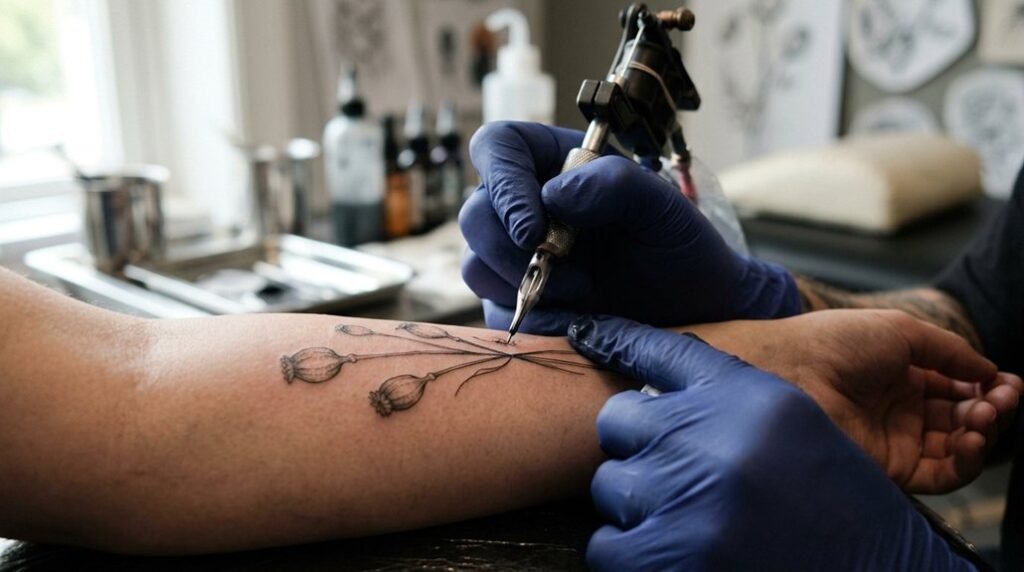
How exactly do artists create those whisper-thin lines that seem to float on your skin? You’ll notice the difference immediately when you compare fine line work to traditional tattoos. The ink sits closer to your skin’s surface, creating that ethereal, almost weightless appearance you’re drawn to.
Your artist achieves this through minimal saturation. They’re not packing pigment deep into your dermis like conventional methods demand. Instead, they’re tracing gentle, calculated paths that leave just enough ink to catch the light without shouting for attention.
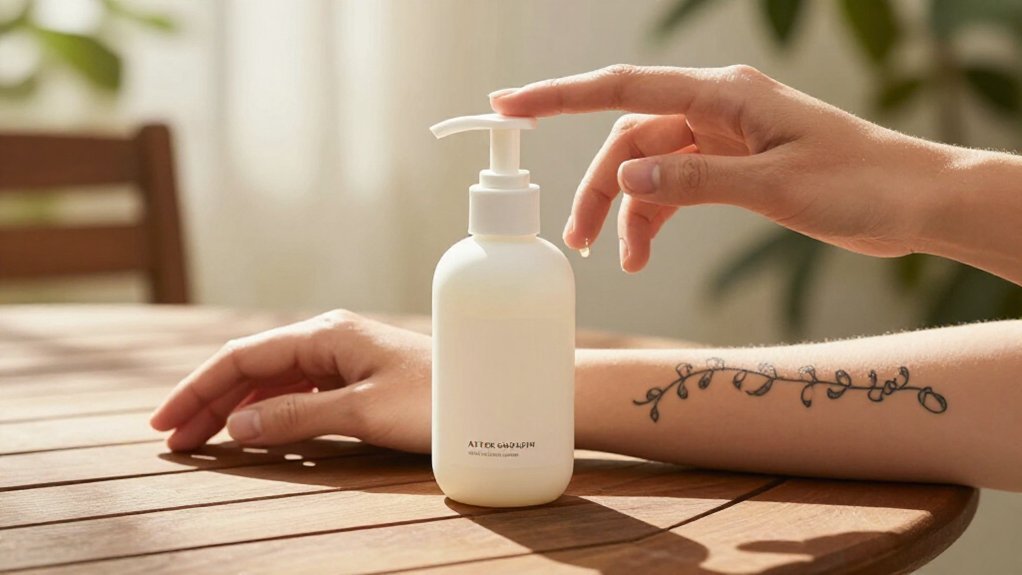
You’ll see this delicacy most clearly in botanical pieces, where petals appear to breathe, or in script that reads like handwritten silk. The technique prizes restraint over boldness. When you move, these lines shift with your body rather than fighting against it, creating living art that feels inseparable from you.
Recommended Products
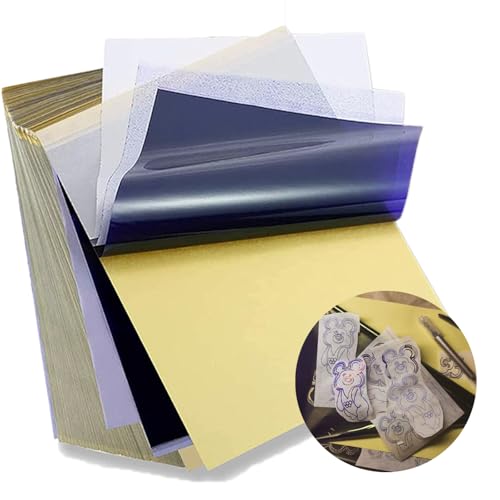
Standard size: Tattoo Transfer Paper is standard A4 paper size, each measures 8.27 in X 11.69 in. There are 4 levels in total. The thickness of the paper is very light and smooth to the touch.
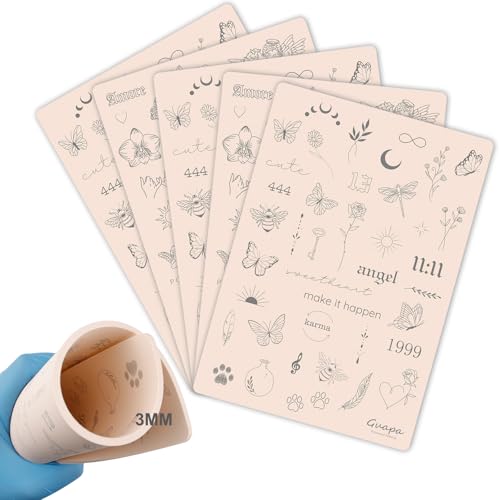
3MM Tiny Tattoo Practice skin Made from high-quality materials, it is closely mimic the texture and feel of real human skin. This gives you a realistic experience, allowing you to refine your skills before working on actual clients
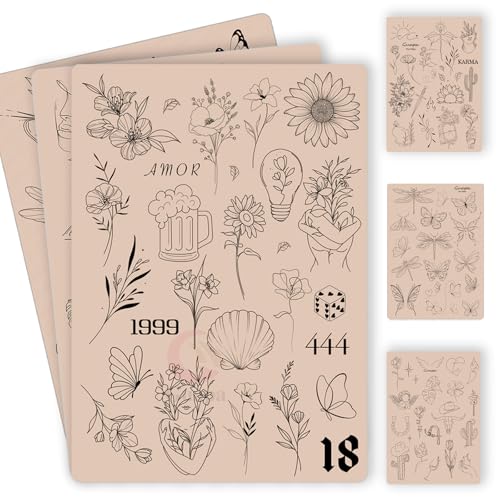
100+ Pre-Printed Designs – Features a wide variety of fine line and tiny tattoo stencils to enhance detailing skills.
The Single-Needle Setup Behind Every Precise Line
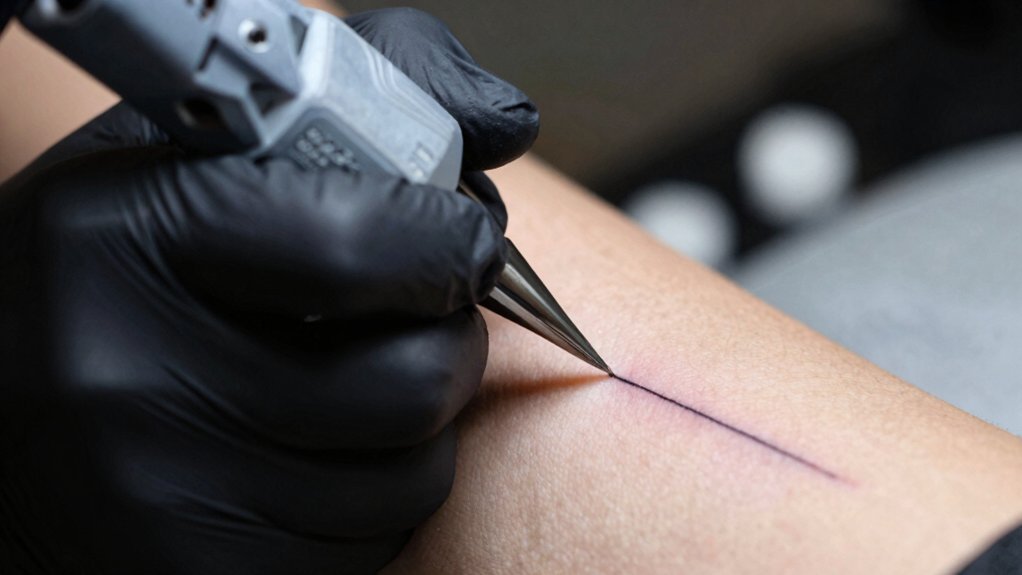
Why does a single needle make such a difference? You’d notice the precision immediately when your artist sets up. That one needle creates lines half the width of standard setups, giving you control you’d never achieve with multiple points.
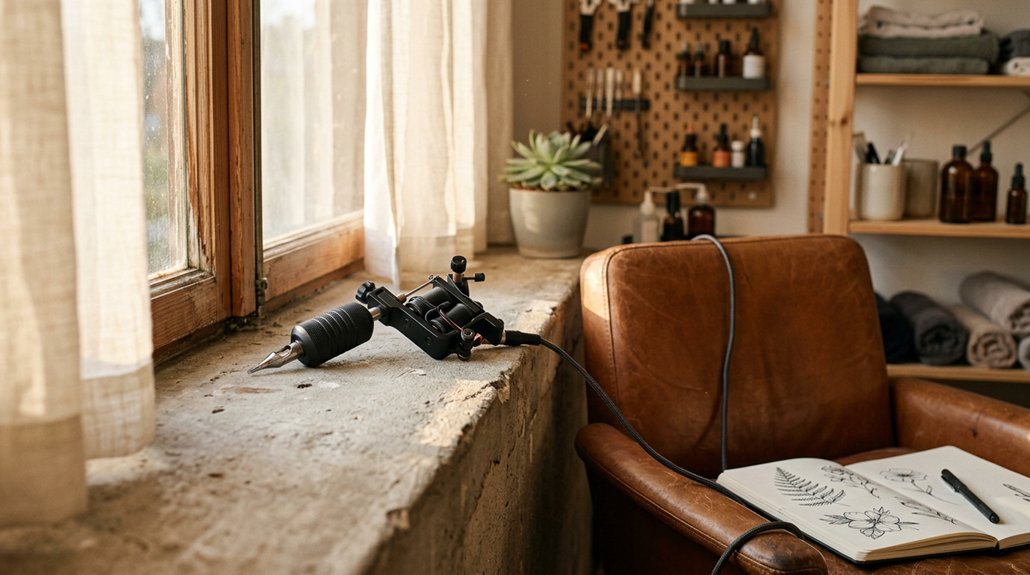
You’re working with a 1RL configuration—one round liner—when you tattoo fine line pieces. This setup deposits minimal ink with each pass, preventing blowouts and maintaining crisp edges. You adjust your machine to run faster and lighter, letting the needle dance rather than dig.
You’ll find yourself stretching skin tighter and moving your hand slower than with traditional work. The needle requires steady pressure; too heavy, and you’ll damage the skin. You’re building images through accumulated whisper-thin strokes, each one demanding your full attention.
Recommended Products

Dragonhawk Tattoo Needles: High-quality tattoo needles, manufactured under the trusted Dragonhawk brand, are perfect for all-purpose work. With a polished, long taper design, these needles ensure reliable performance and excellent control.

ANTI-REFLUX MEMBRANE DESIGN – Engineered with a high-quality elastic band and integrated plastic membrane, these 1007RL cartridges effectively prevent ink backflow. This ensures a clean workflow by keeping ink out of your rotary pen tube, reducing cross-contamination risks and making cleanup significantly faster during intricate micro-detail work.

✅ MIXED CONFIGURATIONS FOR VERSATILITY – Includes 20 cartridges (#06/03RL - #12/11RL), perfect for micro realism, fine lines, and portrait tattoos.
Why Fine Line Fades Faster: and How to Slow It Down
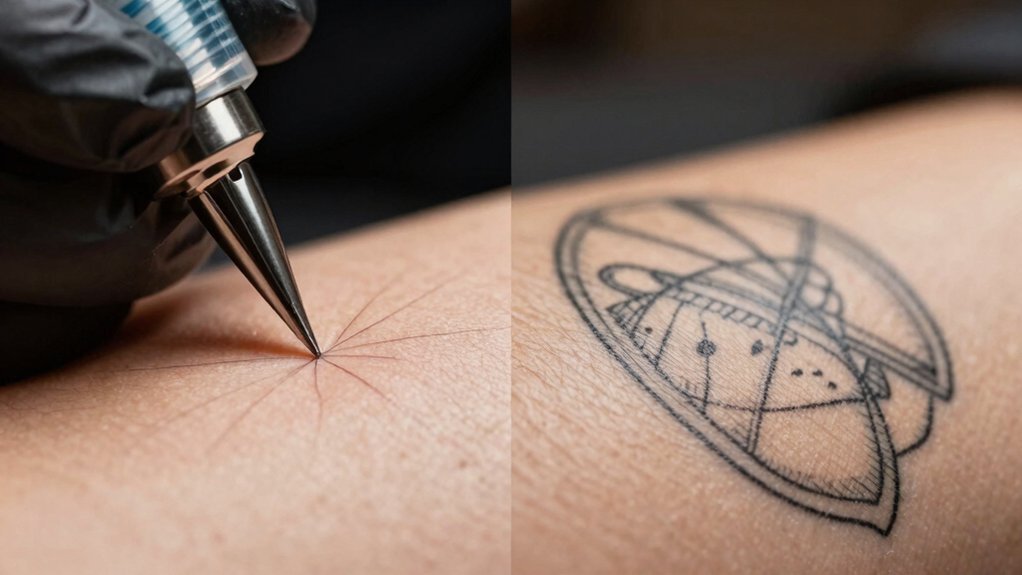
Where does that delicate shading go when your fine line piece starts looking washed out? You’re witnessing single needle deposits dispersing—thin lines hold less pigment, so your immune system flushes them faster. You’re also battling sun exposure, which breaks down those tiny ink particles rapidly.
You can slow this process. You’ll need to apply broad-spectrum SPF daily, shielding your tattoo from UV damage. You must moisturize regularly, keeping skin hydrated so lines stay crisp. You’re choosing placement wisely, avoiding high-friction areas like palms or fingers where shedding accelerates. You’re booking touch-ups every few years, replenishing faded strokes before they blur beyond recognition.
You’re not fighting biology—you’re working with it. Your fine line tattoo demands more vigilance, but with proper care, you’ll preserve that elegant precision for years.
Recommended Products

Package: 50pcs mixed tattoo cartridge needles, includes 10pcs each of 1203RL, 1205RL, 1207RL, 1209RL, 1211RL.

LINE & SOFT SHADING COMBO SET: 50 cartridges designed for artists who focus on clean outlines and smooth soft shading in one efficient setup. Includes 10 each of 3RL, 5RL, 7RL, 5RS, and 7RS, giving you the flexibility to move from precise linework to soft fills, whip shading, and smooth black & grey blending without changing cartridge systems.

MADE IN THE USA SINCE 1990 — For over 30 years Dynamic Color has produced professional tattoo ink in the United States, an established American brand artists built their work on long before most imported labels existed.
Is Fine Line Right for Your Skin and Design?
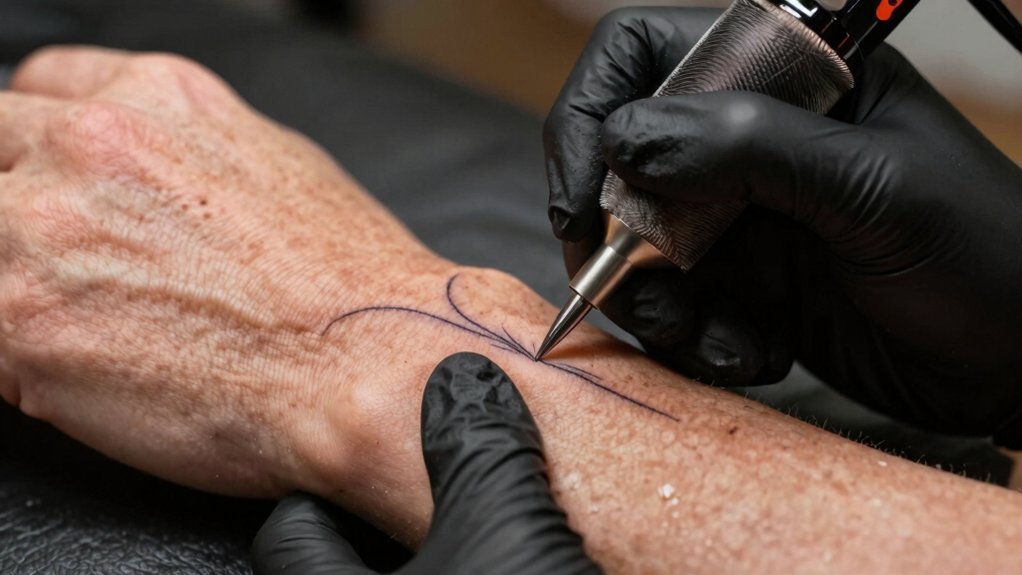
Will your skin hold those hair-thin strokes, or will they blur into indistinct smudges within months? You need to assess your skin type honestly. Oily, thick, or aged skin tends to spread ink faster, turning crisp lines into blobs. Darker skin tones can carry fine line work, but you’ll want bolder strokes and higher contrast to ensure visibility as pigment settles.
Your design matters equally. You can’t cram dense detail into a tiny space and expect it to age gracefully. Simple, open compositions with adequate negative space heal cleaner and read better over time. You’re also limiting your color palette—fine line thrives in black and grey, not bright gradients.
Visit artists whose healed work you’ve seen in person. They’ll evaluate your specific canvas and steer you toward what actually lasts.
Recommended Products

Material and Size: crafted from fabric, these tattoo sleeves a skin-friendly experience for all users; Designed for men, the arm sleeve tattoo fits snugly at 18.11 inches/46 cm, plus size is suitable for those with wide arms, while one size is for regular arms, comfortable fit that feels natural on your skin
Roxun cooling arm sleeves provide a seamless, snug fit, thanks to the durable blend of 90% nylon and 10% spandex. Forget about constant adjustments or circulation issues
What You’ll Actually Pay for Quality Fine Line Work
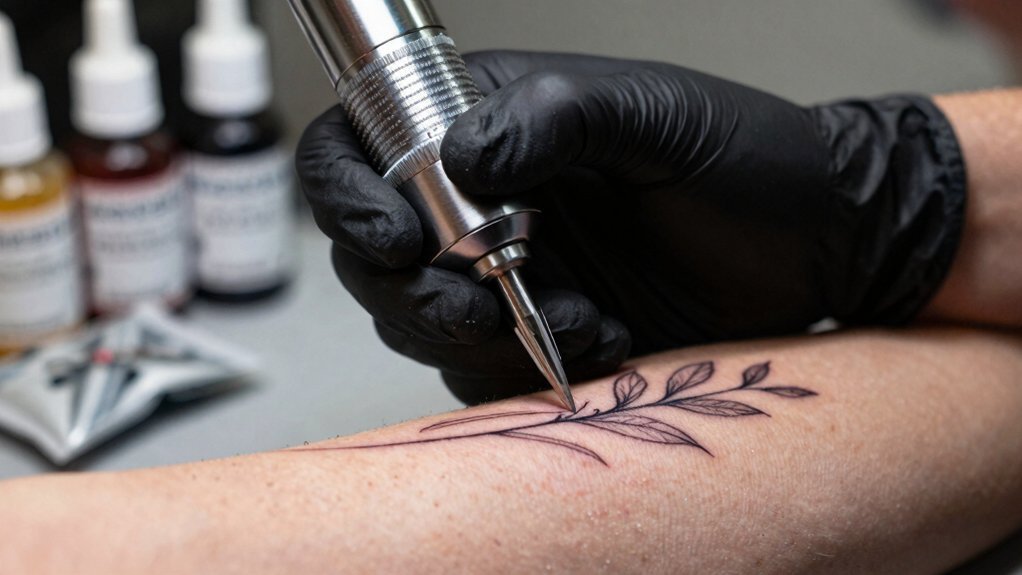
Once you’ve determined your skin suits fine line work, you’ll face sticker shock. Quality fine line artists command premium rates because this technique demands surgical precision, specialized equipment, and extensive training. You’ll typically pay $150 to $300 hourly for established artists, with small pieces starting at $200 or reaching $500.
Don’t ever bargain hunt. Cheap work leads to blowouts, fading, and costly cover-ups within months. Single needle work requires slower, steadier hands and premium needles that cost significantly more. You’ll invest more upfront, but quality lines age cleaner and spare you from expensive laser removal or correction sessions later.
Budget realistically though. Complex designs often demand multiple sessions. You’ll stretch payments across appointments if absolutely needed, but never compromise on artist skill simply to save money. Your skin deserves this investment, and properly executed fine line work lasts decades without blurring or distortion.
Recommended Products
Package: 20pcs tattoo cartridge needles; Wormhole Tattoo Needles are individually packed, and for disposable use only
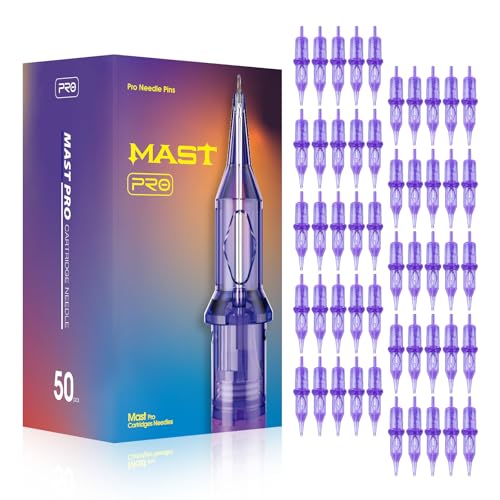
Mast Pro purple tattoo cartridges needles have been providing with high density clear plastic body.

Mast Pro purple tattoo cartridges needles have been providing with high density clear plastic body.
Questions That Reveal an Artist’s Actual Fine Line Experience
How do you separate seasoned fine line specialists from artists who simply own a single needle? You ask targeted questions that expose real expertise.
You request specific details: “How do you adjust voltage for different skin types?” You probe their needle knowledge: “When do you switch between three-round liner and single needle?” You ask about aftercare complications: “How do you fix a blowout in delicate work?”
Watch their responses. Experienced artists explain technical decisions without hesitation. They describe how they’ve adapted machines for minimal trauma. They’ll warn you about areas where fine lines blur fastest.
You also evaluate their portfolio critically. You look for healed photos, not fresh ink. You verify consistent line weight across multiple pieces.
These questions reveal who’s performed hundreds of successful fine line tattoos versus who’s experimenting on clients.
Recommended Products

Multiple uses: the 2 tip marker skin pens size are 0.5 mm and 1 mm; The thickness of the pen tip can easily draw accurate and clean lines, suitable for experienced or beginners

Warm Tips: The tattoo transfer paper need to work with transfer medias.You will need to purchase the stencil ointment separately. Apply the design made on the master paper. Please pay attention to press the back side of the pattern to the skin for at least 3 seconds

Precision Transfer Performance - It’s professional-grade tattoo stencil paper delivers vibrant, high-definition transfers even for intricate designs. The carbon layer ensures sharp outlines without smudging or fading, ensuring crisp lines that stay true to your original artwork.
The Body Placements That Preserve Fine Line Detail
Where you place a fine line tattoo determines whether it’ll stay crisp or blur into a mess within months. You’ll get the best longevity on areas with stable skin that doesn’t stretch or rub constantly.
Choose your forearms, upper arms, calves, or ribs. These spots experience minimal friction and maintain their shape as you move. You’ll avoid high-risk zones like fingers, palms, feet, and inner lips entirely—those areas shed skin rapidly and subject ink to constant abrasion.
You should also skip elbows, knees, and other joints that flex repeatedly. That motion distorts healing and accelerates fading. Similarly, you’ll want to reconsider the chest or stomach if your weight fluctuates, since stretching warps delicate lines permanently.
Discuss placement frankly with your artist. They’ll steer you toward spots where your fine line investment actually lasts.
Recommended Products

COMPLETE LINING PACK: 20 individually sealed 3RL round liner cartridges for crisp outlines and fine lines. The 3-needle formation gives you control to lay clean, precise lines each session.
【1009RL Precision for Fine Line & Micro-Realism】Master the art of detail with our 1009RL bugpin cartridges. The tight 9-needle configuration delivers razor-sharp lines with minimal skin trauma—ideal for micro-realism, portrait details, and intricate script work. Achieve consistent ink flow and crisp edges in a single pass, whether you're outlining traditional pieces or adding fine textures.

1201RL SPECIFICATION — #12 0.35MM SINGLE ROUND LINER: Each cartridge uses one 0.35mm needle in a 1RL Round Liner configuration. The single-needle grouping keeps the working end narrow, while the #12 diameter provides a more visible line and dot profile than finer single-needle gauges. A focused choice when the design needs clear definition without moving to a multi-needle liner.
Conclusion
You’ve learned that fine line tattooing demands both an artist’s steady hand and your committed aftercare. You’ll want to choose placement wisely, ask the right questions, and invest in quality work if you’re chasing that ethereal, lightweight aesthetic. Whether you’re drawn to delicate botanicals or fine script, you’re now equipped to decide if this restrained, breathing style matches your vision—and your skin’s needs—for the long haul.
Recommended Products

MADE IN THE USA SINCE 1990 — For over 30 years Dynamic Color has produced professional tattoo ink in the United States, an established American brand artists built their work on long before most imported labels existed.

【High‑Quality Premium Materials】 Crafted with sharp 316L stainless steel bugpin needles for long‑lasting durability. Premium plastic housing and flexible silicone ensure stable smooth operation. Single‑use disposable design keeps tattoo practice clean for artists and beginners.

Outling Black Tattoo Ink - Our darkest black, this super thin viscosity ink flows into the skin with a quickness that will make you grab for it first every time. Kuro Sumi is the absolute blackest pigment in the entire industry, world known for its quality and consistency for all tattoo supplies & tattoo kits. It also has the best flow.