
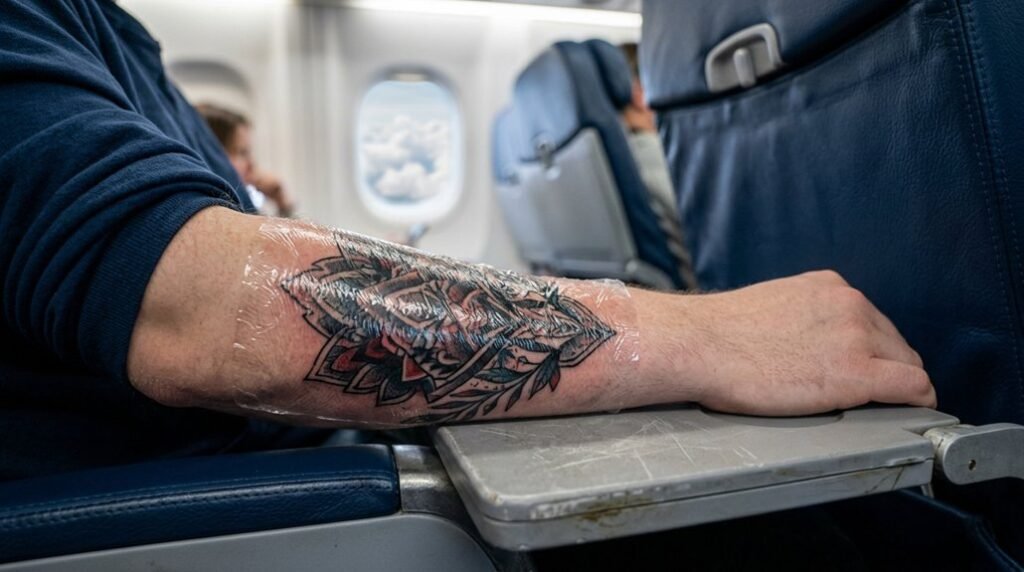
You’re standing at the airport gate with fresh ink pulsing under your sleeve, wondering if you made a mistake. The short answer is yes, you can fly, but your tattoo might protest. Cabin pressure, dry air, and cramped seats create a perfect storm for irritated skin. Before you board, you need to know what risks you’re actually facing.
Key Takeaways
- Airlines do not ban passengers with fresh tattoos, though proper aftercare becomes challenging during flights.
- Wait at least 24 hours for small tattoos and 48–72 hours for larger pieces before flying.
- Dry cabin air below 20% humidity risks drying, cracking, and swelling of healing tattoos.
- TSA does not flag tattoos; bandages and small ointment containers pass security without issue.
- Protect healing ink by staying hydrated, moisturizing frequently, and wearing loose, breathable clothing.
Recommended Products

COMPLETE AFTERCARE KIT FOR NEW & EXISTING TATTOOS: This Tattoo Aftercare Kit brings together 3 essentials, Antimicrobial Soap, Tattoo Balm, and Tattoo Lotion, to help cleanse, protect, and moisturize fresh ink. Useful after tattoo sessions and throughout healing, it supports vibrant color and skin comfort for dedicated ink enthusiasts and artists

HUSTLE BUTTER ESSENTIALS TATTOO AFTERCARE KIT: This Essential Kit includes our Hustle Butter Tattoo Balm (1 fl oz), Hustle Bubbles Foaming Soap (3.4 fl oz), and our Hustle Butter Tattoo Aftercare Wrap - Small (6 in x 2.2 yds)

Nourishes Healing Ink for Vibrant Color: Tattoo Goo supports healing tattoos & maintains vibrancy on healed ink with a lightweight formula rich in olive oil, lavender oil, cocoa butter, and beeswax. It absorbs quickly, moisturizes deeply, and helps reduce dryness, itch and tightness so your tattoo looks and feels comfortable through everyday routines
Can You Fly After Getting a Tattoo?
How soon can you board a flight after getting fresh ink? You can technically fly immediately after getting tattooed, as airlines don’t restrict passengers with fresh tattoos. However, you’ll face several challenges if you choose to travel right away.
Your new tattoo creates an open wound that requires careful attention. You’ll need to keep it clean and moisturized during your journey, which proves difficult in cramped airplane bathrooms and dry cabin conditions. Airport security won’t flag your tattoo, but you’ll carry aftercare supplies through checkpoints.
Consider your seating arrangement carefully. You’ll want to avoid positions that rub, press, or irritate your fresh ink. Tight clothing becomes your enemy, and you’ll need space to adjust bandages privately. Window seats work well for leg tattoos; aisle seats accommodate arm pieces better.
You make the call, but prepare for discomfort.
Recommended Products

Widely Used: Our tattoo film has grid lines on the backing paper, which can be cut into different sizes according to requirements. The size of the film is 6 inches x 8 yards, including 3 layers, namely PET backing, PU film and release paper. Soft and stretchable, which makes it fit perfectly anywhere in the body

THE ORIGINAL TATTOO AFTERCARE BANDAGE – Saniderm’s Original Gloss Bandage is the tried-and-true, industry-defining tattoo aftercare bandage. Dermatologist-recommended and trusted by expert tattoo artists worldwide, this medical-grade bandage ensures your tattoo heals quickly, safely, and more vibrantly. With over a decade of experience and millions of tattoos healed, it’s the perfect way to heal your ink.

PERFECT FOR THE TATTOO ARTIST AND COLLECTOR – Whoever you are, you want to make your tattoo aftercare experience convenient and effortless. This soap ensures the tattoo always leaves the shop or house sanitized and moisturized.
How Long Should You Wait Before Flying?
When exactly should you schedule that flight?
You should wait at least 24 hours before flying with a small tattoo. For larger pieces, you need 48-72 hours minimum. Your artist will tell you when you’ve reached the safe zone.
You must factor in your tattoo’s size and location. Small tattoos on arms or legs heal faster than back pieces or chest work. You also need to consider your personal healing speed. Some people’s skin bounces back quickly; others swell for days.
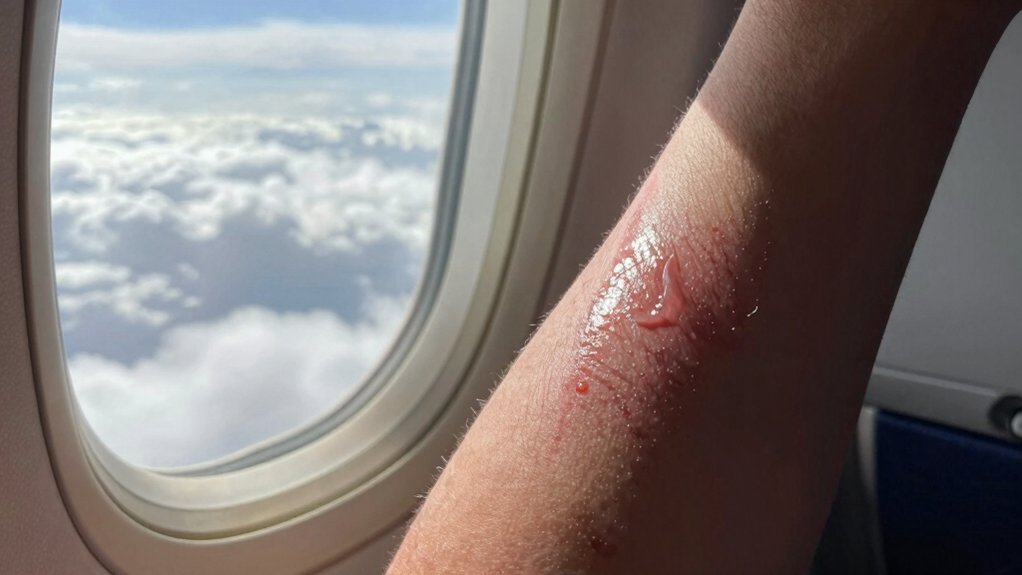
You can’t rush this timeline. Fresh tattoos remain open wounds, even when they look fine. You risk infection, ink loss, and prolonged healing if you ignore these windows.
You should book refundable tickets until you know your recovery timeline. Your artist’s aftercare instructions trump any general advice you read online.
Recommended Products

Protect Your Body Art: Moisturizing with the bonus of itch relief! Tattoo Goo's Tattoo Care Lotion soothes healing skin & keeps healed ink looking sharp for life. With olive oil & glycerin, it delivers deep, breathable hydration that won’t clog pores

TATTOO AFTERCARE ESSENTIAL: Hustle Butter is the original tattoo aftercare balm for new and older tattoos. With over 10 years in the market, we are a pioneer of the tattoo aftercare category.

Enhances Tattoo Appearance: Helps improve the look of existing tattoos by supporting a clearer, bolder and more defined appearance with regular use.
How Airplane Conditions Damage Healing Tattoos
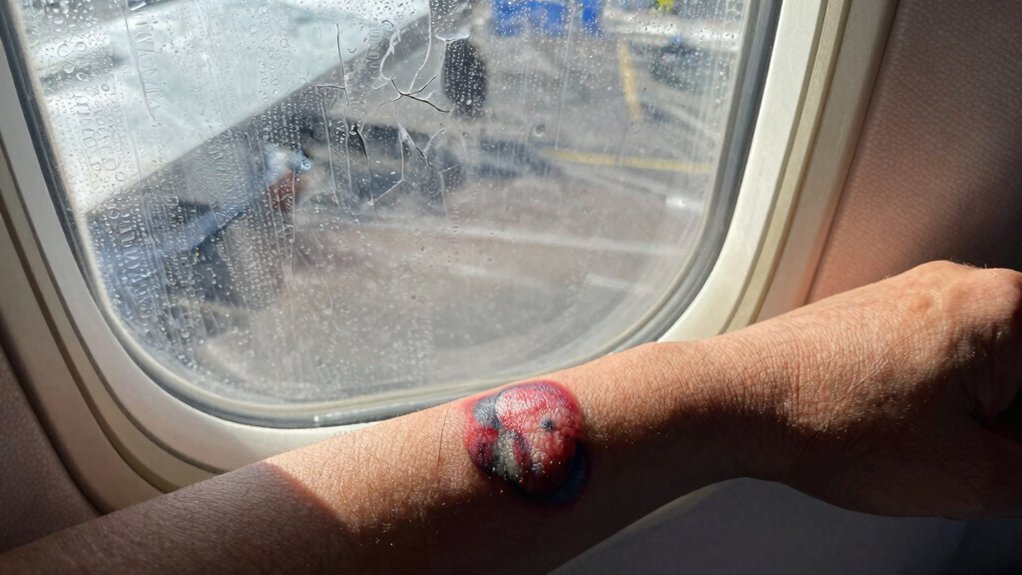
Airplane cabins create a hostile environment for healing tattoos. You’re stepping into extremely dry air—humidity drops below 20%—and your fresh ink pays the price. The plasma and ink ooze more freely. Your skin cracks. You scratch. You introduce bacteria.
Pressure changes mess with your body too. You’re sealed at altitude, and your swollen tattoo throbs harder. Blood rushes awkwardly. The tight space traps sweat against new wounds. You can’t clean it properly mid-flight.
You also contort into cramped seats. Your fresh tattoo rubs armrests, seatbelts, and unfamiliar fabrics. Each contact drags healing skin. You shift constantly, seeking relief, but you only aggravate the damage.
Recommended Products

Sweat-Powered Cooling--90% nylon, 10% spandex material, made with sweat-wicking fabric that cools you down as you heat up. Keeping you fresh and comfortable even in extreme heat

❤️️ UV Protection- Can effectively resist 99.99% of the UV, Protection class is UPF 52+. Keep your skin away from freckles ,dark spots ,dull and peeling and other troubles, to avoid premature aging

Plus size:The arm compression shaper are in plus size, designed for plus-size women; Compare to other regular shawl,our arm sleeves wrap can stretch up to 31% wider,larger and more comfortable to use
Getting Through TSA With a Fresh Tattoo
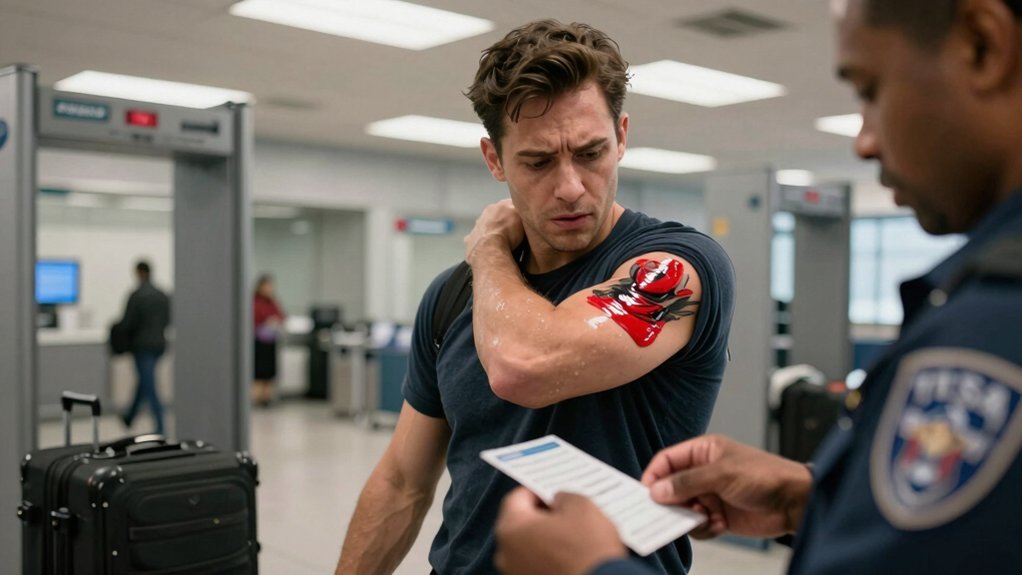
Where exactly does a healing tattoo fit into TSA’s security theater? You won’t find ink on the prohibited items list, but you’ll still feel the scrutiny.
You walk through the scanner. Your fresh tattoo raises no alarms. The metal detector doesn’t detect pigment. Yet you might notice agents eyeing bandages or ointment gleaming through transparent medical tape. You’re allowed these coverings. TSA permits creams and lotions under 3.4 ounces.
You prepare for additional screening anyway. Swabs test for explosives, not infections. You explain nothing. You don’t need to disclose your Friday night decision to strangers.
You collect your shoes. You proceed to gates. The checkpoint consumes two minutes of your life. Your tattoo remains none of their business, even when you’re flinching from their pat-down near your sore shoulder.
Recommended Products
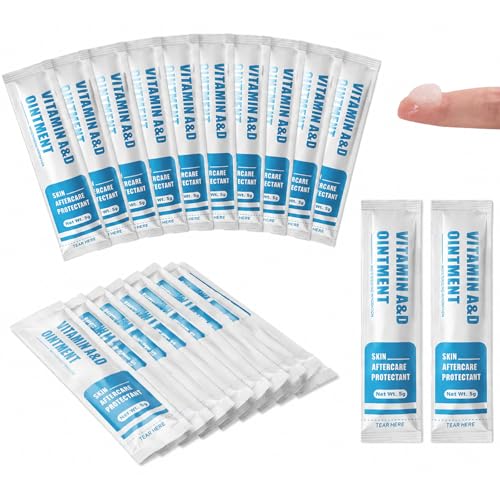
Honest, Accurate Care – This protective ointment comes in 50 hygienic single-serve packets for mess-free, on-the-go convenience. Easy to apply for tattoo protection anytime.

[ Natural Ingredients ] — Our all-natural after tattoo care butter is petroleum and paraben free. Bela tattoo post care is made from only the finest ingredients, including Shea Butter, Olive Oil, Panthenol, Tocopherol, Grape Seed Oil, Lavender Oil, Aloe Vera Extract, Coconut Oil, Camellia Japonica Seed Oil, Bisabolol, and Sunflower Oil. Great tattoo aftercare ointment.

【Enriched with Vitamins A & D】This tattoo scar gel is formulated with naturally derived vitamins A and D, plus skin-calming ingredients. It helps support your skin's natural recovery process while keeping the tattoo area moisturised.
Protecting Your Tattoo During the Flight
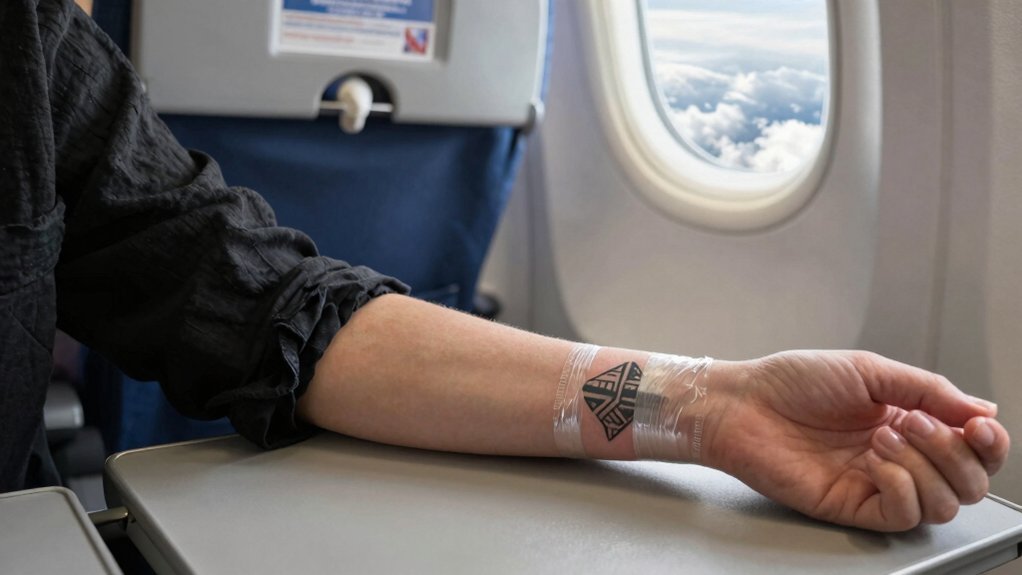
How does a few hours in a pressurized cabin threaten something your artist spent hours needling into your skin? Dry cabin air pulls moisture from healing skin, causing scabs to crack and flake prematurely. You’re sitting still, so blood pools and swells tender areas. Your fresh tattoo suffocates under clothing pressed against seats. Don’t let this happen.
Drink water constantly during the flight. You’re combatting dehydration at the source. Apply a thin layer of fragrance-free moisturizer before boarding, and reapply every hour. You’re keeping the healing environment balanced. Wear loose, breathable clothing that doesn’t rub against your new ink. You’re avoiding friction damage. If possible, choose an aisle seat for easier bathroom access to clean and re-moisturize. You’re maintaining control.
Your tattoo survives the flight intact when you stay proactive.
Recommended Products

Nourishes Healing Ink for Vibrant Color: Tattoo Goo supports healing tattoos & maintains vibrancy on healed ink with a lightweight formula rich in olive oil, lavender oil, cocoa butter, and beeswax. It absorbs quickly, moisturizes deeply, and helps reduce dryness, itch and tightness so your tattoo looks and feels comfortable through everyday routines

STICK APPLICATION, ZERO MESS: Twist up the tattoo balm stick, swipe directly over the tattoo, and blend as needed. No jar to open, no fingers scooping product, and no need to carry a separate applicator. The solid stick format is easy to keep in a bag, bathroom cabinet or travel kit, making care simple at home or on the go. It gives you controlled application exactly where you want moisture, with less mess than traditional balm jars. Great for quick touch-ups whenever tattooed skin feels like it needs extra care, at home, after work or while traveling.

100 Pack Professional Tattoo Aftercare Cards Includes 100 high-quality tattoo aftercare cards in a 2 x 3.5 inch business card size. Perfect for tattoo artists, studios, and piercers to give clients clear post-tattoo care instructions.
Conclusion
You can fly after getting a tattoo, but you’ll want to wait 24–72 hours first. Keep your fresh ink clean, moisturized, and protected from dry cabin air and friction during the flight. Stay hydrated, wear breathable clothing, and don’t worry—TSA won’t hassle you about your tattoo. Just follow your artist’s aftercare advice, and you’ll keep your new art looking its best while traveling.
Recommended Products

After tattoo care:Helps safeguard new tattoos or retouched areas, supporting a cleaner, smoother healing process. It can help lock the color, protect your tattooed skin, reduce scab when you wash or moisturize your tattoo, quickly form a protective film, and then accelerate your recovery.

RELIABLE PROTECTION: Hion transparent adhesive bandage shields your skin from dust, dirt, germs and bacteria, as well as friction or scrubbing. It is good to protect minor burns, scrapes, cuts, blisters, abrasions and new tattoo in healing. The transparent film dressing allows you to observe healing progress of your wound without having to peel it off.

Transparent Matte Film Protection - This breathable tattoo bandage is a must-have in your tattoo supplies, offering latex-free protection that supports gentle healing for new ink.