

Getting your first night’s sleep with a fresh tattoo sets the tone for your entire healing journey, yet most people wing it and wake up to stuck sheets, smeared ink, or worse. You’ll need more than luck to protect your investment while you rest.
Key Takeaways
- Sleep on the opposite side of your tattoo with the inked limb elevated on a pillow to reduce pressure and swelling.
- Wrap your tattoo nightly using sterile non-stick wrap and thin ointment, removing it each morning to let the skin breathe.
- Keep sheets clean and loose to prevent sticking; if stuck, loosen with warm water rather than ripping fabric away.
- Maintain a cool sleeping environment and wear breathable clothing to minimize sweating and infection risk.
- Stop wrapping after two to three nights once oozing subsides, then moisturize regularly and avoid scratching any itching.
Recommended Products

Self Adhesive Bandage: Package includes 16 rolls of black self adhesive bandage wrap. Each roll measures 2 inch wide and 5 yards long after stretching. It easily adheres to itself but will not stick to other surfaces such as skin or hair, making it easy to pull off and change bandages
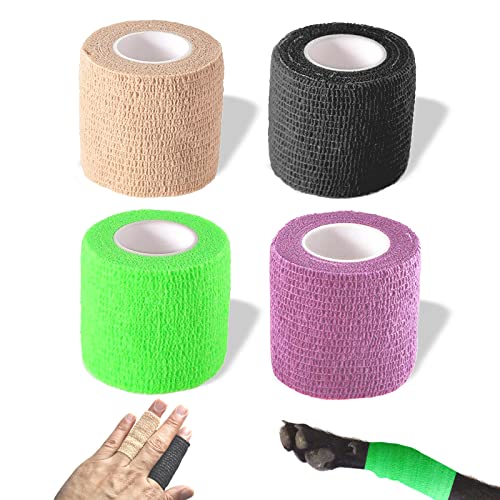
The bandage gives good adhesion, sticks to itself without sticking to skin. It almost feels like another layer of skin.

Mess-Free Care With Petroleum Jelly: Each pad is pre-lubricated to act as a petroleum gauze dressing, helping create a moist environment that supports fast wound care—without the mess or guesswork.
Why Your First Night Sleeping With a New Tattoo Matters Most
Why does this single night carry such critical weight? You’re healing an open wound. Your fresh tattoo leaks plasma, ink, and blood for hours after the artist finishes. When you lie down, you’re pressing this wound against fabric, trapping bacteria and moisture against vulnerable skin. You’re also risking the wrap snagging, the scab cracking, or the design sticking to your sheets. Each disruption pulls ink from where it belongs. You can’t control what happens while you’re unconscious, so you must prepare before sleep takes you. This night sets the trajectory for your entire healing process. Get it wrong, and you’re inviting infection, patchy color, or permanent damage to the artwork you’ve invested in.
Recommended Products

Gentle, Deep Cleansing: Tattoo Goo Foaming Cleansing Soap for tattoos and piercings helps remove impurities and clean the inked or pierced areas at a deep level by removing dirt, dead skin cells, and killing germs without damaging the skin

GENTLY CLEANSES NEW TATTOOS - Use Repair Tattoo Wash during the healing process to keep your fresh tattoo ink clean or as a perfect prep wash before and after tattooing.

GREAT FOR NEW TATTOOS - H2Ocean Blue Green Foam Soap cleanses skin on and around new tattoos and the addition of aloe vera aids the healing process.
Best Sleeping Positions for Every Tattoo Location
Where do you position your body when every angle threatens to press, stick, or smudge your fresh ink? You adapt your sleep posture based on placement.
For arm tattoos, you’ll sleep on your opposite side, keeping the inked limb elevated on a pillow to reduce swelling. Back pieces demand side-sleeping; wedge pillows between your knees to maintain spinal alignment without rolling onto fresh work. Chest tattoos require back-sleeping, propping yourself slightly to minimize contact.
Rib tattoos push you toward your stomach or opposite side, though you’ll angle carefully to prevent sheet friction. Leg work forces elevated positioning with pillows stacked beneath the calf, never the knee bent directly on ink. Thigh tattoos accommodate side-sleeping with the unmarked leg down, creating natural clearance. You’ll coordinate these adjustments before exhaustion hits, building pillow barricades that train your sleeping self to maintain boundaries throughout the night.
Recommended Products
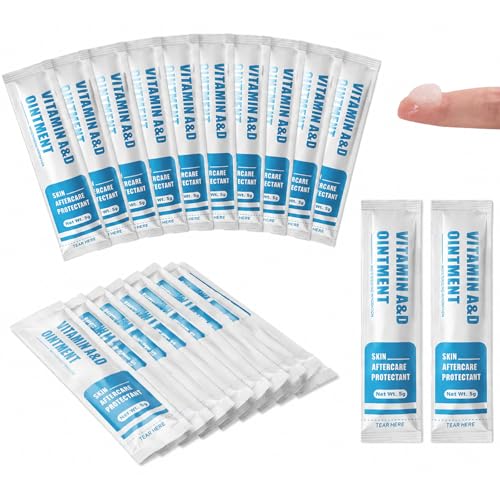
Honest, Accurate Care – This protective ointment comes in 50 hygienic single-serve packets for mess-free, on-the-go convenience. Easy to apply for tattoo protection anytime.

PROTECT & HEAL - H2Ocean Aquatat seals the skin in a moisturizing barrier to protect from irritants while still allowing the skin to breathe. Aquatat will also heal topical wounds on skin such as tattoos, rashes, cuts and scrapes while minimizing scabbing.

QUICK HEALING:A&D ointment gel is rich in essential vitamins A and D,which is very important for aftercare microblading ,effectively helping to remove burns,cuts,surgical marks and the impact of marks on beauty
How to Wrap Your New Tattoo Before Bed
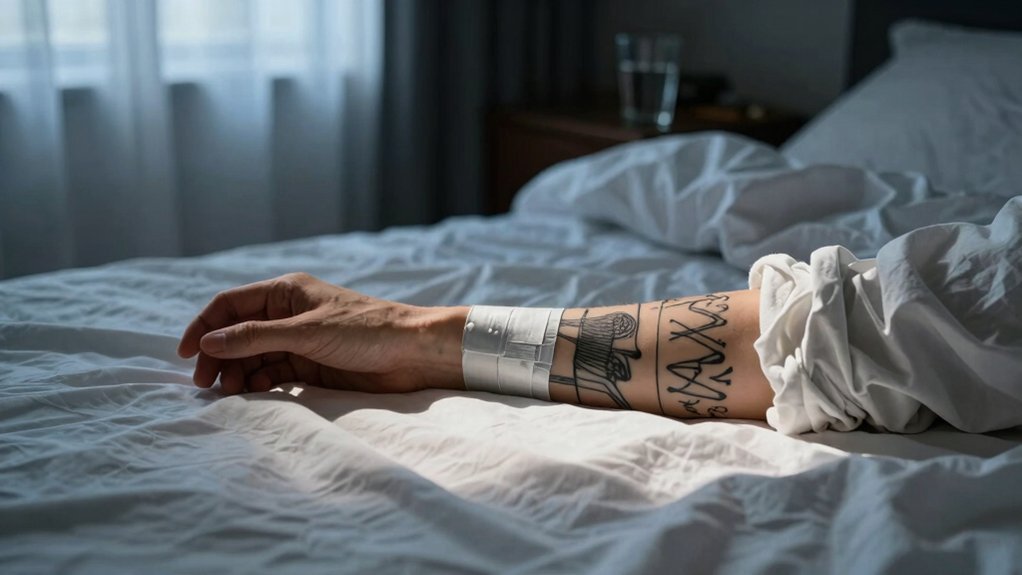
How exactly do you protect fresh ink when fabric and friction conspire against you? You’ll wrap your tattoo before bed, creating a barrier between your healing skin and the outside world.
First, wash your hands thoroughly. Then gently clean your tattoo with mild, fragrance-free soap and lukewarm water. Pat it completely dry with a clean paper towel—moisture trapped under wrap breeds bacteria.
Apply a thin layer of your artist’s recommended ointment. Don’t overdo it; suffocated skin won’t heal properly.
Cut a piece of sterile, non-stick bandage or plastic wrap large enough to cover your tattoo plus one inch of surrounding skin. Secure the edges with medical tape, but don’t wrap too tightly—you need airflow.
Remove this covering immediately upon waking, wash the area, and let your tattoo breathe throughout the day.
Recommended Products

SUPER COMFORTABLE BED WEDGE PILLOW, SNORING PILLOW: Available in 2 height options – 7.5 inch and 12 inch height. (24 x 24 x 7.5 or 25 x 25 x 12) This is the 7.5 inch option.

Adjustable 10-in-1 Design: Bedluxe's bed wedge pillow set offers a dynamic 10-in-1 adjustable design. Its ergonomic design supports various uses – from elevated back support for sleeping, reading or working, to a gentle slope for sleep, easing snoring, post-surgery discomfort, acid reflux, and improving blood circulation as a leg elevation pillow.

HIGH QUALITY FOAM: The inner core of this triangle pillow is 1.2 inches of slow rebound memory foam on the surface layer and high quality foam on the bottom layer, which provides firm support and is perfect for your post surgery recovery and full rest. We offer bed wedge pillow post surgery in sizes 7.5 inches; 10 inches and 12 inches. The 10 inch fits a balanced frame, the 12 inch wedge pillow is better for taller people, and the 7.5 inch wedge bed pillow is better for petite people, so we recommend that you choose the right size based on your body type and sleeping habits
What to Do When Your Tattoo Sticks to Sheets
Sometimes you’ll wake to find your tattoo welded to your bedsheets—what now?
Don’t rip them apart. You’ll damage the healing skin and pull out ink. Wet the stuck area with warm water instead. Use a clean spray bottle or damp cloth—hydration loosens the bond. Peel the fabric away slowly once it releases. Never yank.
Check the tattoo immediately. If plasma or ink appeared, you’ve got an open wound. Clean it gently with fragrance-free soap, pat dry, and apply a thin layer of recommended ointment. You’ve learned a lesson: your wrap failed, or you skipped it entirely.
Prevent this tomorrow. Ensure your covering stays secure overnight. Secure loose edges with medical tape. Switch to smoother, higher-thread-count sheets if you’re unwrapped. Your healing skin deserves surfaces that won’t bond with seeping plasma and ink.
Recommended Products

WHAT IS PAMIOU TATTOO AFTERCARE FILM? - The second skin tattoo cover is design of three-layer: Composed of PU film, PE protective layer and the release paper. It can be used to lock the tattoo ink, protect your tattooed skin.
Compatible with all LASER printers.Please print image on gloss side.Safe material, but please do not apply to eyes and broken skin.
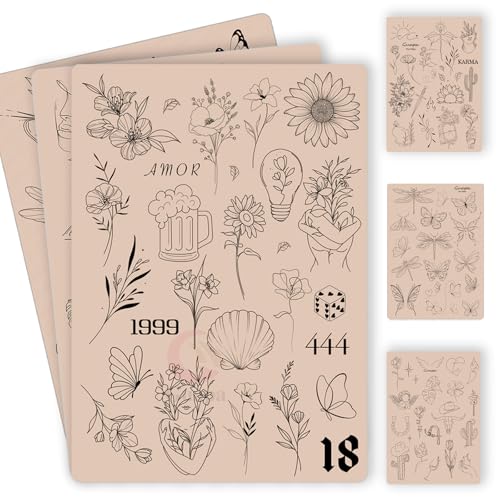
100+ Pre-Printed Designs – Features a wide variety of fine line and tiny tattoo stencils to enhance detailing skills.
How Often to Re-Wrap Your Tattoo Overnight
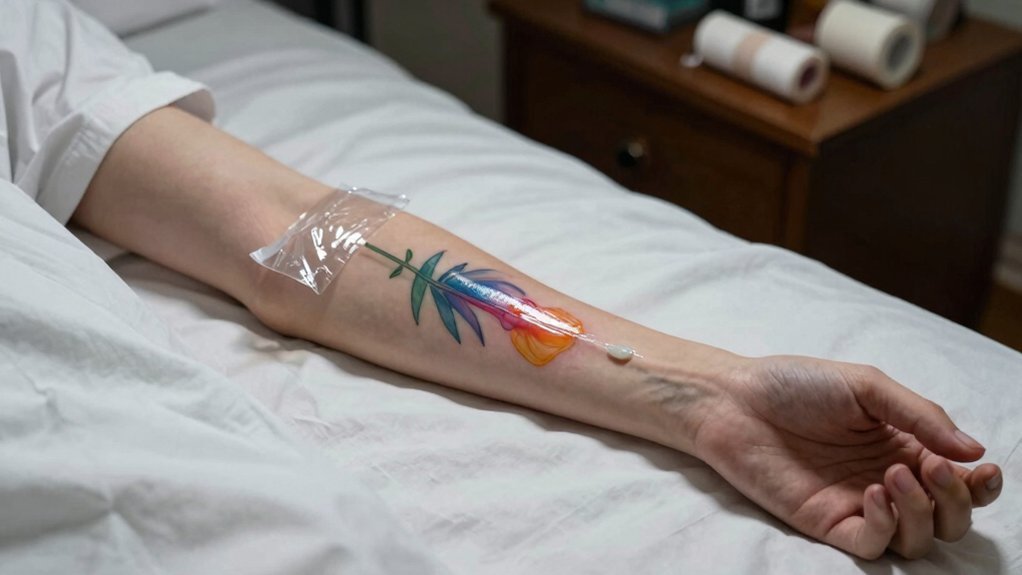
Why guess when you can know exactly when to re-wrap? You re-wrap your tattoo each night during the initial healing phase, creating a fresh barrier between ink and bedding. You remove the old wrap before bed, gently cleanse the area with fragrance-free soap, pat it completely dry, and apply a thin layer of recommended ointment. You then apply new breathable wrap—never re-use the same covering.
You check your wrap each morning. If you notice plasma, ink, or moisture pooling underneath, you change it immediately rather than waiting for nightfall. You keep your sleeping environment cool to reduce sweating that compromises the barrier.
You handle your tattoo with clean hands only. You don’t let sheets, pets, or partners contact the fresh ink. You protect your investment through consistent nightly coverage until your artist directs you otherwise.
Recommended Products

COMFORTABLE: Experience a new level of comfort with our wound pad, designed specifically for painless removal and switching. These non-stick pads for wounds are a blessing for those with sensitive skin or painful wounds, making dressing changes less distressing and more comfortable.

Widely Used: Our tattoo film has grid lines on the backing paper, which can be cut into different sizes according to requirements. The size of the film is 6 inches x 8 yards, including 3 layers, namely PET backing, PU film and release paper. Soft and stretchable, which makes it fit perfectly anywhere in the body

Self Adhesive Bandage: Package includes 20 rolls of black color self adhesive bandage wrap. Each roll measures 2 inch wide and 5 yards long after stretching. It easily adheres to itself but will not stick to other surfaces such as skin or hair, making it easy to pull off and change bandages
When to Stop Wrapping Your New Tattoo
Where exactly do you draw the line between protection and overprotection? You’ll wrap your fresh tattoo for the first two to three nights, but after that, you stop. Your artist’s advice trumps everything—follow their timeline first.
By day three, your tattoo starts sealing itself. You’ll notice plasma and ink oozing less; the surface begins drying. This signals you to drop the wrap entirely. Continuing past this point traps moisture, breeds bacteria, and suffocates your healing skin.
You wash your hands, gently cleanse the tattoo, pat it dry, and apply a thin layer of recommended ointment. Then you sleep with clean, loose sheets and let it breathe.
Stop wrapping when healing shifts from open wound management to simple aftercare. Trust the process.
Recommended Products

COMPLETE AFTERCARE KIT FOR NEW & EXISTING TATTOOS: This Tattoo Aftercare Kit brings together 3 essentials, Antimicrobial Soap, Tattoo Balm, and Tattoo Lotion, to help cleanse, protect, and moisturize fresh ink. Useful after tattoo sessions and throughout healing, it supports vibrant color and skin comfort for dedicated ink enthusiasts and artists

Foaming Tattoo Soap: Great for in-process and post-tattoo and piercing care. Keeps new tattoos & piercings clean during the healing process.

PERFECT FOR THE TATTOO ARTIST AND COLLECTOR – Whoever you are, you want to make your tattoo aftercare experience convenient and effortless. This soap ensures the tattoo always leaves the shop or house sanitized and moisturized.
How to Stop Tattoo Itching That Keeps You Awake
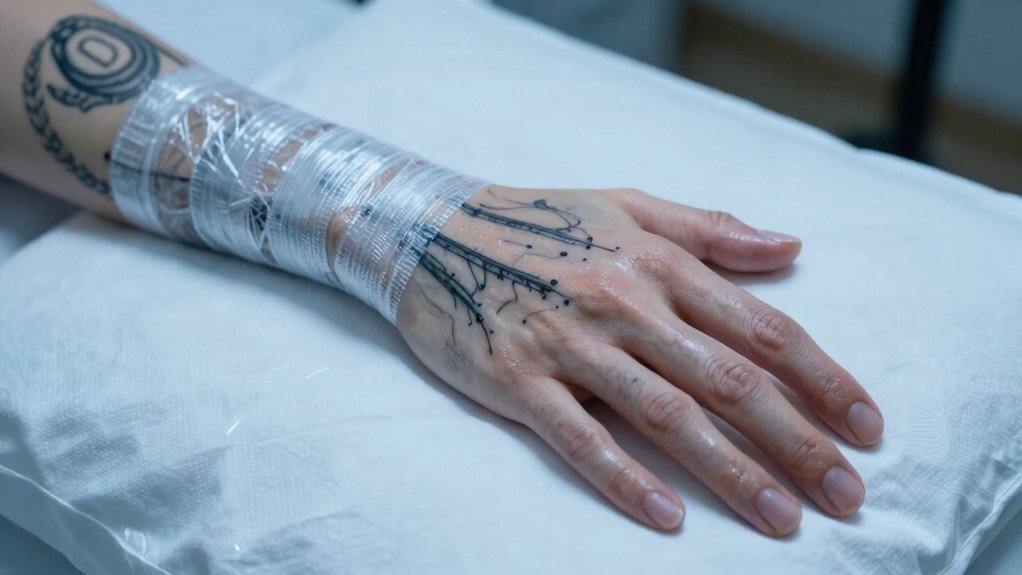
The itch always hits hardest when you’re lying still, doesn’t it? You’re trying to fall asleep, but your healing skin screams for attention. Don’t scratch—that’ll damage the ink and invite infection.
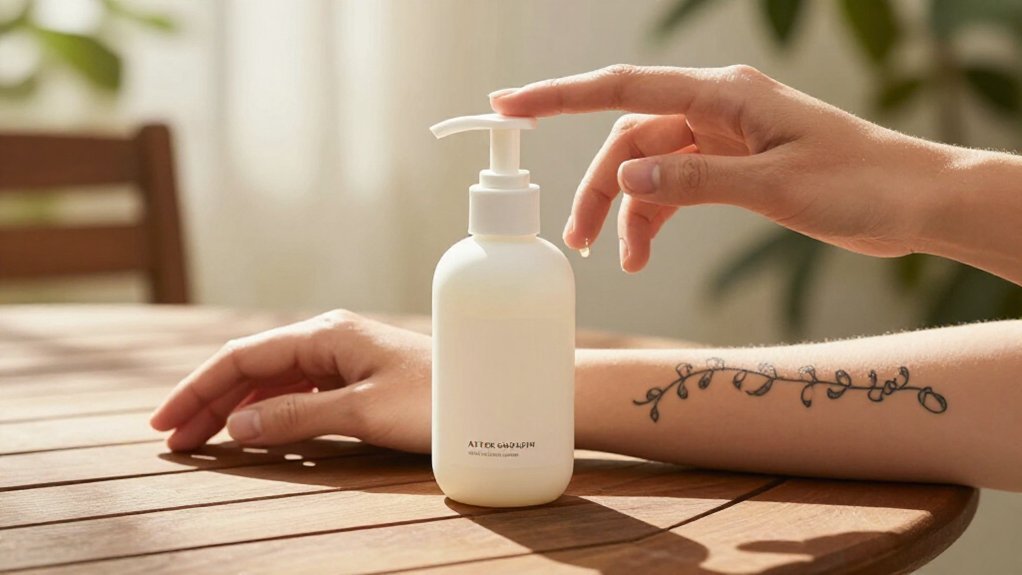
Instead, you slap the area gently. The vibration confuses your nerves without breaking skin. You keep your tattoo moisturized with a thin layer of fragrance-free lotion; dry skin itches more. You run cool water over it before bed, patting completely dry after. You wear loose, breathable cotton that won’t rub or trap heat.
If the itch overwhelms you, you press a cold, clean cloth against the tattoo for a few minutes. You distract yourself with deep breathing or white noise. You remember that intense itching usually peaks during days three through five, then fades. You’ll sleep through the night soon.
Recommended Products

[ Natural Ingredients ] — Our all-natural after tattoo care butter is petroleum and paraben free. Bela tattoo post care is made from only the finest ingredients, including Shea Butter, Olive Oil, Panthenol, Tocopherol, Grape Seed Oil, Lavender Oil, Aloe Vera Extract, Coconut Oil, Camellia Japonica Seed Oil, Bisabolol, and Sunflower Oil. Great tattoo aftercare ointment.

PROTECT & HEAL - H2Ocean Aquatat seals the skin in a moisturizing barrier to protect from irritants while still allowing the skin to breathe. Aquatat will also heal topical wounds on skin such as tattoos, rashes, cuts and scrapes while minimizing scabbing.

FROM THE LEADER IN TATTOO AFTERCARE: For years now, Mad Rabbit has consistently ranked among the most popular and highest-rated tattoo products on the market. We’ve created a top-of-the-line Tattoo Glide to help professional tattoo artists do their best work.
Sleep-Specific Mistakes That Slow Tattoo Healing
While you’re finally drifting off, you might be sabotaging your healing without realizing it. You roll onto your fresh tattoo, pressing bacteria-laden sheets against open skin. You skip the wrapping because it feels uncomfortable, letting fabric stick to plasma and ink. You sleep too hot, sweating through your bandage and creating a breeding ground for infection.
You scratch unconsciously, dragging fingernails across tender lines. You sleep longer than recommended on one side, trapping moisture against the wound. You ignore the extra pillow that would’ve kept your limb elevated, letting blood pool and swell the area.
You wake to find scabs torn, color patchy, healing delayed by days. These mistakes happen in darkness when your guard drops. Your tattoo pays the price while you dream.
Recommended Products

【Enhanced Health Support】This multi‑purpose bed back pillow relieves discomfort for your neck, back, legs, knees, head and shoulders. Featuring balanced softness and firmness, it aids sleep apnea, acid reflux, back pain and post‑surgery recovery like C‑section and mastectomy. As ideal height and angle vary per individual, adjust the pillow setup for your most comfort.

Elevated Support for Various Uses: Whether for head, foot, or leg elevation, our wedge pillow offers versatile support. Perfect for snoring, acid reflux, and general sleeping comfort, it's a multipurpose solution to enhance your sleep quality
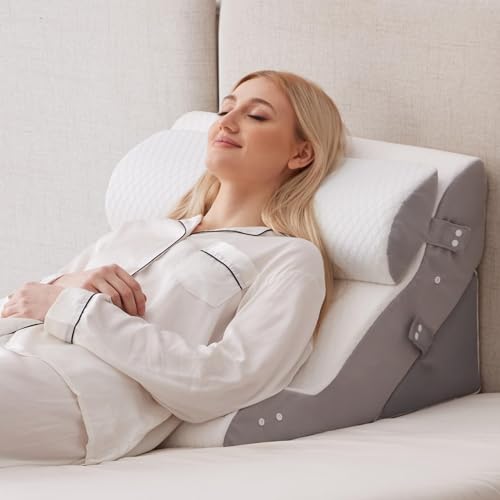
【Multi-Functional 3PCS Wedge Pillow Set】This 3PCS wedge pillow set includes a triangle base wedge, support wedge, and half-moon bolster pillow. Use individually or together as a backrest pillow, leg elevation pillow, reading pillow, or bed support cushion. Multiple configurations allow you to customize your preferred support setup.
Keeping Pets and Bedding Away From Your Healing Tattoo
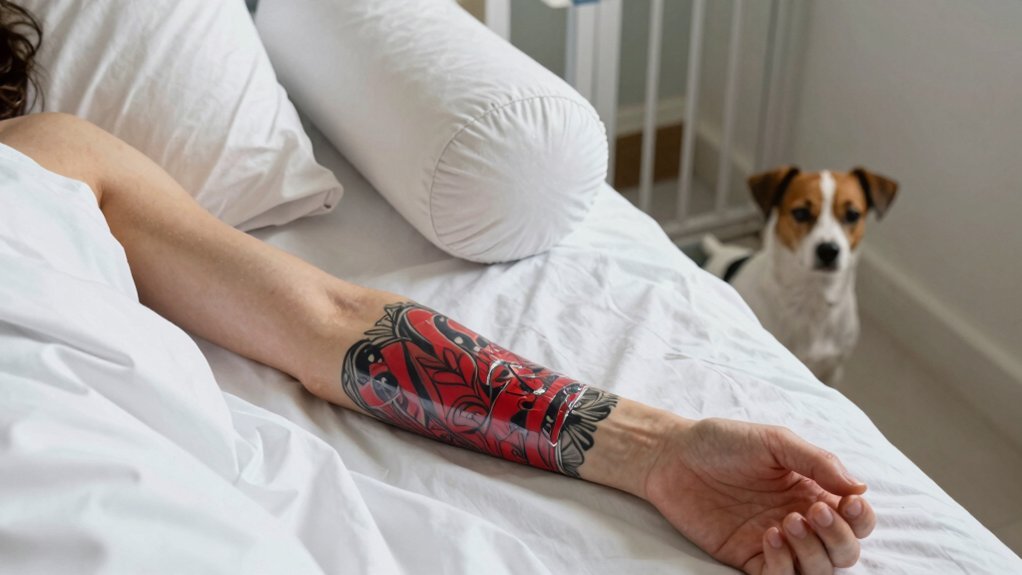
Why risk your fresh ink on something as ordinary as your own bed? You’ll toss, turn, and press your healing tattoo against sheets that harbor bacteria, lint, and dead skin. Change your bedding before that first night. Use clean, light-colored sheets so you’ll spot any drainage immediately.
Keep pets far away. Your dog’s paws carry bacteria from outside. Your cat’s fur sheds onto everything. One jump onto your bed means claws near open skin and dander in your wound. Lock them out of your bedroom for at least two weeks.
Sleep on your opposite side. Place a clean towel beneath you as a protective barrier. You’ll sacrifice some comfort now, but you’ll preserve your tattoo’s vibrancy permanently. Your artist worked hard; don’t sabotage their effort with careless nights.
Recommended Products

Warm Tips: The tattoo transfer paper need to work with transfer medias.You will need to purchase the stencil ointment separately. Apply the design made on the master paper. Please pay attention to press the back side of the pattern to the skin for at least 3 seconds

Professional-Grade Realism:Professional Grade 1mm Fake Skin with realistic dermis texture, certified by artists for true needle feedback and ink absorption. This synthetic skin delivers an authentic tattooing experience, making it perfect for beginners to practice safely and build confidence.

Material Quality: Our snake skin tattoo wrap is constructed with a breathable matte PU film, pressure-sensitive adhesive that is latex-free, ensuring safety. It effectively aids in soothing and shielding the tattoo from dirt, dust, or other contaminants that may cause cross-infection.
Conclusion
You’ve got everything you need to protect your fresh ink through the night. Stick to clean wraps, smart sleeping positions, and pet-free bedding, and you’ll dodge infections, stuck sheets, and patchy healing. Follow your artist’s timeline for unwrapping, stay cool, and resist that itch. Your tattoo’s permanent—treat it right from day one, and you’ll wake up to vibrant, properly healed art you’re proud to show off.